Global Breakthrough: FGC2.3 Feline Vocalization Project Nears Record Reads — Over 14,000 Scientists Engage With Cat-Human Translation Research

Global Breakthrough: FGC2.3 Feline Vocalization Project Nears Record Reads — Over 14,000 Scientists Engage With Cat-Human Translation Research

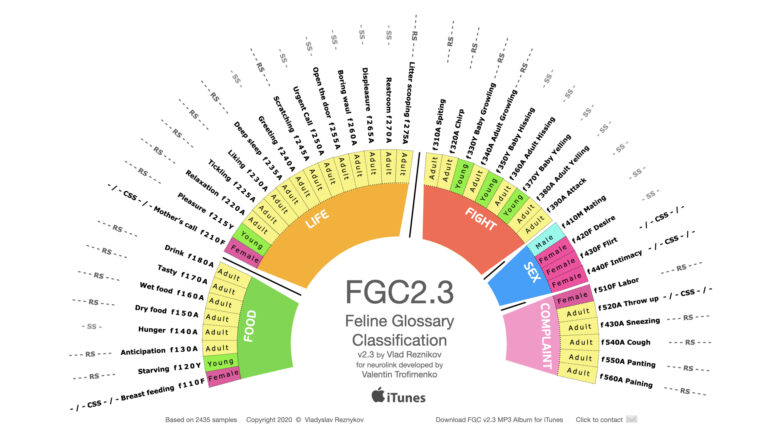
MIAMI, FL — The FGC2.3: Feline Vocalization Classification and Cat Translation Project, authored by Dr. Vladislav Reznikov, has crossed a critical scientific milestone — surpassing 14,000 reads on ResearchGate and rapidly climbing toward record-setting levels in the field of animal communication and artificial intelligence. This pioneering work aims to develop the world’s first scientifically grounded…

Tariff-Free Relocation to the US

Tariff-Free Relocation to the US

EU, China, and more are now in the crosshairs. How’s next? It’s time to act. The Trump administration has announced sweeping tariff hikes, as high as 50%, on imports from the European Union, China, and other major markets. Affected industries? Pharmaceuticals, Biotech, Medical Devices, IVD, and Food Supplements — core sectors now facing crippling costs,…

Global Distribution of the NRAs Maturity Levels as of the WHO Global Benchmarking Tool and the ICH data

Global Distribution of the NRAs Maturity Levels as of the WHO Global Benchmarking Tool and the ICH data

This study presents the GDP Matrix by Dr. Vlad Reznikov, a bubble chart designed to clarify the complex relationships between GDP, PPP, and population data by categorizing countries into four quadrants—ROCKSTARS, HONEYBEES, MAVERICKS, and UNDERDOGS depending on National Regulatory Authorities (NRAs) Maturity Level (ML) of the regulatory affairs requirements for healthcare products. Find more details…

CDC Embraces ACIP Guidelines for Chickenpox and COVID-19 Vaccination

CDC Embraces ACIP Guidelines for Chickenpox and COVID-19 Vaccination

A new group of CDC advisors voted last month to separate the chickenpox vaccine from the measles, mumps, rubella components of the MMRV shot due to concerns over febrile seizures, while recommending a more risk-based approach to COVID-19 immunizations that mirrors recent FDA approvals.

Quantum Sensors Overcome Heisenberg Uncertainty Challenges in Measurements

Quantum Sensors Overcome Heisenberg Uncertainty Challenges in Measurements

A cornerstone of quantum physics is uncertainty. Heisenberg’s uncertainty principle states the more precisely you pinpoint the position of a particle, the less precisely you can know its momentum at the same time, and vice versa.

However, a new study reveals that scientists have now discovered a way to sidestep this quantum tradeoff. This could lead to next-generation quantum sensors that can simultaneously measure both the position and momentum of particles with unprecedented precision.

“We take it for granted that the Heisenberg uncertainty principle is a fundamental law that cannot be broken,” says Tingrei Tan, a research fellow at the University of Sydney Nano Institute and School of Physics. “I want to be clear that we have not broken the Heisenberg uncertainty principle. But in certain cases, we can get around it.”

Other kinds of uncertainty are known in quantum physics as well. For example, if an atom is excited to a higher orbital, one cannot precisely know both the energy and the duration of its excited state at the same time.

Previously, scientists have taken advantages of these kinds of tradeoffs to “squeeze” or reduce the uncertainty in the measurements of a given variable while increasing the uncertainty in the measurement of another variable the researchers can ignore. For example, researchers have shown they can make qubits—the key components in quantum computers—highly resistant to a common source of error known as bit flip, when a qubit’s state flips from 1 to 0 or the reverse, while making them more vulnerable to a different common source of error known as phase flip, when a qubit switches between one of two opposite phases. They make this tradeoff because having just one common source of error to correct instead of two can drastically simplify quantum-computer design.

Now Tan and his colleagues have found they can make a similar tradeoff to sidestep Heisenberg’s uncertainty principle. “We are increasing the precision with which we can measure momentum and position at the same time within a small sensing range, while increasing the uncertainty with which we can measure those properties simultaneously outside of that sensing range,” Tan says.

Since the kind of quantum sensing applications the researchers want to carry out with this new technique are roughly on the atomic scale anyhow, gaining precision on a tiny scale while losing it on larger ones is a worthwhile tradeoff. It’s a bit like using a magnifying glass — you care about what you want to focus on under the lens, not around it.

Inspiration from quantum computing

In the new study, the researchers experimented with a single ytterbium ion held in place and controlled with electric and magnetic fields. They generated sets of specific patterns of vibrations in the ion known as grid states or Gottesman-Kitaev-Preskill (GKP) states.

Scientists have long investigated GKP states for quantum error correction strategies in quantum computing. In the case of trapped ions, because of the way in which the patterns of vibrations are entangled together, any small disturbance would generate changes in these patterns, which quantum error correction techniques can detect and account for in quantum computations.

In the new study, by preparing grid states in the vibrations of a ytterbium ion, the researchers found they could simultaneously measure both its position and momentum with a precision beyond the standard quantum limit — the best achievable using only classical sensors.

Man near window Dr Tingrei Tan in the Sydney Nanoscience Hub at the University of Sydney, where he manages the Quantum Control Laboratory.Fiona Wolf/The University of Sydney

“We are borrowing techniques from quantum error correction to do quantum sensing,” Tan says.

Tan says a key application for this research is spectroscopy — the analysis of atoms or molecules based on the specific wavelengths of light they absorb or reflect, which finds wide use in medical research, navigation in environments where GPS does not work, and searches for dark matter. In general, however, “this opens up a whole new way to do precision measurements,” Tan says. “It was taken for granted that there were pairs of variables that you could not measure precisely at the same time, and our work provides a framework for how we can get around those limitations.”

The scientists detailed their findings 24 September in the journal Science Advances.

Utilizing Wi-Fi Waves for Heartbeat Detection: A Revolutionary Approach

Utilizing Wi-Fi Waves for Heartbeat Detection: A Revolutionary Approach

This article is part of our exclusive IEEE Journal Watch series in partnership with IEEE Xplore.

Wi-Fi signals today primarily transmit data. But these signals can also be used for other innovative purposes. For instance, one California-based team has proposed using ambient Wi-Fi signals to monitor a person’s heart rate.

The new approach, called Pulse-Fi, offers advantages over existing heart rate monitoring methods. It’s low-cost and easily deployable, and it sidesteps the need for people to strap a device to their body.

Katia Obraczka is a professor at the University of California, Santa Cruz, who led the development of Pulse-Fi. She notes that continuous tracking of vital signs, including heat rate, can help flag health concerns such as stress, dehydration, cardiac disease, and other illnesses. “But using wearables to monitor vitals can be uncomfortable, have weak adherence, and have limited accessibility due to cost,” she says.

Camera-based methods are one option for remote, contactless tracking of people’s heart rate without a wearable device. However, these approaches can be compromised in poor lighting conditions, and also raise privacy concerns.

In the search for a better option, Obraczka, along with postdoctoral student Nayan Sanjay Bhatia and high school intern Pranay Kocheta working in her lab, sought to create Pulse-Fi. “Pulse-Fi uses ordinary Wi-Fi signals to monitor your heartbeat without touching you. It captures tiny changes in the Wi-Fi signal waves caused by heart beats,” says Obraczka.

How Can Wi-Fi Signals Measure Someone’s Pulse?

Specifically, the team designed Pulse-Fi to filter out background noise and detect the changes in signal amplitude brought about by heartbeats. They developed an AI model—capable of running on a simple computing device, such as a Raspberry Pi—which then reads the filtered signals and estimates heart rate in real time.

The team tested their approach in two different experiments, which are described in a study published in August at the 2025 International Conference on Distributed Computing in Smart Systems and the Internet of Things.

First, the researchers had seven volunteers sit in a chair at various distances of 1, 2 and 3 meters from two ESP32 microcontrollers that used Pulse-Fi to estimate the volunteers’ heart rates, comparing these data to heart rate measurements taken by a pulse oximeter. In the second experiment, Pulse-Fi was used on a Rasberry Pi devices to monitor the heart rates of more than 100 participants in different positions, including walking, running in place, sitting down, and standing up.

The results show that the system performs on par with other reference sensors, and Pulse-Fi’s less than 1.5 beats-per-minute error rate compares favorably to other vital-sign monitoring technologies. Pulse-Fi also maintained sufficient accuracy despite the person’s posture (e.g., sitting, walking) or distance from the recording device (up to 10 feet away). Based on these results, Obraczka says the team plans to establish a company to commercialize the technology.

A woman scientist smiles in a conversation with her graduate student, as he explains the data being displayed on his laptop. Prof. Katia Obraczka and her Ph.D. student Nayan Bhatia—both of the University of California, Santa Cruz—discuss research on their Pulse-Fi technology, which remotely measures people’s pulse rates using Wi-Fi signals. Erika Cardema/UC Santa Cruz

She adds that Pulse-Fi can work in new environments that its underlying AI model hadn’t trained for. “The model generalized well in [a new] setting, showing it’s not just memorizing, but actually learning patterns that transfer to new situations,” she says.

Obraczka also notes that the devices that Pulse-Fi runs on are affordable–with ESP32 chips costing about $5–$10 USD, with Raspberry Pis costing about $30 USD.

As yet, the researchers have only tested Pulse-Fi on a single user in the room at a time. The team is now beginning to pilot the approach on multiple users simultaneously. “In addition to working on multi-user environments, we are also exploring other wellness and healthcare applications for Pulse-Fi,” Obraczka says, citing sleep apnea and breathing rates as examples.

NutraCast: Efforts of Vitamin Angels to Bridge Gaps in Maternal Nutrition

NutraCast: Efforts of Vitamin Angels to Bridge Gaps in Maternal Nutrition

Vitamin Angels, a non-profit organisation, is dedicated to enhancing nutrition for pregnant women, infants and children globally. Despite being a developed nation, the U.S. faces a maternal health crisis, with over a million underserved pregnant women lacking access to essential prenatal care and nutrition. Vitamin Angels’ U.S. program reached 500,000 underserved pregnant women last year, and the organization aims to double its impact by 2033 through grassroots delivery and policy change, addressing ‘hidden hunger’ and partnering with health departments and WIC programs.