Many of the most devastating illnesses are like black boxes to science. Most cancer deaths, for example, are caused by strain from the disease spreading throughout the body, fueled by the few tumor cells able to survive the travel to different body parts and form new growths. But biologists know relatively little about how these aggressive cells function, which hinders knowledge of cancer progression and resistance.
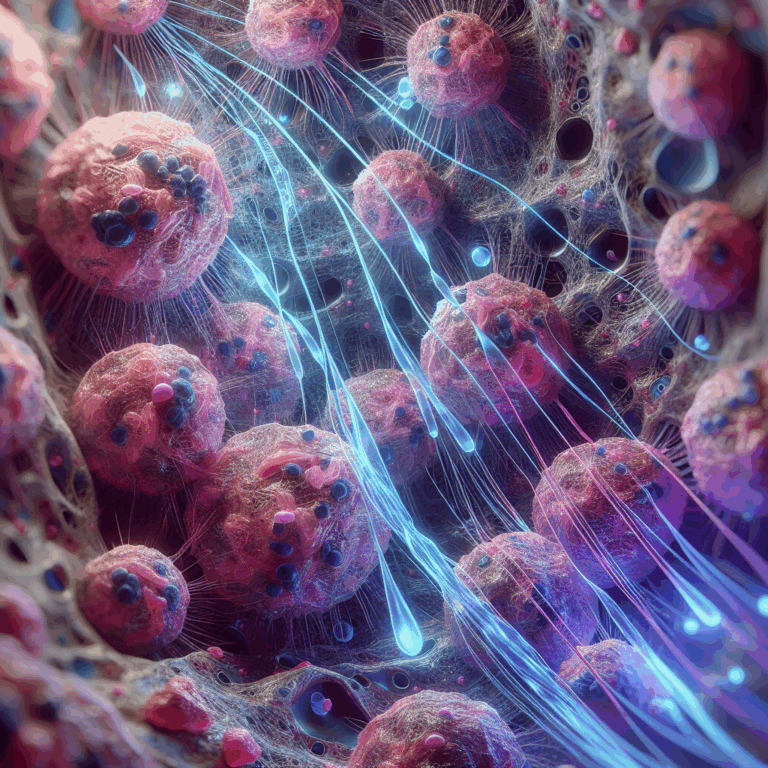
Oncology isn’t the only field in pursuit of valuable information about single rare cells—fields including developmental biology, immunology, stem cell biology, neuroscience, and infectious disease all require studying individual cells. By looking at cells one at a time rather than in bulk, researchers can uncover their genetic makeup and unique behavior, observing subtle but influential traits that would be otherwise hidden.
The key to breakthroughs in all of these fields, experts say, is clear: better single-cell sequencing technology.
To study rare cells, researchers need to separate individual cells from big clumps of human tissue, but doing so threatens the viability of the very cells they hope to analyze. Existing technologies to isolate cells often do so by sawing small pieces off of a larger tissue chunk with a scalpel or razor, potentially damaging the cells so they can no longer be studied properly. Other methods use enzymes to isolate cells, but those procedures are time consuming and can threaten useful cell characteristics. “And for rare cell types, every little loss counts,” says Katalin Susztak, who studies chronic kidney disease at the University of Pennsylvania.
Hypersonic Levitation in Cell Isolation
A new method of isolating and suspending cells, called hypersonic levitation and spinning (HLS), relies on acoustic resonators and micro-electromechanical systems (MEMS) technology to yield biology breakthroughs. The group from Tianjin University in China responsible for its development found that the tool is able to isolate more cells in substantially less time than traditional techniques.
HLS uses a metal probe to transmit billions of vibrations per second into a water mixture surrounding human cancer tissue in a research lab. The resulting “liquid jets” peel a single cancer cell away from thousands of others in the chunk of tissue, an entirely contact-free process. The cell is held in place by the liquid jets—suspended in the fluid but free to spin at any degree—allowing for complete visual analysis from every angle with advanced microscopy.
Xuexin Duan, who leads the Tianjin University group, and his colleagues set out to invent a tool that would not only lessen the threat to cells during the isolation process, but speed the whole process up. They started by considering the fact that living cells are generally surrounded by water. “We asked: could we use a finely tuned physical field within the fluid itself to act as a gentle, invisible hand?” Duan says.
They came up with a small, high-frequency ultrasound probe that uses three MEMS-based resonators to vibrate tissue in a water and enzyme solution. When the device is turned on, a signal generated at 2.49 gigahertz alerts a printed circuit board to send out a high-frequency voltage. Once the voltage reaches the MEMS resonators, an inverse piezoelectric effect is triggered, yielding billions of vibrations per second that generate acoustic waves in the surrounding fluid.
A reflector beneath each resonator bounces the waves in a specific pattern, causing the water-enzyme mixture to start flowing and spinning quickly—creating liquid jets powerful enough to remove a single cell from a clump of tissue, but gentle enough to do so without deterioration. Once a cell is isolated, the same acoustic mechanisms allow it to float and spin freely in the fluid.
While much of the design is unique, HLS is more of a refinement than a completely new device. “This levitation method has been used before for other types of work,” says Z. Hugh Fan, a biomedical MEMS and microfluidics researcher at the University of Florida. He says that HLS “is an improvement, not a dramatic change.” Still, Fan thinks the tool shows serious potential.
The Tianjin University researchers tested their device on human renal cancer tissue samples. Using HLS, the group was able to isolate 90 percent of cells in 15 minutes, but could only do the same for 70 percent of cells in an hour using conventional methods. HLS performed so well because it helps the enzymes penetrate the tissue and break up cells “without the need for harsh mechanical grinding or prolonged enzymatic exposure,” Duan says.
Concerns Over HLS in Single-Cell Research
The biggest concern from University of Pennsylvania’s Susztak is that HLS may pose a threat to cells sensitive to high-frequencies. “Even slight perturbations matter in single-cell work,” she says. “Will the acoustic fields perturb the cell’s biochemistry?”
Duan is confident that his team’s design is safe for fragile cells because they experience a controlled force, not the raw acoustic wave, he claims. “This intense force field is confined to the fluid, not the cell directly.”
Outside experts have more concerns about implementation. Susztak notes that “biological labs are unforgiving” so research tools must be reliable and robust, and MEMS devices in fluid tend to face drift and calibration issues. Cost and ease of access concern Fan, though he thinks that both issues could be solved by business efforts. “How mainstream it will become is really dependent on commercialization,” he says.
For these reasons and others, Duan says that his team has spun HLS into a startup company—Convergency Biotech—with the goal to develop HLS workstations user-friendly enough for any lab. And he’s optimistic about the enterprise. “We believe MEMS-based acoustic tools will become a mainstream component of the biological toolkit,” he says.
Single-cell researchers show similar optimism, but in the company of caution. Susztak considers HLS “a clever tool with genuine promise,” she says, “but it must prove itself in the messy world of real biology.”