Global Breakthrough: FGC2.3 Feline Vocalization Project Nears Record Reads — Over 14,000 Scientists Engage With Cat-Human Translation Research

Global Breakthrough: FGC2.3 Feline Vocalization Project Nears Record Reads — Over 14,000 Scientists Engage With Cat-Human Translation Research

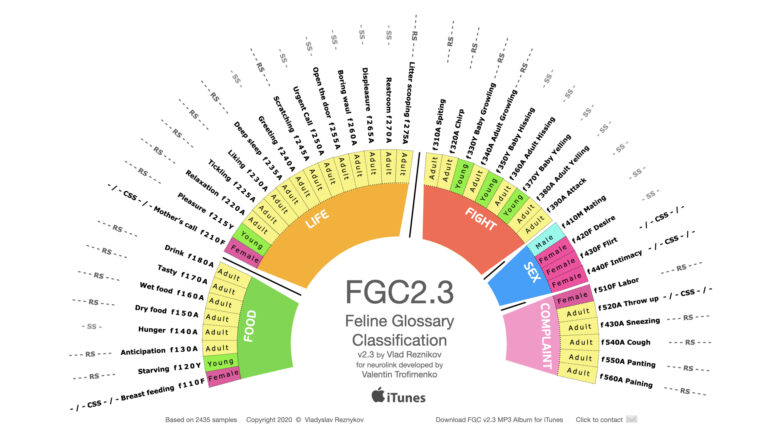
MIAMI, FL — The FGC2.3: Feline Vocalization Classification and Cat Translation Project, authored by Dr. Vladislav Reznikov, has crossed a critical scientific milestone — surpassing 14,000 reads on ResearchGate and rapidly climbing toward record-setting levels in the field of animal communication and artificial intelligence. This pioneering work aims to develop the world’s first scientifically grounded…

Tariff-Free Relocation to the US

Tariff-Free Relocation to the US

EU, China, and more are now in the crosshairs. How’s next? It’s time to act. The Trump administration has announced sweeping tariff hikes, as high as 50%, on imports from the European Union, China, and other major markets. Affected industries? Pharmaceuticals, Biotech, Medical Devices, IVD, and Food Supplements — core sectors now facing crippling costs,…

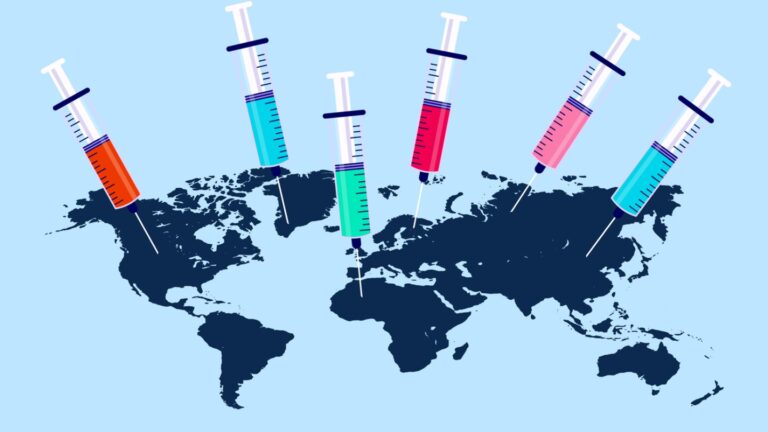
Global Distribution of the NRAs Maturity Levels as of the WHO Global Benchmarking Tool and the ICH data

Global Distribution of the NRAs Maturity Levels as of the WHO Global Benchmarking Tool and the ICH data

This study presents the GDP Matrix by Dr. Vlad Reznikov, a bubble chart designed to clarify the complex relationships between GDP, PPP, and population data by categorizing countries into four quadrants—ROCKSTARS, HONEYBEES, MAVERICKS, and UNDERDOGS depending on National Regulatory Authorities (NRAs) Maturity Level (ML) of the regulatory affairs requirements for healthcare products. Find more details…

An In-Depth Examination of Creatine Use in Combat Sports

An In-Depth Examination of Creatine Use in Combat Sports

A comprehensive review published in the Journal of Dietary Supplements examines the effects of creatine supplementation on athletes in combat sports, highlighting potential benefits such as increased muscular strength and fat-free mass. The study addresses concerns about weight gain and suggests that increases are modest and potentially advantageous. It calls for future research with greater methodological rigor to further understand creatine’s impact on performance and body composition.

Generative AI-Created Medications Take on Superbugs

Generative AI-Created Medications Take on Superbugs

Some today fear that artificial intelligence will one day destroy humanity. But if the rise of the machines doesn’t get us, drug-resistant bacteria just might. These microscopic killers already claim millions of lives each year worldwide, and the world’s arsenal of effective antibiotics is dwindling.

But could one threat be trained perhaps to help stave off the other? A study published today in the journal Cell certainly suggests the possibility. A team led by Jim Collins, MIT professor of biological engineering, showed how generative AI algorithms trained on vast datasets of antibacterial substances could dream up millions of previously unimagined molecules with predicted microbe-killing power—some of which proved potent in mouse experiments.

The researchers synthesized a small subset of these AI-designed molecules and found them lethal to superbugs responsible for drug-resistant gonorrhea and stubborn staphylococcus skin infections.

“It’s a great addition to this emerging field of using AI for antibiotic discovery,” says César de la Fuente, a synthetic biologist at the University of Pennsylvania who was not involved in the research. “It shows quite well how generative AI can produce molecules with real-world activity,” he adds. “It’s elegant and potentially clinically meaningful.”

A social-enterprise non-profit created by Collins, called Phare Bio, now plans to advance these and other AI-discovered antibiotics toward clinical development.

The candidate antibiotics build on earlier finds from Collins’ lab—including halicin, a potent broad-spectrum antibiotic identified in 2020; a more targeted agent called abaucin with activity against Acinetobacter baumannii, a major cause of hospital-acquired infections; and a novel structural class of molecules described last year that proved effective against the superbugs MRSA and VRE.

With the team’s earlier discoveries, however, Collins and his colleagues were still mining existing chemical libraries, using deep-learning models to spot overlooked compounds with antibacterial potential. The new work sets down a new path altogether: rather than searching for hidden gems in familiar territory, the generative AI platform starts from scratch, conjuring entirely new molecular structures absent from any database.

“This is moving from using AI as a discovery tool to using AI as a design tool,” Collins says. The shift, he adds, opens new frontiers in antibiotic discovery—unexplored territory that could harbor the next generation of lifesaving drugs.

Anti-Germ Intelligence Proves Its Mettle

To train their generative AI model, Collins and his colleagues first used a neural network framework to virtually screen more than 45 million chemical fragments—the building blocks of would-be drugs—looking for pieces predicted to have activity against Neisseria gonorrhoeae (the cause of sexually transmitted gonorrhea infections) and Staphylococcus aureus (the germ behind deadly bloodstream infections, pneumonia, and flesh-eating skin disease). Two algorithms then went to work: one assembling the fragments into complete molecular structures, the other predicting which of those structures would pack the strongest antibacterial punch.

Together, the algorithms generated more than 10 million candidate molecules, none of which had ever existed before. But then came what MIT study author and computational biologist Aarti Krishnan describes as “a massive bottleneck”: very few of these prophesied antibiotics could actually be made in the lab.

The researchers manually sifted through the AI hits, filtering for properties suggestive of drug-likeness and synthetic feasibility. They ultimately arrived at a shortlist of around 200 promising designs, 24 of which could be successfully generated. Seven proved to be bona fide antimicrobial agents, as confirmed by laboratory tests, with two showing particularly strong efficacy in mouse models of gonorrhea and staph infections. Notably, each seems to work through a distinct and novel mechanism of action not exploited by existing antibiotics.

“That’s pretty cool,” says Phare co-founder Jonathan Stokes, an antimicrobial chemical biologist at Canada’s McMaster University in Hamilton, Ontario. He praises Collins’ team for unearthing two highly promising antibiotic leads but notes that the labor-intensive trial-and-error process underscores how far the technology still has to go in producing compounds that can be readily synthesized.

“It’s a bit of an elephant in the room,” he says of synthetic tractability in GenAI drug discovery. “Antibiotics, because of the financial disincentives in this space, have to be cheap,” Stokes, who was not involved in the research, says. “They have to be cheap to discover, cheap to develop, and cheap to make. So if there are opportunities to avoid all of these issues with synthetic feasibility, I feel like that is a major advantage.”

Moving From Model to Molecule

To tackle that challenge, Stokes and his colleagues developed a generative AI tool that designs antibiotic candidates with chemical blueprints tailored for real-world manufacturing, not just computer screens. This tool, called SyntheMol, operates within a more limited chemical space than Collins’ GenAI model, choosing only molecules whose building blocks can be synthesized with known, lab-proven reaction steps. That narrows the search parameters to tens of billions of molecules, compared to the 1060 possible structures that Collins’ model explored.

It’s enough, however, for SyntheMol to have already yielded several drug candidates that Stokes and his colleagues, through a startup called Stoked Bio, hope to develop into treatments for bacteria linked to Crohn’s disease and other hard-to-treat conditions.

The team aims to balance the sheer breadth of biochemical possibilities the models can explore with crucial metrics like drug potency, safety, low toxicity, and ease of synthesis. “It’s a multi-objective optimization problem,” says de la Fuente, who advises Phare and builds his own generative AI models to design antimicrobial peptide drugs.

But for now, the tools powering Phare’s discovery efforts—rooted in Collins’ approaches—are already delivering early wins, says Akhila Kosaraju, Phare Bio’s CEO and president. “We are getting substantially more potent and less toxic initial compounds,” she notes. And backed by the U.S. government’s Advanced Research Projects Agency for Health (ARPA-H), along with the philanthropic arm of Google—which is funding Phare to build open-source infrastructure around AI-guided antibiotic design— Kosaraju and her colleagues aim to move the most promising candidates into human trials.

“We are building what we think is the most novel and robust pipeline of antibiotics in the world,” she says.

Research Strengthens Case for Metabolic Advantages of L. paracasei

Research Strengthens Case for Metabolic Advantages of L. paracasei

Lacticaseibacillus paracasei NB23 supplementation significantly improved metabolic health, muscle mass, and lower limb strength in healthy adults, according to a 12-week randomized controlled trial. The study highlighted increased IGF-1 levels, better insulin sensitivity, and enhanced cardiometabolic markers, supporting NB23’s potential as a functional probiotic for metabolic resilience and muscle maintenance.

Prasad Makes a Comeback, Delany Exits, Lilly’s Weight Loss Product Fails to Impress, and Ongoing Issues for Sarepta

Prasad Makes a Comeback, Delany Exits, Lilly’s Weight Loss Product Fails to Impress, and Ongoing Issues for Sarepta

CBER Chief Vinay Prasad reclaimed his job less than two weeks after his mysterious exit; MAHA implementor Gray Delany is out after reportedly sparring with other agency officials over communications strategy; Eli Lilly’s first Phase III readout for oral obesity drug orforglipron missed analyst expectations; and Arrowhead Pharmaceuticals addresses the recent woes of its of partner Sarepta.

Meta’s Innovative Bracelet Interprets Hand Movements

Meta’s Innovative Bracelet Interprets Hand Movements

Imagine the ability to control machines with your mind, instead of having to type on a keyboard or click on a mouse. Now Facebook’s parent company Meta is aiming for the next best thing—a new wristband that can, with the help of AI, infer electrical commands sent from the brain to muscles and convert them into computer signals, all in a noninvasive way. Although experts doubt it will replace keyboards and mice for traditional computing, it might have new uses for a wide range of applications, such as wearable interfaces for mobile devices, or thought-controlled assistive technologies for people with disabilities.

The bracelet from Reality Labs at Meta uses metal contacts placed against the skin to detect electrical signals from muscles—a technique known as surface electromyography (sEMG)—which are generated in response to commands from the brain. The highly sensitive new system transmits this data to a computer using Bluetooth to help it recognize gestures such as pointing and pinching in real time, findings detailed in Nature on 23 July.

The bracelet is not a direct interface with the brain. “It is not a mind-reading system. It cannot make you act in a different way as imposed by your will, it does not connect you to other people neurally, it does not predict your intentions,” says Dario Farina, chair in neurorehabilitation engineering at Imperial College, London, who did not take part in Meta’s research but has tested the technology. (Meta was unable to make anyone available for comment as of press time.)

How AI Enables Meta’s Wristband

Previous “neuromotor” devices, such as the discontinued Myo armband, also sought to use sEMG for computer interfaces. A key challenge these earlier devices faced was how they each needed time-consuming personalized calibration for each user to account for differences in human anatomy and behavior.

See how the device detects thumb swipes, finger taps, and handwriting gestures.Reality Labs at Meta

In contrast, Meta says its bracelet can essentially work off-the-shelf. The key was training deep learning artificial intelligence systems on data from more than 6,000 paid volunteers who wore the device. This generated models that could accurately interpret user input across different people without requiring individual calibration, says Joe Paradiso, head of the Responsive Environments Research Group at the MIT Media Lab, who did not participate in this study.

“The amount of information decoded with this device is very large, far larger than any previous attempt,” Farina says. “The device can recognize handwriting, for example, which would have not been conceivable before.”

An illustration imagines surface electromyography (SEMG) signals working through the hand The wristband uses surface electromyography to non-invasively measure electrical activity of the muscles that control hand gestures.Reality Labs at Meta

A possible concern with using this wristband is how users might not want every hand motion interpreted as input—say, if they had to scratch an itch, or pick up a glass of water. However, the device is trained to recognize only certain commands, while ignoring other gestures. “A potential user of the device can perform any activity of daily living without the risk to activate the device, and yet control the device with the specific gestures for which the device has been trained,” Farina says.

In tests, volunteers who had never previously tried the bracelet could use handwriting gestures to input text at 20.9 words per minute. (In comparison, mobile phone keyboard typing speeds average roughly 36 words per minute.)

Given this interface speed, “I doubt most computer users would rush out to buy this wristband if it becomes commercially available,” says Eben Kirksey, a professor of anthropology at the University of Oxford who studies the interplay of science, technology, and society. “Most people type at around 40 words a minute and highly skilled typists can bang out upwards of 100 words a minute. Since this new wearable device only enables users to write 20 words a minute, I doubt many people will want to take the time to learn how to use this new way to interface with computers.”

Instead, the new study argues the bracelet might prove useful in scenarios where keyboards or mice would be limiting, such as mobile and wearable applications. “It’s not a keyboard replacement. It’s something else, and I think things like this are needed for the computational paradigms that are coming,” Paradiso says.

For example, when it comes to the virtual reality and augmented reality glasses that Meta, Google, and others have pursued, interfaces previously envisioned for these devices include vision-based trackers that track the motions of hands held up in front of users, Paradiso says. However, the fatigue that can set in with this “gorilla arm” approach limits long-term use, and “the need to use space in front of you has its drawbacks,” Paradiso notes.

Because this new bracelet interprets electrical signals instead of motion, it could instead let users keep their hands to their sides and interact with devices using subtle finger motions. “Interfaces like these are needed for the everywhere-computing eyewear that’s emerging,” Paradiso says. “My favorite scenario is on a crowded train with my head-worn display catching up with the news, or communicating with friends. You just nudge it around with your hands by your side. Going for a walk, and so on—same deal.”

Applications for Accessibility

The researchers also suggest the wristband could help people with disabilities better interact with computers, particularly individuals with reduced mobility, muscle weakness, finger amputations, paralysis and more. “Some members of the disabled community have difficulty typing on conventional keyboards, or using computer mice,” says Kirksey, who did not take part in this research. “This device offers a new option that might help some members of this community, who have very specific bodily challenges, interface with computers.”

For such applications, a virtue of the new bracelet is that it is relatively easy to don and doff. In contrast, brain-computer interfaces (BCIs), which also rely on electrical signals from the brain, often require invasive brain surgery. Non-invasive BCIs do exist, such as ones that apply electrodes onto the scalp, “but a wristband is more ergonomic than a skullcap,” Paradiso says.

However, many questions remain before this new technology might help people with disabilities. “This type of wearable assumes typical limb shape and fine motor control,” says Solomon Romney, formerly the head of Microsoft’s Inclusive Design Lab. “As a limb-different person, I am always looking for ways to move activities to my limblet rather than continue to overload my typical hand. How easily can it be adjusted to fit non-typical limbs and-or musculature? How does it filter tremors? How effectively would it work for someone with no hands to wear on their ankle?”

Ultimately, “the main obstacle is large-scale deployment,” Farina says. “To be distributed to millions of individuals, the system needs to be robust across different anatomies and be used with minimal error rate. To match the error rate of a mouse or keyboard in a vast human population is certainly a huge challenge.”