Global Breakthrough: FGC2.3 Feline Vocalization Project Nears Record Reads — Over 14,000 Scientists Engage With Cat-Human Translation Research

Global Breakthrough: FGC2.3 Feline Vocalization Project Nears Record Reads — Over 14,000 Scientists Engage With Cat-Human Translation Research

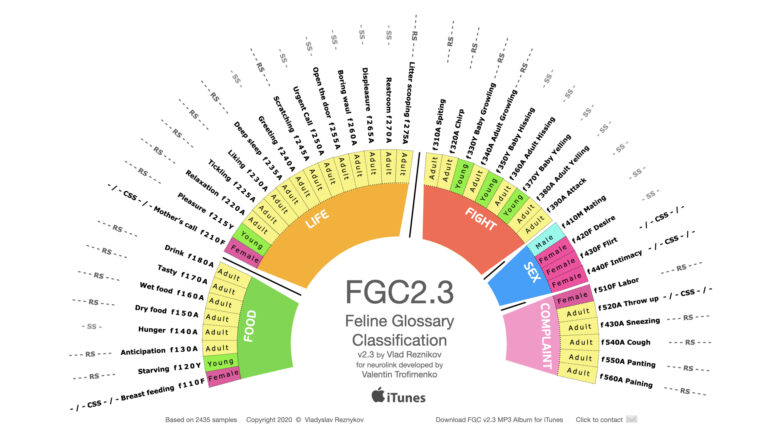
MIAMI, FL — The FGC2.3: Feline Vocalization Classification and Cat Translation Project, authored by Dr. Vladislav Reznikov, has crossed a critical scientific milestone — surpassing 14,000 reads on ResearchGate and rapidly climbing toward record-setting levels in the field of animal communication and artificial intelligence. This pioneering work aims to develop the world’s first scientifically grounded…

Tariff-Free Relocation to the US

Tariff-Free Relocation to the US

EU, China, and more are now in the crosshairs. How’s next? It’s time to act. The Trump administration has announced sweeping tariff hikes, as high as 50%, on imports from the European Union, China, and other major markets. Affected industries? Pharmaceuticals, Biotech, Medical Devices, IVD, and Food Supplements — core sectors now facing crippling costs,…

Global Distribution of the NRAs Maturity Levels as of the WHO Global Benchmarking Tool and the ICH data

Global Distribution of the NRAs Maturity Levels as of the WHO Global Benchmarking Tool and the ICH data

This study presents the GDP Matrix by Dr. Vlad Reznikov, a bubble chart designed to clarify the complex relationships between GDP, PPP, and population data by categorizing countries into four quadrants—ROCKSTARS, HONEYBEES, MAVERICKS, and UNDERDOGS depending on National Regulatory Authorities (NRAs) Maturity Level (ML) of the regulatory affairs requirements for healthcare products. Find more details…

Kava Removed from the Menu in New York City

Kava Removed from the Menu in New York City

Restaurants in New York City can no longer serve kava drinks, thanks to a recent ruling on steeped kava beverages. A federal judge recently ruled in favor of New York City public health and safety officials who shut down two Kavasutra locations for serving kava tea.

Arrowhead Emerges as the RNAi Hero Amidst the Sarepta ‘Downdraft’

Arrowhead Emerges as the RNAi Hero Amidst the Sarepta ‘Downdraft’

Sarepta’s troubles had nothing to do with Arrowhead’s assets, and yet both companies have seen their stock prices decline this past month. BioSpace caught up with Arrowhead’s Chris Anzalone to talk about the biotech’s role as an RNAi pipeline savior.

Streamlined DNA Mutation Detection Through “Electrical Genotyping”

Streamlined DNA Mutation Detection Through “Electrical Genotyping”

A new microfluidic chip simplifies detecting and quantifying DNA by analyzing electrical impedance signals that vary based on DNA flowing across a biosensor inside the chip. The proof-of-concept technique, called electrical genotyping, can accurately detect single-point mutations faster and more simply than traditional genotyping, which typically takes days or weeks and can be prohibitively expensive.

The new tool, developed by scientists at Rutgers University and Yale University, won’t replace all genotyping, but it could still be a powerful, yet affordable, screening tool that one day expands the ability of any clinic’s early detection of rare diseases. “What we’re trying to make is the equivalent of a glucose meter, but for detecting genetic mutations,” says Mehdi Javanmard, a professor in the Rutgers electrical and computer engineering department.

Detecting Hereditary Genetic Mutations

The researchers focused on detecting a hereditary single mutation that causes transthyretin cardiac amyloidosis, a disease that can lead to congestive heart failure. It is underdiagnosed and disproportionately affects people with West African ancestry.

The researchers ran clinical samples of six patients, four of whom had the mutation, through the tool. The initial sample preparation steps amplified the mutated section of DNA. When the four samples with amplified amounts of DNA containing the relevant mutation were run, the biosensor correctly detected the DNA through changes in electrical impedance. It also measured low concentrations of DNA in nonamplified samples lacking the mutation. Javanmard and his colleagues published their findings in June in Nature Communications Engineering.

In general, electrochemical biosensors have advanced research for various applications, including detecting cancer biomarkers, and DNA data storage and synthesis. This study’s detection is done with label-free impedance biosensors. (Labels are like attaching baggage tags to DNA. They are commonly used for accurate detection, but require extra steps that cost time and money.) “The novelty of the sensing component is being able with high sensitivity to detect DNA without any fluorescent tags” or other labels, Javanmard says.

“Instead of 15 steps and a 5-hour-long run with a DNA sequencer, we’re talking about something that’s significantly shorter, a couple of steps on the sample-preparation side and then just one step on the detection side. Within 5 minutes, the detection is performed,” says Javanmard. The simplified sample preparation was developed by Curt Scharfe, a professor of genetics at Yale, and his lab.

DNA Detection Through Electrical Impedance

Before DNA can be detected, it must be prepared using the targeted technique developed by Scharfe’s team. “It’s the amplification process that allows you to differentiate between the wild type [nonmutated] and the mutation,” says Javanmard.

Then the amplified DNA solution, driven by passive capillary flow, washes through the microfluidic channel of the biosensor and across submerged gold electrodes. The channel and the gold electrodes form a sensing circuit. The solution in the channel is modeled as a resistor and the DNA is modeled as a dipole capacitance due to its negatively charged properties and inherent conductivity.

Essentially, the method measures conductivity. The electrical conductivity of a solution containing DNA is different than a solution without it, so the signal can be differentiated.

An external impedance spectroscope sends a low-frequency stimulus (between 10 and 250 kilohertz) to the circuit, generating an electrical field. As the DNA solution flows through the channel, it changes the electrical conductivity, and thus the impedance in the sensing circuit. This rate of impedance change is measured by the sensor as a raw current signal.

That signal is fed into off-chip equipment. First it goes into a transimpedance amplifier that boosts the signal to a more detectable level and converts it into a voltage. Then it enters a lock-in amplifier, which reduces noise and outputs a clear signal by extracting, digitizing, and filtering the input. Finally, the data is analyzed.

As the DNA concentration in the sensing region increases, the rate of change of the output voltage increases too, and the system measures the amount of DNA present. This is what the researchers dub a “DNA quantification score.” To improve the score’s accuracy, they average the readouts from four low-frequency signals sent to the circuit.

For both nonmutated and mutated samples, the gold standard biological readout is “fluorescence intensity correlated with the electrical DNA quantification score,” notes Javanmard. Their simpler electrical-detection technique could replace the more manual biological readout and be more portable in resource-constrained settings.

The label-free technique itself is not new, but “there’s no one-size-fits-all electrical impedance sensor,” says Javanmard. He also says it’s a combination of how the measurement was performed, selecting the right mix of excitation frequencies for impedance, and postmeasurement data analytics that makes their sensor optimized and novel.

To get beyond a proof of concept, the chip’s sensitivity to detect DNA will still need to be improved. The study authors believe one approach is to reduce the sensing area, which creates a greater threshold difference between a DNA impedance signal and a no-DNA signal.

They would also need to bring the electronics and biological amplification on-chip. Javanmard said they’ve already shown that it’s possible to miniaturize the off-chip electronics in a device made by RizLab Health, a company spun off from his lab.

This technique could also have applications beyond medical diagnostics. Javanmard notes, “as DNA storage becomes more and more advanced, there will be a need for technologies for accurate readout and error control. Rapid and advanced DNA biosensors will become a necessity.”

Commemorating 25 Years of Innovative Oral Microbiome Research: The Journey of NZ’s BLIS Technologies

Commemorating 25 Years of Innovative Oral Microbiome Research: The Journey of NZ’s BLIS Technologies

BLIS Technologies, founded on the pioneering research of Professor John Tagg, has been at the forefront of oral microbiome science for 25 years, with a focus on developing probiotics like BLIS K12 and BLIS M18 to combat oral pathogens and enhance immune health. Dr. John Hale, a key figure in the company, highlights the success of BLIS K12 in reducing throat infections and its potential in sports nutrition, while BLIS M18 targets dental health by reducing plaque and gum disease. The company continues to innovate, expanding its probiotic repertoire beyond the oral cavity to include skin health, while maintaining its commitment to oral health research.

Neural Tissue-Infused Chips Seek to Enhance Energy Efficiency in AI Systems

Neural Tissue-Infused Chips Seek to Enhance Energy Efficiency in AI Systems

As generative AI systems advance, so too does their appetite for energy. Training and running large language models consumes vast amounts of electricity. AI’s energy demand is projected to double in the next five years, gobbling up 3 percent of total global electricity consumption. But what if AI chips could function more like the human brain, processing complex tasks with minimal energy? A growing chorus of scientists and engineers believes that the key might lie in organoid intelligence.

AI enthusiasts were introduced to the concept of brain-inspired chips in July at the United Nations’ AI for Good Summit in Geneva. There, David Gracias, a professor of chemical and biomolecular engineering at Johns Hopkins University, gave a talk discussing the latest research he’s led on biochips and their applications to AI. Focused on nanotech, intelligent systems, and bioengineering, Gracias’s research team is among the first to build a functioning biochip that combines neural organoids with advanced hardware, enabling chips to run on and interact with living tissue.

Organoid intelligence is an emerging field that blends lab-grown neurons with machine learning to create a new form of computing. (The term ‘organoid intelligence’ was coined by Johns Hopkins researchers including Thomas Hartung.) The neurons, called organoids, are more specifically three-dimensional clusters of lab-grown brain cells that mimic neural structures and functions. Some researchers believe that so-called biochips—organoid systems that integrate living brain cells into hardware—have the potential to outstrip silicon-based processors like CPUs and GPUs in both efficiency and adaptability. If commercialized, experts say biochips could potentially reduce the staggering energy demands of today’s AI systems while enhancing their learning capabilities.

“This is an exploration of an alternate way to form computers,” Gracias says.

How Do Biochips Mimic the Brain?

Traditional chips have long been confined to two-dimensional layouts, which can limit how signals flow through the system. This paradigm is starting to shift, as chipmakers are now developing 3D chip architectures to increase their devices’ processing power.

Similarly, biochips are designed to emulate the brain’s own three-dimensional structure. The human brain can support neurons with up to 200,000 connections—levels of interconnectivity Gracias says flat silicon chips can’t achieve. This spatial complexity allows biochips to transmit signals across multiple axes, which could enable more efficient information processing.

Gracias’s team developed a 3D electroencephalogram (EEG) shell that wraps around an organoid, enabling richer stimulation and recording than conventional flat electrodes. This cap conforms to the organoid’s curved surface, creating a better interface for stimulating and recording electrical activity.

To train organoids, the team uses reinforcement learning. Electrical pulses are applied to targeted regions. When the resulting neural activity matches a desired pattern, it’s reinforced with dopamine, the brain’s natural reward chemical. Over time, the organoid learns to associate certain stimuli with outcomes.

Once a pattern is learned, it can be used to control physical actions, such as steering a miniature robot car through strategically placed electrodes. This demonstrates neuromodulation—the ability to produce predictable responses from the organoid. These consistent reactions lay the groundwork for more advanced functions, such as stimulus discrimination, which is essential for applications like facial recognition, decision-making, and generalized AI inference.

Gracias’s team is in the early stages of developing miniature self-driving cars controlled by biochips: A proof of concept that the system can act as a controller. This experimental work suggests future roles in robotics, prosthetics, and bio-integrated implants that communicate with human tissue.

These systems also hold promise in disease modeling and drug testing. Gracias’s group is developing organoids that mimic neurological diseases like Parkinson’s. By observing how these diseased tissues respond to various drugs, researchers can test new treatments in a dish rather than relying solely on animal models. They can also uncover potential mechanisms of cognitive impairment that current AI systems fail to simulate.

Because these chips are alive, they require constant care: temperature regulation, nutrient feeding, and waste removal. Gracias’s team has kept integrated biochips alive and functional for up to a month with continuous monitoring.

Two men, founders of Swiss startup FinalSpark, pose in a laboratory. Fred Jordan (left) Martin Kutter are the founders of FinalSpark, a Swiss startup developing biochips that the company claims can store data in living neurons.FinalSpark

Challenges in Scaling Biochip Technology

Yet significant challenges remain. Biochips are fragile and high maintenance, and current systems depend on bulky lab equipment. Scaling them down for practical use will require biocompatible materials and technologies that can autonomously manage life-supporting functions. Neural latency, signal noise, and the scalability of neuron training also present hurdles for real-time AI inference.

“There are a lot of biological and hardware questions,” Gracias says.

Meanwhile, some companies are testing the waters. Swiss startup FinalSpark claims its biochip can store data in living neurons—a milestone it calls a “bio bit,” says Ewelina Kurtys, a scientist and strategic advisor at the company. This step suggests biological systems could one day perform core computing functions traditionally handled by silicon hardware.

FinalSpark aims to develop remote-accessible bioservers for general computing in about a decade. The goal is to match digital processors in performance while being exponentially more energy-efficient. “The biggest challenge is programming neurons, as we need to figure out a totally new way of doing this,” Kurtys says.

Still, transitioning from the lab to industry will require more than just technical breakthroughs. ”We have enough funding to keep the lab running,” Gracias says. “But for the research to take off, more funding is needed from Silicon Valley.”

Whether biochips will augment or replace silicon remains to be seen. But as AI systems demand more and more power, the idea of chips that think—and sip energy—like brains is becoming increasingly attractive.

For Gracias, that technology could be shipped to market sooner than we think. “I don’t see any major show stoppers on the way to implementing this,” he says.