Global Breakthrough: FGC2.3 Feline Vocalization Project Nears Record Reads — Over 14,000 Scientists Engage With Cat-Human Translation Research

Global Breakthrough: FGC2.3 Feline Vocalization Project Nears Record Reads — Over 14,000 Scientists Engage With Cat-Human Translation Research

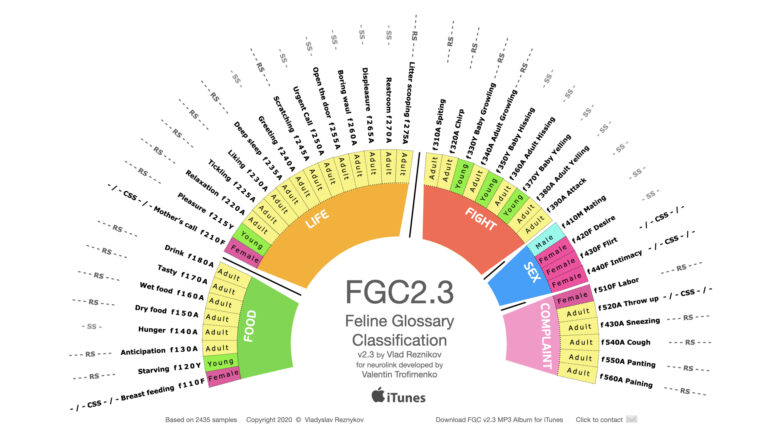
MIAMI, FL — The FGC2.3: Feline Vocalization Classification and Cat Translation Project, authored by Dr. Vladislav Reznikov, has crossed a critical scientific milestone — surpassing 14,000 reads on ResearchGate and rapidly climbing toward record-setting levels in the field of animal communication and artificial intelligence. This pioneering work aims to develop the world’s first scientifically grounded…

Tariff-Free Relocation to the US

Tariff-Free Relocation to the US

EU, China, and more are now in the crosshairs. How’s next? It’s time to act. The Trump administration has announced sweeping tariff hikes, as high as 50%, on imports from the European Union, China, and other major markets. Affected industries? Pharmaceuticals, Biotech, Medical Devices, IVD, and Food Supplements — core sectors now facing crippling costs,…

Global Distribution of the NRAs Maturity Levels as of the WHO Global Benchmarking Tool and the ICH data

Global Distribution of the NRAs Maturity Levels as of the WHO Global Benchmarking Tool and the ICH data

This study presents the GDP Matrix by Dr. Vlad Reznikov, a bubble chart designed to clarify the complex relationships between GDP, PPP, and population data by categorizing countries into four quadrants—ROCKSTARS, HONEYBEES, MAVERICKS, and UNDERDOGS depending on National Regulatory Authorities (NRAs) Maturity Level (ML) of the regulatory affairs requirements for healthcare products. Find more details…

Revolutionary Advancements in Stretchable OLED Technology

Revolutionary Advancements in Stretchable OLED Technology

Wearable displays are catching up with phones and smart watches. For decades, engineers have sought OLEDs that can bend, twist, and stretch while maintaining bright and stable light. These displays could be integrated into a new class of devices—woven into clothing fabric, for example, to show real-time information, like a runner’s speed or heart rate, without breaking or dimming.

But engineers have always encountered a trade-off: the more you stretch these materials, the dimmer they become. Now, a group co-led by Yury Gogotsi, a materials scientist at Drexel University in Philadelphia, has found a way around the problem by employing a special class of materials called MXenes—which Gogotsi helped discover—that maintain brightness while being significantly stretched.

The team developed an OLED that can stretch to twice its original size while keeping a steady glow. It also converts electricity into light more efficiently than any stretchable OLED before it, reaching a record 17 percent external quantum efficiency—a measure of how efficiently a device turns electricity into light.

The “Perfect Replacement”

Gogotsi didn’t have much experience with OLEDs when, about five years ago, he teamed up with Tae-Woo Lee, a materials scientist at Seoul National University, to develop better flexible OLEDs, driven by the ever-increasing use of flexible electronics like foldable phones.

Traditionally, the displays are built from multiple stacked layers. At the base, a cathode supplies electrons that enter the adjacent organic layers, which are designed to conduct this charge efficiently. As the electrons move through these layers, they meet positive charge injected by an indium tin oxide (ITO) film. The moment these charges combine, the organic material releases energy as light, creating the illuminated pixels that make up the image. The entire structure is sealed with a glass layer on top.

The ITO film—adhered to the glass—serves as the anode, allowing current to pass through the organic layers without blocking the generated light. “But it’s brittle. It’s ceramic, basically,” so it works well for flat surfaces, but can’t be bent, Gogotsi explains. There have been attempts to engineer flexible OLEDs many times before, but they failed to meaningfully overcome both flexibility and brightness limitations.

Gogotsi’s students started by creating a transparent, conducting film out of a MXene, a type of ultra-thin and flexible material with metal-like conductivity. The material is unique in its inherent ability to bend because it’s made from many two-dimensional sheets that can slide relative to each other without breaking. The film—only 10 nanometers thick—“appeared to be this perfect replacement for ITO,” Gogotsi says.

Through experimentation, Gogotsi and Lee’s shared team found that a mix of the MXene and silver nanowire would actually stretch the most while maintaining stability. “We were able to double the size, achieving 200 percent stretching without losing performance,” Gogotsi says.

A bi-axially twisted exciplex-assisted phosphorescent film deposited on a small stretchable substrate. The new material can also be twisted without losing its glow.Source image: Huanyu Zhou, Hyun-Wook Kim, et al.

And the new MXene film was not only more flexible than ITO, but also increased brightness by almost an order of magnitude by making the contact between the topmost light-emitting organic layer and the film more efficient.

Unlike ITO, the surface of MXenes can be chemically adjusted to make it easier for electrons to move from the electrode into the light-emitting layer. This more efficient electron flow significantly increases the brightness of the display, as evidenced by an external quantum efficiency of 17 percent, which the group claims is a record for stretchable OLEDs.

“Achieving those numbers in intrinsically stretchable OLEDs under substantial stretching is quite significant,” says Seunghyup Yoo, who runs the Integrated Organic Electronics Laboratory at South Korea’s KAIST. An external quantum efficiency of 20 percent is an important benchmark for this kind of device because it is the upper limit of efficiency dictated by the physical properties of light generation, Yoo explains.

To increase illumination, the researchers went beyond working with MXene. Lee’s group developed two additional organic layers to add into the middle of their OLED—one that directs positive charges to the light-emitting layer, ensuring that electricity is used more efficiently, and one that recycles wasted energy that would normally be lost, boosting overall brightness.

Together, the MXene layer and two organic layers allow for a notably bright and stable OLED, even when stretched. Gogotsi thinks the subsequent OLED is “very successful” because it combines both brightness and stretchability, while, historically, engineers have only been able to achieve one or the other.

“The performance that they are able to achieve in this work is an important advancement,” says Sihong Wang, a molecular engineer at the University of Chicago who also develops stretchable OLED materials. Wang also notes that the 200 percent stretchability that Gogotsi’s group attained is beyond robust for wearable applications.

Wearables and Healthcare

A stretchable OLED that maintains its brightness has uses in many settings, including industrial environments, robotics, wearable clothing and devices, and communications, Gogotsi says, although he’s most excited about its adoption in health-monitoring devices. He sees a near future in which displays for diagnostics and treatment become embedded in clothing or “epidermal electronics,” comparing their function to smart watches.

Before these displays can come to market, however, stability issues inherent to all stretchable OLEDs need to be solved, Wang says. Current materials are not able to sustain light emissions for long enough to serve customers in the ways they require.

Finding housings to protect them is also a problem. “You need a stretchable encapsulation material that can protect the central device without allowing oxygen and moisture to permeate,” Wang says.

Yoo agrees: He says it’s a tough problem to solve because the best protective layers are rigid and not very stretchable. He notes yet another challenge in the way of commercialization, which is “developing stretchable displays that do not exhibit image distortion.”

Regardless, Gogotsi is excited about the future of stretchable OLEDs. “We started with computers occupying the room, then moved to our desktops, then to laptops, then we got smartphones and iPads, but still we carry stuff with us,” he says. “Flexible displays can be on the sleeve of your jacket. They can be rolled into a tube or folded and put in your pocket. They can be everywhere.”

EMA and FDA Establish Unified Guidelines for Artificial Intelligence in Medical Development

EMA and FDA Establish Unified Guidelines for Artificial Intelligence in Medical Development

EMA and the U.S. Food and Drug Administration (FDA) have jointly identified ten principles for good artificial intelligence (AI) practice in the medicines lifecycle.The…, “The guiding principles of good AI practice in drug development are a first step of a renewed EU-US cooperation in the field of novel medical technologies. The…, The use of AI technologies across the medicines lifecycle has increased significantly in recent years. As emphasised in the European Commission’s Biotech Act proposal, AI holds…

CDER SBIA On-Demand Learning Resource Hub

CDER SBIA On-Demand Learning Resource Hub

FDA’s CDER Small Business and Industry Assistance (SBIA) is making available our YouTube learning library – now hundreds of our recordings are readily accessible.

Innovative Machine Learning System Tracks Patient Discomfort Levels Throughout Surgical Procedures

Innovative Machine Learning System Tracks Patient Discomfort Levels Throughout Surgical Procedures

This article is part of our exclusive IEEE Journal Watch series in partnership with IEEE Xplore.

In the operating room, patients undergoing procedures with local anesthesia, while still conscious, may have difficulty expressing their levels of pain. Some, such as infants or people with dementia, may not be able to communicate these feelings at all. In the search for a better way to monitor patients’ pain, a team of researchers has developed a contactless method that analyzes a combination of patients’ heart rate data and facial expressions to estimate the pain they’re feeling. The approach is described in a study published 14 November in the IEEE Open Journal of Engineering in Medicine and Biology.

Bianca Reichard, a researcher at the Institute for Applied Informatics in Leipzig, Germany, notes that camera-based pain monitoring sidesteps the need for patients to wear sensors with wires, such as ECG electrodes and blood pressure cuffs, which could interfere with the delivery of medical care.

To create their contactless approach, the researchers created a machine-learning algorithm capable of analyzing aspects of pain that can be detected visually by a camera. First, the algorithm analyzes the nuances of a person’s facial expressions to estimate their pain levels.

The system also uses heart rate data via a technique called remote photoplethysmogram (rPPG), which involves shining a light on a person’s skin. The amount of light reflected back can be used to detect changes in blood volume within their vessels. The researchers initially considered 15 different heart-rate variability parameters measured by rPPG to include in their model and selected the top seven that are statistically most relevant to pain prediction, such as heart rate maximums, minimums, and intervals.

Pain-Prediction Model Training Datasets

The team used two different datasets to train and test their pain-prediction model. One is a well-established and widely used database that measures pain called the BioVid Heat Pain Database. Researchers created this dataset in 2013 through experiments in which thermodes induced incremental, measurable temperature increases on individuals’ skin. The researchers then captured the participants’ physical responses to the corresponding pain that they felt.

The second dataset was developed by the researchers for this new work. Twenty-nine patients undergoing heart procedures involving insertion of a catheter were surveyed about their pain levels at five-minute intervals.

Importantly, most other pain-prediction algorithms have been trained using very short video clips, but Reichard and her team specifically used longer training videos (ranging from 30 minutes to 3 hours) of realistic surgery scenarios to train their model. For instance, the training videos used may have included scenarios where lighting may not be ideal, or the patient’s face may be partially obscured from the camera at times. “This reflects a more realistic clinical situation compared to laboratory datasets,” Reichard explains.

Tests of their model show that it has a pain-prediction accuracy of about 45 percent. Reichard says she is surprised that the model is so accurate, given the number of disruptions that occurred throughout the raw video footage, such as a patient moving on the operating table or changes in the camera angle. While many previously developed pain-prediction models can achieve higher accuracies, those were trained using short video clips that are “ideal” with no visual obstructions. Instead, this research team used less-than-ideal—but more realistic—video footage to train their model.

What’s more, Reichard notes that the team used a fairly simple statistical machine-learning model. “Using more complex approaches, for example, based on neural networks, would most likely further improve performance,” she says.

Reichard says she finds this type of research—which could support both patients and medical staff—meaningful and is planning on developing similar contactless systems for measuring patients’ vital signs using radar in medical settings, in future work.