Global Breakthrough: FGC2.3 Feline Vocalization Project Nears Record Reads — Over 14,000 Scientists Engage With Cat-Human Translation Research

Global Breakthrough: FGC2.3 Feline Vocalization Project Nears Record Reads — Over 14,000 Scientists Engage With Cat-Human Translation Research

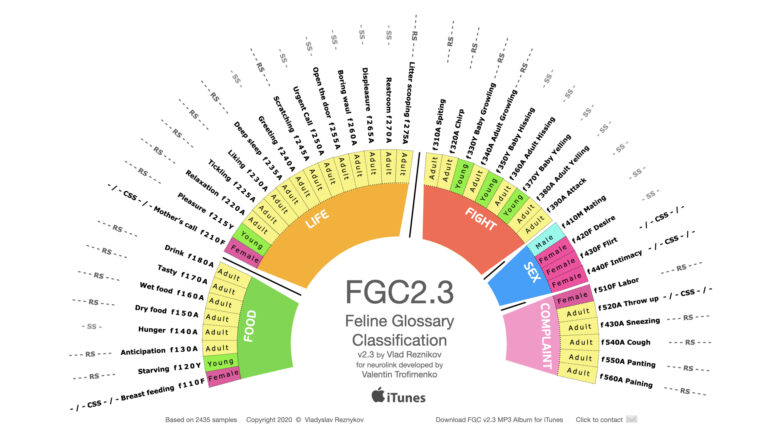
MIAMI, FL — The FGC2.3: Feline Vocalization Classification and Cat Translation Project, authored by Dr. Vladislav Reznikov, has crossed a critical scientific milestone — surpassing 14,000 reads on ResearchGate and rapidly climbing toward record-setting levels in the field of animal communication and artificial intelligence. This pioneering work aims to develop the world’s first scientifically grounded…

Tariff-Free Relocation to the US

Tariff-Free Relocation to the US

EU, China, and more are now in the crosshairs. How’s next? It’s time to act. The Trump administration has announced sweeping tariff hikes, as high as 50%, on imports from the European Union, China, and other major markets. Affected industries? Pharmaceuticals, Biotech, Medical Devices, IVD, and Food Supplements — core sectors now facing crippling costs,…

Global Distribution of the NRAs Maturity Levels as of the WHO Global Benchmarking Tool and the ICH data

Global Distribution of the NRAs Maturity Levels as of the WHO Global Benchmarking Tool and the ICH data

This study presents the GDP Matrix by Dr. Vlad Reznikov, a bubble chart designed to clarify the complex relationships between GDP, PPP, and population data by categorizing countries into four quadrants—ROCKSTARS, HONEYBEES, MAVERICKS, and UNDERDOGS depending on National Regulatory Authorities (NRAs) Maturity Level (ML) of the regulatory affairs requirements for healthcare products. Find more details…

Integrating Financing Strategies in Biotech: Transitioning from Grants to Family Offices

Integrating Financing Strategies in Biotech: Transitioning from Grants to Family Offices

In this episode of Denatured, you’ll listen to Ram May-Ron, managing partner at FreeMind Group, and Ravi Kiron, managing director at Biopharma Strategy Advisors. We’ll be speaking about how to combine nondilutive funding and family office money into a unified strategy that gets companies through the drug development valley of death.

Understanding UniQure’s Setback, the Rejection Faced by REGENXBIO, Sarepta’s Ingram Resignation, and Additional Insights

Understanding UniQure’s Setback, the Rejection Faced by REGENXBIO, Sarepta’s Ingram Resignation, and Additional Insights

UniQure and REGENXBIO are both dealing with FDA setbacks for their respective gene therapies, as regulatory experts question the FDA’s decision-making processes; CBER director Vinay Prasad is under probe for allegedly fostering a toxic workplace; Sarepta CEO Doug Ingram is stepping down after several years of tumult at the top of the muscular dystrophy–focused company; and Eli Lilly again tops Novo Nordisk in a weight loss trial.

Innovative “Cyborg” Tissue May Accelerate Development of Treatments for Type 1 Diabetes

Innovative “Cyborg” Tissue May Accelerate Development of Treatments for Type 1 Diabetes

Lab-grown cell therapies for diabetes are edging toward the clinic. Researchers can now coax stem cells to behave like pancreatic islets, the tiny clusters of cells that regulate blood sugar. But even the most promising candidate therapies still need months inside a patient’s body to fully mature and work reliably—and some never quite get there.

Now researchers have found a way to watch—and even gently steer—that maturation in the lab.

A team led by Harvard bioengineer Jia Liu and University of Pennsylvania stem-cell biologist Juan Alvarez embedded soft, stretchable electronics into the tiny clusters to create “cyborg” islet organoids. Woven through with a flexible web of microelectrodes, the miniature pancreas-like tissue can eavesdrop on the electrical chatter of individual lab-grown cells for months as they mature, learning to sense glucose and release hormones in tightly coordinated bursts.

That electrical activity is essential. Islets are part of the body’s neuroendocrine system: Like neurons in the brain, their cells fire voltage-driven signals—and those electrical spikes trigger the release of insulin and glucagon, the twin hormones that stabilize blood sugar levels.

The cyborg islets helped the researchers tease apart how the two main cell types that make up islets—insulin-producing beta cells and glucagon-secreting alpha cells—pass through distinct electrical maturation stages before settling into the synchronized firing patterns seen in mature tissue. Reporting 19 February in Science, the researchers also showed how exposures to rhythmic daily glucose cycles and brief pulses of electrical stimulation sharpened the glucose responsiveness of the cells, suggesting that the road to islet maturity can be engineered, not merely observed.

“It is a testimony of the magic that can happen when two very different fields—beta-cell biology and nano-electronics—collide,” says Torsten Meissner, a stem-cell-therapy researcher at Beth Israel Deaconess Medical Center who was not involved in the research.

Silicon Meets Stem Cells

Integrating flexible bioelectronics directly into lab-made islets opens the door to several practical applications, says Alvarez. For one, the approach could accelerate efforts to refine stem-cell-differentiation recipes, so that lab-grown islets are closer to maturity and “can hit the ground running when transplanted,” he explains.

The embedded electronics could also provide a built-in way to monitor the performance of implanted cell therapies—or even one day form the basis of a true “bionic” pancreas system that automatically stimulates cells to sharpen their insulin response when blood sugar levels begins to rise.

“This is really the future,” Liu says. “I think flexible, stretchable, soft electronics integrated with organoids should become the gold standard for next-generation cell therapies, because you don’t want to transplant large numbers of cells if you have no way to monitor or control what they’re doing.”

Liu has been moving toward this vision for more than a decade, beginning with early work he did as a graduate student on syringe-injectable mesh electronics designed to blend into living brain tissue for long-term neural recording. Instead of rigid probes that scar the brain, the porous, ultraflexible meshes were built to match the softness of cells and move with them.

Together with his Harvard colleagues, Liu first applied the concept to organoids in 2019. The researchers showed that by weaving the stretchable electronics into flat sheets of stem cells as they folded themselves into three-dimensional mini-organs, the devices could become an integral part of the tissue itself. Early demonstrations focused on cardiac tissue, tracking the coordinated electrical waves that drive beating heart cells. Subsequent work pushed the platform into brain organoids and even developing embryos.

How Stem Cells Could Cure Diabetes

Now, with pancreatic islets, Liu is bringing the technology to one of regenerative medicine’s most urgent challenges: building replacement cells for people with type 1 diabetes who, because of an immune system that turns on itself, have lost the cells necessary to keep blood sugar in balance.

Important hurdles remain. Most islet-cell therapies still require lifelong treatment with immune-suppressing drugs, restricting transplants to only the most severe cases in which patients can no longer manage their diabetes with insulin alone. Companies are pursuing two main workarounds: encasing cells in protective capsules or genetically engineering them to evade immune attack. But encapsulation efforts have been plagued by device failures, and gene-edited “stealth” cells remain in the early stages of development.

That is not to say the field has lacked breakthroughs.

Last year, Vertex Pharmaceuticals announced that a full dose of its stem-cell-derived islet therapy, named Zimislecel, had helped people with severe type 1 diabetes produce their own insulin again, enabling 10 of 12 study participants to stop taking insulin injections altogether. The results were hailed as a watershed moment: evidence that lab-grown cells can work inside the human body and a glimpse of a future in which a virtually limitless supply of replacement islets could free the field from its reliance on scarce donor pancreases.

But while the transplanted cells eventually performed as well as fully mature islets taken from deceased donors, it took months inside patients’ bodies for them to reach that level of function—and even then, they didn’t work for everybody.

Microscopic view of a device's embedded high density electrode array inside a cyborg pancreatic organoid. Passing light through the cyborg organoid while it’s under a microscope shows the flexible electronic device. Qiang Li et al.

Toward Smarter Cell Therapies

That is where the cyborg islets from Liu and Alvarez could make a difference. They won’t address the immune suppression challenge. But they could sharpen the cell product itself.

First, by providing a continuous, single-cell readout of electrical activity, the devices could help companies like Vertex fine-tune differentiation protocols in the manufacturing process—testing growth factors, for instance, or electrical stimulation patterns, and quickly identifying which combinations produce the most mature cells.

“Neuroendocrine connections are missing from current stem-cell differentiation protocols,” notes Omid Veiseh, a bioengineer at Rice University who studies diabetes cell therapies but was not involved in the research. Incorporating cues like those delivered by the embedded electronics “could further enhance differentiation trajectories,” he says. “It’s really innovative.”

Second, the bioelectronic scaffolds could one day act as built-in health monitors, providing real-time feedback on islet performance so clinicians can adjust treatment if function begins to falter—a strategy also being explored by companies such as Minutia, though using different device-based approaches.

And third, by coupling sensing with stimulation, the system points toward a closed-loop future: engineered islets equipped with AI-driven sensors that detect rising glucose and automatically boost insulin output through targeted electrical pulses that nudge the cells back on track.

“I see a lot of value here,” says Jeffrey Millman, a bioengineer at Washington University who helped develop the protocol used to create Vertex’s stem-cell-derived therapy and continues to work on improving the maturation and function of lab-grown islets.

But with major engineering, safety, and regulatory questions still to be resolved, don’t expect cyborg islets to enter clinical trials anytime soon, he cautions. In Millman’s view, the near-term payoff is far more practical: using the system to fine-tune differentiation in the lab to produce islets that secrete insulin more powerfully, respond faster to glucose swings, and require fewer cells to achieve the same therapeutic effect.

It may not be as flashy as a high-tech, closed-loop implant, Millman notes, but getting the cells right from the start should yield better therapies in the end.

Xiangyi Cheng Introduces Augmented Reality to Educational and Healthcare Settings

Xiangyi Cheng Introduces Augmented Reality to Educational and Healthcare Settings

When Xiangyi Cheng published her first journal paper as a principal investigator in IEEE Access in 2024, it marked more than a professional milestone. For Cheng, an IEEE member and an assistant professor of mechanical engineering at Loyola Marymount University, in Los Angeles, it was the latest waypoint in a career shaped by curiosity, persistence, and a belief that technology should serve people—not the other way around.

The paper’s title was “Mobile Devices or Head-Mounted Displays: A Comparative Review and Analysis of Augmented Reality in Healthcare.”

XIANGYI CHENG

Employer

Loyola Marymount University, in Los Angeles

Title

Assistant professor of mechanical engineering

Member grade

Member

Alma maters

China University of Mining and Technology; Texas A&M University

Cheng’s work spans robotics, intelligent systems, human-machine interaction and artificial intelligence. It has applications in patient-specific surgical planning, an approach whereby treatment is customized to the anatomy and clinical needs of each individual.

Her research also covers wearables for rehabilitation and augmented-reality-enhanced engineering education.

The throughline of her career is sound judgment based on critical thinking. She urges her students to avoid the temptation to accept the answers they’re given by AI without cross-checking them against their own foundational understanding of the subject matter.

“AI can give you ideas,” Cheng says, “but it should never lead your thinking.”

That principle—honed through uncertainty, disciplinary shifts, and hard-earned confidence—has made Cheng an emerging voice in applied intelligent systems and a thoughtful educator preparing students for an AI-saturated world.

From Xi’an to Beijing: A mind drawn to mathematics

Cheng, born in Xi’an, China, grew up in a household shaped by her parents’ disparate careers. Her father was a mining engineer, and her mother taught Chinese and literature at a high school.

“That contrast between logical and literary thinking helped me understand myself early,” Cheng says. “I liked math, and STEM felt natural to me.”

Several teachers reinforced her inclination, she says, particularly a math teacher whose calm, fair approach emphasized reasoning over punishments such as detention for misbehavior or failure to complete assignments.

“It wasn’t about being right,” Cheng says. “It was about thinking clearly.”

She moved to Beijing in 2011 to attend the China University of Mining and Technology , where she studied mechanical engineering. After graduating with a bachelor’s degree in 2015, she was unsure where the field would take her.

An IEEE paper changed her trajectory

Later in 2015, she traveled to the United States to study at Case Western Reserve University, in Cleveland.

She initially viewed the move as exploratory rather than a long-term commitment.

“I wasn’t thinking about a Ph.D.,” she says. “I wasn’t even sure research was for me.”

That uncertainty shifted in 2017, when Cheng submitted her “IntuBot: Design and Prototyping of a Robotic Intubation Device” paper to the IEEE International Conference on Robotics and Automation (ICRA)—which was accepted.

“AI can give you more possibilities, but thinking is still our responsibility.”

Intubation is a procedure in which an endotracheal tube is inserted into a patient’s airway—usually through the mouth—to help them breathe. Because placing the tube correctly is not simple and usually must be done quickly, it requires training. That’s why research into robotic or assisted intubation systems focuses on improving speed, accuracy, and safety.

She presented her findings at ICRA in 2018, giving her early exposure to a global research community.

“That acceptance gave me confidence,” she recalls. “It showed me I could contribute to the field.”

Her advisor at Case Western encouraged her to switch from the mechanical engineering master’s program to the Ph.D. track. When the advisor moved to Texas A&M University, in College Station, in 2019, Cheng decided to transfer. She completed her Ph.D. in mechanical engineering at Texas A&M in 2022.

Although she didn’t earn a degree from Case Western, she credits her experience there with clarifying her professional direction.

Shortly after graduating with her Ph.D., Cheng was hired as an assistant professor of mechanical engineering at Ohio Northern University, in Ada. She left in 2024 to become an assistant professor at Loyola Marymount.

Engineering for the body—and the classroom

Cheng’s research focuses on human-centered engineering, particularly in health care. One of her major projects addresses syndactyly, a congenital condition in which a newborn’s fingers are fused at birth. Surgeons rely on their experience to estimate the size and shape of skin grafts to be taken from another part of the body for the corrective surgery.

She is developing technology to scan the patient’s hand, extract anatomical landmarks, and use finite element analysis—a computer-based method for predicting how a physical object will behave under real-world conditions—to determine the optimal graft size and shape.

Smiling portrait of Xiangyi Cheng. Xiangyi Cheng designs human-centered intelligent systems with applications in health care and education.Xiangyi Cheng

“Everyone’s hand is different,” Cheng says. “So the surgery should be personalized.”

Another project centers on developing smart gloves to assist with hand rehabilitation, pairing the unaffected hand with the injured one so the person’s natural motion can help guide therapy.

She also is exploring augmented reality in engineering education, using immersive visualization and AI tools to help students grasp three-dimensional concepts that are difficult to convey through traditional learning tools. Such visualization lets students see and interact with a digital world as if they’re inside it instead of viewing it on a flat screen.

Teaching balance in an AI-driven world

Despite working at the forefront of AI-enabled systems, Cheng cautions her students to be judicious in their use of the technology so that they don’t rely on it too heavily.

“AI is not always right and perfect,” she says. “You still need to be able to judge whether the answers it provides are correct.”

As AI continues to reshape engineering, Cheng remains grounded in a simple principle, she says: “We should use these tools. But we should never let them replace our judgment. AI can give you more possibilities, but thinking is still our responsibility.”

In her lab and classroom, Cheng prioritizes independent thinking, critical evaluation, and persistence. Many of her research students are undergraduates, and she encourages them to take ownership of their work—planning ahead, testing ideas, and learning from failure.

“The students who succeed don’t give up easily,” she says.

What she finds most rewarding, she says, is watching students mature. Reserved first-year students often become confident seniors who can present complex work and manage demanding projects.

“Getting to witness that transformation is why I teach,” she says.

For students considering engineering, Cheng offers straightforward advice: “Focus on mathematics. Engineering looks hands-on, but math is the foundation behind everything.”

With practice and persistence, she says, students can succeed and find meaning in the field.

Why IEEE continues to matter

Cheng joined IEEE in 2017, the year she submitted her first paper to ICRA. The organization has remained central to her professional development, she says.

She has served as a reviewer for IEEE journals and conferences including Robotics and Automation Letters, Transactions on Medical Robotics and Bionics, Transactions on Robotics, the International Conference on Intelligent Robots and Systems, and ICRA.

IEEE’s interdisciplinary scope aligns naturally with her work, she says, adding that the organization is “one of the few places that truly welcomes research across boundaries.”

More personally, IEEE helped her see a future she had not initially imagined.

“That first conference was a turning point,” she says. “It helped me realize I belonged.”

Overview of Clinical Testing: HYRNUO Insights

Overview of Clinical Testing: HYRNUO Insights

HYRNUO is a tyrosine-kinase inhibitor that is indicated for the treatment of adult patients with non-squamous non-small cell lung cancer. Learn more about the drug trials.