Global Breakthrough: FGC2.3 Feline Vocalization Project Nears Record Reads — Over 14,000 Scientists Engage With Cat-Human Translation Research

Global Breakthrough: FGC2.3 Feline Vocalization Project Nears Record Reads — Over 14,000 Scientists Engage With Cat-Human Translation Research

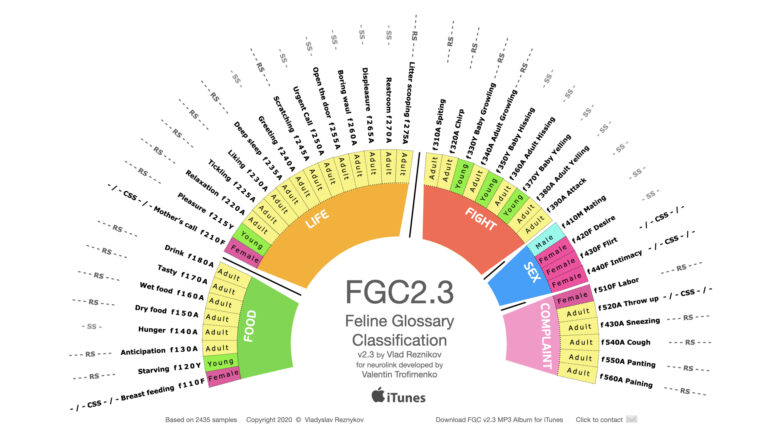
MIAMI, FL — The FGC2.3: Feline Vocalization Classification and Cat Translation Project, authored by Dr. Vladislav Reznikov, has crossed a critical scientific milestone — surpassing 14,000 reads on ResearchGate and rapidly climbing toward record-setting levels in the field of animal communication and artificial intelligence. This pioneering work aims to develop the world’s first scientifically grounded…

Tariff-Free Relocation to the US

Tariff-Free Relocation to the US

EU, China, and more are now in the crosshairs. How’s next? It’s time to act. The Trump administration has announced sweeping tariff hikes, as high as 50%, on imports from the European Union, China, and other major markets. Affected industries? Pharmaceuticals, Biotech, Medical Devices, IVD, and Food Supplements — core sectors now facing crippling costs,…

Global Distribution of the NRAs Maturity Levels as of the WHO Global Benchmarking Tool and the ICH data

Global Distribution of the NRAs Maturity Levels as of the WHO Global Benchmarking Tool and the ICH data

This study presents the GDP Matrix by Dr. Vlad Reznikov, a bubble chart designed to clarify the complex relationships between GDP, PPP, and population data by categorizing countries into four quadrants—ROCKSTARS, HONEYBEES, MAVERICKS, and UNDERDOGS depending on National Regulatory Authorities (NRAs) Maturity Level (ML) of the regulatory affairs requirements for healthcare products. Find more details…

Superpower Unveils Health Platform Offered at Streaming Service Rates

Superpower Unveils Health Platform Offered at Streaming Service Rates

Superpower has launched a health platform offering over 100 lab tests, personalized care plans and supplement recommendations, priced similarly to a streaming service subscription, at $199 annually. The platform integrates clinical diagnostics with everyday user experience, providing insight into biomarker patterns and recommending supplements based on evidence and biological dynamics. It aims to make advanced preventative care accessible and affordable, challenging traditional supplement purchasing models and emphasizing the importance of actionable insights over mere lab numbers. The service also offers support through a concierge health team and integrates with wearable technology for comprehensive health monitoring.

Finding Positives: The Upside of Being Laid Off

Finding Positives: The Upside of Being Laid Off

Generous severance packages, getting out of toxic workplaces and finding a better job with better pay are a few reasons respondents to a recent BioSpace survey felt that being laid off was for the best.

Revolutionary Quantum Sensor Capable of Detecting Molecules via Their Vibrational Signatures

Revolutionary Quantum Sensor Capable of Detecting Molecules via Their Vibrational Signatures

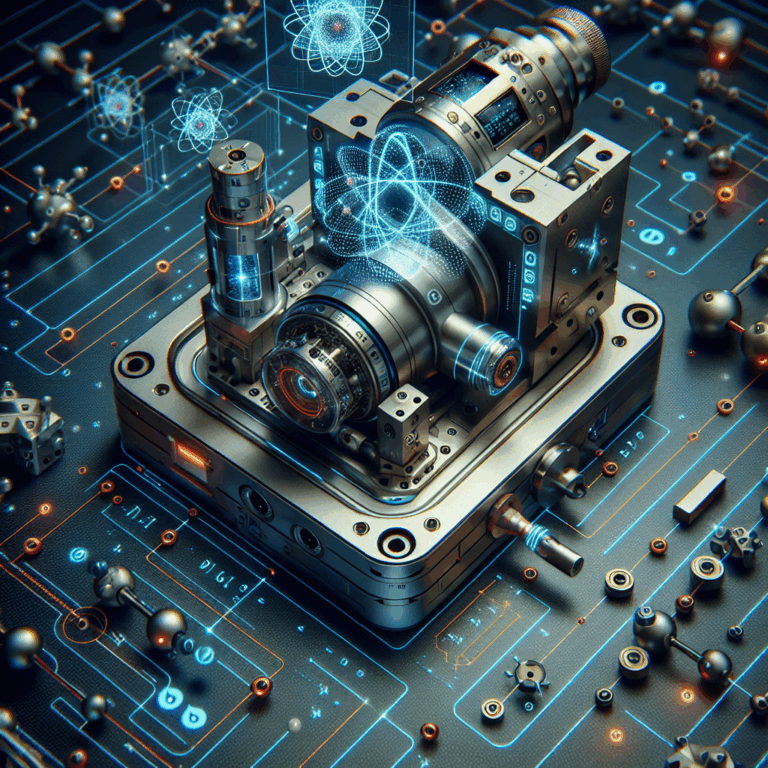
By harnessing virtual particles that constantly blink in and out of existence, a new type of sensor can detect infinitesimal vibrations to identify molecules. The novel device may one day help identify diseases and detect trace levels of contaminants in factories and the environment, researchers say.

The way in which atoms move within a molecule can supply details about the kinds of bonds that connect these atoms. By shining light onto molecules to analyze these vibrations, techniques such as infrared spectroscopy or Raman spectroscopy can identify these molecules. Such insights have a wide range of applications, such as revealing the presence of diseases ranging from infections to cancer.

However, conventional techniques for analyzing molecular vibrations are limited by weak interactions between the light they use and the matter they are probing. This leads to signals that are often faint, easily drowned out by background noise, and difficult to isolate in complex biological environments such as blood or tissue.

In a new study, researchers aimed to create strong interactions between light and molecular vibrations. They started with highly reflective gold mirrors about 12 nanometers thick to create optical cavities about 6 micrometers large. To understand why that’s helpful, we have to peer into the quantum world of atoms.

Harnessing Quantum Physics

The strange nature of quantum physics suggests that the universe is inherently fuzzy. For instance, you can never know a subatomic particle’s momentum and position at the same time. A consequence of this uncertainty is that space—such as the area within an optical cavity—is never completely empty but instead buzzes with so-called virtual particles that constantly pop in and out of existence.

The optical cavities forced virtual photons, or particles of light, to reflect back and forth, helping them couple with the vibrations of molecules that were also enclosed within the receptacles. The virtual photons and the molecular vibrations became so intertwined, they formed a new kind of hybrid quantum state, a quasiparticle called a vibropolariton. The researchers could then use infrared light to analyze these vibropolaritons.

“This advance required three ingredients—precise nanophotonic engineering to confine light strongly enough to couple with vibrations, theoretical advances in understanding quantum hybrid states, and modern spectroscopic tools capable of resolving very small shifts in molecular signals,” says Peng Zheng, an associate research scientist in the department of mechanical engineering at Johns Hopkins University, in Baltimore, who worked on the project. “Only recently have these technologies matured to the point where all three could be combined.”

In experiments, by analyzing the spectral features of these vibropolaritons, the new quantum sensor was able to identify an organic molecule known as 4-mercaptobenzonitrile dissolved in an organic solvent.

“Quantum hybrid light-matter states, something often thought of as highly abstract, can actually make molecules easier to detect in practical conditions,” says Ishan Barman, a professor of mechanical engineering at Johns Hopkins. “By tapping into these states, we found a way to amplify molecular sensitivity beyond what classical optics can do.”

A Path to Real-World Applications

These experiments achieved this feat under ambient, real-world conditions, without the need for the kind of high-vacuum, cryogenic, or other extreme environments typically required to preserve fragile quantum states.

“We now have a pathway toward molecular detection using quantum states in practical conditions,” Barman says. “The big-picture message is that quantum physics isn’t just a curiosity here; it can be harnessed to build real-world sensors for health, safety, and the environment.”

Ultimately, Barman envisions compact, microchip-scale quantum sensors. Potential applications include medical diagnostics that can detect trace levels of disease-linked molecules at the very early stages of a condition, real-time analysis in drug or vaccine production, and environmental monitoring to detect harmful chemicals at extremely low levels where one molecule matters, Zheng adds.

Future research needs to show these quantum sensors can work in real-world clinically relevant conditions. “We want to integrate these sensors into portable, point-of-care devices,” Barman says. “That will take clever materials engineering and smart device design.

The scientists detailed their findings 15 August in the journal Science Advances.

Prasad Urges YouTube to Take Down Clips Featuring His Critique of COVID-19 Vaccinations

Prasad Urges YouTube to Take Down Clips Featuring His Critique of COVID-19 Vaccinations

YouTube has shut down a channel containing hundreds of videos of comments made by doctors and other influencers—including CBER Director Vinay Prasad, Health Secretary Robert F. Kennedy Jr. and NIH Director Jay Bhattacharya—during the pandemic. This comes as Prasad reveals further details about last week’s updated COVID-19 approvals.

Products for Bruising: Navigating the Regulatory Landscape as Consumer Demand Surge

Products for Bruising: Navigating the Regulatory Landscape as Consumer Demand Surge

The global market for dermal fillers is projected to grow significantly, reaching $15.7 billion by 2034, alongside a rise in supplements marketed to aid post-procedure recovery, despite regulatory challenges around disease claims by the FDA. Experts indicate that while targeted nutrients can enhance recovery, care must be taken to avoid substances with blood-thinning effects, emphasising the importance of balanced nutrition and the potential of nutraceuticals to support healing in medical aesthetic contexts.

Innovative Eye-Reshaping Method May Take the Place of LASIK

Innovative Eye-Reshaping Method May Take the Place of LASIK

A new, promising technique has the potential to replace laser surgeries in ophthalmologists’ offices in the future, for a fraction of the cost. Called electromechanical reshaping (EMR), the technique offers a gentler approach to correcting the cornea than Laser-Assisted in Situ Keratomileusis (LASIK), today’s gold-standard for treating vision issues including nearsightedness, farsightedness, and astigmatism.

The eye develops these and other conditions when the cornea’s curvature is off—too steep, too flat, or too uneven. To solve the problem, surgeons generally use laser techniques such as LASIK to “sculpt” the eye surface by cutting away small parts of corneal tissue. The results can be life-changing, but the procedure has its risks, as LASIK permanently reduces corneal strength, raising the risk of new vision problems.

Alternative nonsurgical methods such as specially designed contact lenses can temporarily mold the cornea, but these require nightly wear and can cause infection. Now, engineers and eye doctors are trying to find a way to permanently reshape collagen-rich tissues like the cornea without cutting, burning, or removing material.

Brian Wong, a surgeon-engineer at the University of California, Irvine, stumbled upon a possible solution about decade ago. He had long worked with thermal techniques for reshaping cartilage tissues—which includes the cornea—but found a puzzling “Goldilocks problem” during his research: The heating needed to change shapes often killed too many tissue cells. Then a “happy accident” opened a different perspective, he says. “My postdoctoral fellow connected a pair of electrodes and a Coke can to a power supply… and out of spite, fried a piece of cartilage,” Wong recalls. The cartilage began to bubble, which the postdoc thought was from heat. “But it wasn’t hot. We touched it and thought, this is getting a shape change. This must be electrolysis,” he says.

That surprise pointed to electrochemistry rather than heat as the mechanism. To explore further, Wong partnered with Michael Hill, a chemist at Occidental College. Together, they began exploring the chemistry behind EMR and testing it in different tissues. In mid-August, they presented results from their most recent tests at the American Chemical Society’s Fall meeting that took place in Washington, D.C.

How Electricity Reshapes Tissue

EMR uses small electrical pulses to split water at the tissue surface into hydrogen and oxygen, releasing protons that spread into the part of the corneal tissue that gives it structural integrity, the ability to hydrate, and other mechanical properties.

Once protons are spread throughout the cornea’s surface, they disrupt the chemical bonds that hold collagen fibers in place, also changing the corneal tissue’s pH. This, Wong explains, is the moment when the cornea becomes moldable. Once shaped with a metal contact lens-like mold, it “locks in” to the new shape as the electric pulses are turned off and the body’s natural physiological response returns the cornea’s pH back to its normal value.

In 2023, Wong and Hill coauthored a proof-of-concept paper in ACS Biomaterials Science & Engineering, showing that EMR could reshape rabbit corneas without compromising transparency. “That paper was really about asking, is it even possible? Can we change the shape of a cornea without gross damage?” Hill says. “Now, after two more years of work, we’ve systematically gone through the parameters—and we can say yes, it is possible, and we can do it safely,” he adds.

Their team built custom platinum contact lenses, press-molded to precise curvatures, and connected them to electrodes. Mounted onto rabbit eyes immersed in a saline solution, the electrodes delivered pulses of around 1.5 volts. X-ray imaging tests confirmed the corneas had indeed matched the mold’s shape. Microscopy tests also confirmed the collagen tissue remained organized post-surgery. “Fine control is the key,” Wong observes.

The cost of procedures using the new technique can be significantly lower than laser eye surgery, according to Wong. That’s because, unlike LASIK, EMR doesn’t rely on “laser platforms that cost as much as luxury cars.” The new technique could also be more affordable for clinics and regions priced out of LASIK.

While the technique has a long way to go before being used in eye surgeries, the research is advancing to in-vivo animal tests to prove safety and durability—and for long-term tracking to ensure the results last. “Nobody’s getting this at the optometrist next year,” Hill cautions. “Now comes the hard work—refining parameters, confirming long-term viability, and making sure treated eyes don’t revert back,” he adds.

That hard work, Hill adds, depends a lot on funding for basic science. EMR was born not from a targeted medical device program but from curiosity-driven experiments in electrochemistry. “You don’t always know where basic research will lead,” Hill says. “We were looking at electroanalytical chemistry, not eye surgery. But those foundational insights are what made this possible. If you cut off that basic research, you don’t get these kinds of unexpected, transformative opportunities,” he adds.