Global Breakthrough: FGC2.3 Feline Vocalization Project Nears Record Reads — Over 14,000 Scientists Engage With Cat-Human Translation Research

Global Breakthrough: FGC2.3 Feline Vocalization Project Nears Record Reads — Over 14,000 Scientists Engage With Cat-Human Translation Research

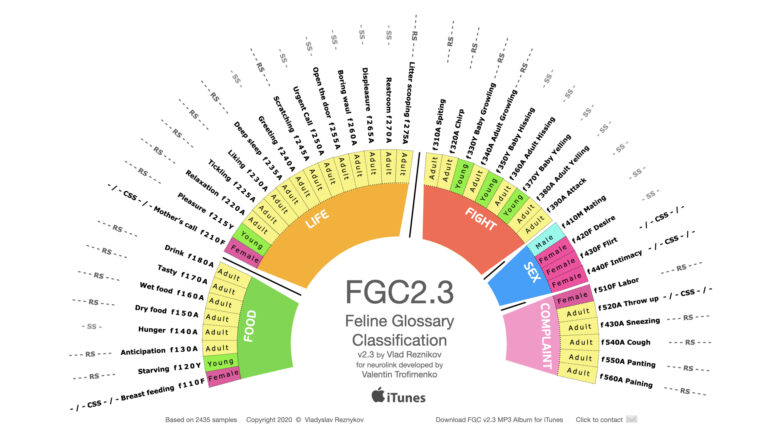
MIAMI, FL — The FGC2.3: Feline Vocalization Classification and Cat Translation Project, authored by Dr. Vladislav Reznikov, has crossed a critical scientific milestone — surpassing 14,000 reads on ResearchGate and rapidly climbing toward record-setting levels in the field of animal communication and artificial intelligence. This pioneering work aims to develop the world’s first scientifically grounded…

Tariff-Free Relocation to the US

Tariff-Free Relocation to the US

EU, China, and more are now in the crosshairs. How’s next? It’s time to act. The Trump administration has announced sweeping tariff hikes, as high as 50%, on imports from the European Union, China, and other major markets. Affected industries? Pharmaceuticals, Biotech, Medical Devices, IVD, and Food Supplements — core sectors now facing crippling costs,…

Global Distribution of the NRAs Maturity Levels as of the WHO Global Benchmarking Tool and the ICH data

Global Distribution of the NRAs Maturity Levels as of the WHO Global Benchmarking Tool and the ICH data

This study presents the GDP Matrix by Dr. Vlad Reznikov, a bubble chart designed to clarify the complex relationships between GDP, PPP, and population data by categorizing countries into four quadrants—ROCKSTARS, HONEYBEES, MAVERICKS, and UNDERDOGS depending on National Regulatory Authorities (NRAs) Maturity Level (ML) of the regulatory affairs requirements for healthcare products. Find more details…

Enhancing Plant Health with E-Tattoos: A Promising Innovation

Enhancing Plant Health with E-Tattoos: A Promising Innovation

Imagine a future in which farmers can tell when plants are sick even before they start showing symptoms. That ability could save a lot of crops from disease and pests—and potentially save a lot of money as well.

A team of researchers in Singapore and China have taken a step toward that possibility with their development of ultrathin electronic tattoos—dubbed e-tattoos—to study plant immune responses without the need for piercing, cutting, or bruising leaves.

The e-tattoo is a silver nanowire film that attaches to the surface of plant leaves. It conducts a harmless alternating current—in the microampere range—to measure a plant’s electrochemical impedance to that current. That impedance is a telltale sign of the plant’s health.

Lead author Tianyiyi He, an associate professor of the Shenzhen MSU-BIT University’s Artificial Intelligence Research Institute, says that a healthy plant has a characteristic impedance spectrum—it’s as unique to the plant as a person’s fingerprints. “If the plant is stressed or its cells are damaged, this spectrum changes in shape and magnitude. Different stressors—dehydration, immune response—cause different changes.”

This is because plant cells, He explains, are like tiny chambers with fluids passing through them. The membranes of plant cells act like capacitors, resisting the flow of electrical current. “When cells break down—like in an immune response—the current flows more easily, and impedance drops,” He adds.

Detecting Plant Stress Early with E-Tattoos

Different problems yield different electrical responses: Dehydration, for example, looks different than an infection. Changes in a plant’s impedance spectrum means that something is not right—and by looking at where and how that spectrum changed, He’s team could spot what the problem was, up to three hours before physical symptoms started appearing.

The researchers conducted the work in a controlled environment. He says that a lot more research is needed to help scientists spot a wider array of responses to stressors in the real-world environment. But this is a good step in that direction, says Eleni Stavrinidou, principal investigator in the electronic plants research group from Linköping University’s Laboratory of Organic Electronics in Sweden, who was not involved in the work. He’s team published its work on 4 April in Nature Communications.

The team tested the film on lab-grown thale cress (Arabidopsis thaliana) for 14 days. They mixed the nanowires in water so that they could transfer smoothly to the plant, by simply dripping the mix onto the leaves. Then they applied the e-tattoo in two different positions—side by side on a single leaf and on opposite faces of a leaf—to see how the current would flow. Then, with a droplet of galistan (a liquid metal alloy composed of gallium, indium, and tin), they attached a copper wire with the diameter of a human hair to the e-tattoo’s surface to apply an AC current from a small generator. He’s team collected data every day to see how plants would react.

Control plants showed a consistent spectrum over the course of two weeks, but plants that received immune-response stimulants (such as ethanol) or were wounded or dehydrated showed different patterns of electrical impedance spectra.

He says liquid-carried silver nanowires worked better than other highly conductive metals such as copper or nickel because they were not soft enough to entirely “glue” to plants’ leaves and stay perfectly plastered even as the leaf bends or wrinkles. And in the case of thale cresses, they also have tricomas, tiny hairlike structures that usually protect and keep leaves from losing too much water. Tricomas, He explains, hinder perfect attachment since they make a leaf’s surface uneven—but silver nanowires managed to get around the problem in a better way than other materials.

“Even the smallest gaps between the film and the leaf can mess with electrical impedance spectroscopy readings,” He says.

The silver nanowire e-tattoo proved to be versatile, too. It also worked with coleus, polka-dot plants, and benth—a close relative to tobacco, field mustard, and sweet potato. The team noticed the material did not block sun rays, which means it did not interfere with photosynthesis.

Advancements in Plant Impedance Spectroscopy

This isn’t the first time tattoos or electrical impedance spectroscopy have been used for plants, says Stavrinidou.

What’s new in the study, Stavrinidou says, “is the validation—they show this approach works on delicate plants like Arabidopsis and links clearly to immune responses.”

Stavrinidou says that ensuring that impedance spectrum changes tell exactly what is wrong with a plant in an unknown scenario is still a challenge. “But this paper is a strong step in that direction.”

At scale, the technique could be another tool to help farmers spot problems in their crops. But the technique will need improvement to get there, He says. Researchers can, for example, redesign the circuits to optimize them. “We can further shrink it to smaller sizes and add wireless communication to build IoT (Internet of Things) systems so we don’t have to link every plant to a wire. Everything is going to be wireless, connected, and transmitted to the cloud,” He says.

To Stavrinidou, this work is a step toward a long-term goal: the development of sensors that correlate biological signals to physiological states—stress, disease, or growth—non-invasively.

“As more of these studies are done, we’ll be able to map out what different impedance signals mean biologically. That opens the door to sensors that are not just diagnostic, but predictive—a game-changer for agriculture,” Stavrinidou says.

Innovative Technology by IEEE Award Winner Shields Against Nerve Damage Caused by Chemotherapy

Innovative Technology by IEEE Award Winner Shields Against Nerve Damage Caused by Chemotherapy

Aishwarya Bandla tries to center her work around passion, people, and purpose, following the Japanese concept of ikigai, or a sense of purpose.

For the IEEE senior member, that involves transforming patient care through innovative health technology. Bandla is developing a means to help prevent nerve damage in cancer patients resulting from chemotherapy treatment, a condition known as chemotherapy-induced peripheral neuropathy

Chemotherapy is known to cause a variety of side effects including nausea, fatigue, and hair loss, according to the American Cancer Society. But one lesser-known effect is neuropathy, Bandla says.

Aishwarya Bandla

Employer:

Paxman Coolers of Huddersfield, England

Title:

Clinical innovation manager

Member grade:

Senior member

Alma maters:

Anna University in Chennai, India, and the National University of Singapore in Queenstown

Peripheral neuropathy nerve damage—which also can stem from diabetes, vitamin deficiencies, and other causes—affects mostly the tips of the patient’s hands and feet. Symptoms range from persistent tingling to excruciating pain. Currently there are no approved preventative measures for the condition; cancer patients try to manage it with painkillers or, in severe cases, reducing or stopping their chemotherapy, Bandla says.

Bandla is the clinical innovation manager at Paxman Coolers, a medical equipment manufacturer headquartered in Huddersfield, England. She is developing a wearable device that cools a person’s limbs. Called the Paxman limb cryocompression system (PLCS), it’s designed to help prevent nerve damage from certain types of intravenous chemotherapy drugs. The cold temperature slows blood flow to the area, allowing less of the injected medication to reach the nerves there.

Bandla, who is based in Singapore, is also a principal investigator at the N.1 Institute for Health, the National University of Singapore (NUS), and at the National University Cancer Institute of Singapore.

An active IEEE volunteer, she follows ikigai in her work with the organization, she says, and she encourages other young professionals to do the same. She has overseen the launch of several career development and mentorship programs for IEEE Women in Engineering Singapore, IEEE Region 10 Women in Engineering, and IEEE Region 10 Young Professionals.

“Being an IEEE member,” she says, “has helped me nurture my purpose in rallying my efforts toward creating meaningful impact.”

For “her leadership in patient-centric health technology innovation and inspiring IEEE Young Professionals to drive meaningful change,” she is the recipient of this year’s IEEE Theodore W. Hissey Outstanding Young Professional Award. The award is sponsored by the IEEE Photonics and IEEE Power & Energy societies, as well as IEEE Young Professionals.

“This recognition fuels me to continue the work IEEE is doing globally to make the world a better place,” she says.

Engineering is a superpower

Bandla had a difficult time deciding whether to pursue medicine or engineering as a career, she says, but she chose the latter because it’s “a superpower that can help you create things to make life better.”

After earning her bachelor’s degree in electrical and electronics engineering in 2009 from Anna University, in Chennai, India, she joined software engineering company Infosys in Mysuru, India, as a technical consultant. She left three years later after being accepted into the neurotechnology doctoral program at NUS in Queenstown. Neurotechnology encompasses ways of directly engaging with the human brain and nervous system, including brain-computer interfaces, magnetic resonance imaging, and brain-wave monitors.

Bandla conducted her research under biomedical engineer Nitish V. Thakor, who specializes in developing brain-monitoring technologies and neuroprostheses. The IEEE Life Fellow is a professor of biomedical engineering at Johns Hopkins University, in Baltimore. He also is director of the Singapore Institute for Neurotechnology, SINAPSE, a collaboration among six research universities including Johns Hopkins, NUS, and the University of Patras, in Greece.

Under Thakor’s tutelage, Bandla began her work in developing the technology she is involved with today.

Using technology to address nerve damage

In 2012 Bandla and other researchers from Thakor’s lab met with neurologist Einar Wilder Smith and oncologist Raghav Sundar from National University Hospital in Kent Ridge, Singapore, to explore how the technology could help cancer patients with peripheral neuropathy.

During chemotherapy, patients are injected with an individualized drug mixture that kills fast-dividing cells or prevents them from multiplying by damaging the cells’ DNA. But the mixture also can attack healthy cells and damage nervous-system structures, causing pain and sensitivity in the patient’s hands and feet, as explained in an article published in the International Journal of Molecular Sciences.

In the meeting, the team learned about a scalp-cooling technology that helps prevent a different side effect: hair loss. A special cap is placed on the patient’s head to cool the scalp.

Inspired by that cold cap, the team set out to develop similar technology for the hands and feet. But first, in 2014, the SINAPSE lab conducted a clinical trial with National University Hospital to see if cooling the limbs would help patients with peripheral neuropathy. Existing localized cryotherapy machines used for sports therapy—which circulate ice-cooled liquid to cool an area on the body, were tested on 15 chemotherapy patients at the hospital. The team found that patients could not comfortably tolerate temperatures below 22 °C during the three-hour treatment, Bandla says.

“Being an IEEE member has helped me nurture my purpose in rallying my efforts toward creating meaningful impact.”

She suggested conducting another clinical trial, this time testing cryocompression tools rather than cryotherapy ones. Cryocompression is used for sports therapy and rehab. It combines cooling and compression—which helps reduce swelling. In the second trial, the team found that patients could tolerate temperatures as low as 11 °C for three hours, Bandla says.

The second trial ended in 2017. Bandla earned her Ph.D. that year but continued to work on the project as a SINAPSE research fellow.

In 2018 the team members began another clinical study, testing if they could safely cool a patient’s scalp and limbs simultaneously to prevent multiple side effects at once.

Throughout the five-year trial period, Bandla collected data to understand the best way to deliver cooling therapy that was safe, comfortable, and effective. The feedback she received from patients, caregivers, and the medical staff demonstrated a clear need for a device to use in the chemotherapy suite.

After the pilot trials ended in 2019, the team began designing a device alongside Richard Paxman and his team at Paxman Coolers, who leveraged their expertise in cryotherapy for side-effect management.

The portable PLCS connects to four insulated wraps, each containing a bladder filled with coolant. The wraps cover a patient’s forearms, hands, shins, and feet and include velcro flaps that can be adjusted for a better fit. The PLCS circulates the coolant through the wraps and powers the compression. It also keeps the coolant temperature at 11 °C.

During every chemotherapy cycle, 30 minutes before the medication is administered, the wraps are placed on the patient’s forearms and shins to begin the cooling process. After the session ends, the device is used on the patient for 30 more minutes, Bandla says.

The team was granted two U.S. patents for the PLCS.

In 2022 Bandla joined Paxman as a research and development manager, and she was promoted to clinical innovation manager two years later.

The impact her work has had keeps her motivated to continue, she says.

The PLCS is being tested in a large-scale clinical trial in 25 U.S. hospitals in collaboration with the National Cancer Institute.

Aishwarya Bandla smiling for a selfie with a group of young students in India. Two years ago Bandla attended a social innovation camp for school students in India.Aishwarya Bandla

Starting her IEEE volunteer journey

Thakor introduced Bandla to IEEE. An active member of the IEEE Engineering in Medicine and Biology Society, he encourages his students to participate in its conferences and to publish papers in its journals.

Bandla says volunteering with IEEE was a no-brainer for her. Her volunteerism began in 2012 with IEEE Women in Engineering Singapore. In 2019 she became its chair and launched the WIE Singapore Networking Night to help build camaraderie between the IEEE Singapore Section and technologists in industry, academia, and government. The annual event includes panel discussions.

In 2021 Bandla joined the IEEE Region 10 Women in Engineering committee as the technical and Young Professionals lead. There she helped launch MentorHer, an eight-week program in which experts help their mentees design and implement a professional development plan. Bandla created the program’s framework.

“After the pilot program was completed in 2021, we received nice feedback from participants,” she says. “Many people said they interacted with people they wouldn’t normally work with and enjoyed the experience.”

In 2020 Bandla began participating in virtual events and conferences held by Region 10’s Young Professionals group as a speaker and panel moderator. Last year she became the chair.

Guiding young professionals

Volunteering for the YP group is special to her, she says, because she has been able to “build a community and help other young professionals become well-rounded leaders and decision-makers.”

She helped develop the Career and Leadership Aid Program (CLAP) at the Region 10 Students, Young Professionals,Women in Engineering,Life Members Congress held in August in Tokyo.

She introduced the concept of ikigai to young professionals by centering the event around it. The congress included what she calls a “human library” session. Ten IEEE members from different engineering fields were positioned around the meeting room, and attendees had an hour to learn about each of the “human books.”

The group received positive feedback, with participants saying they enjoyed the focus on professional and leadership development. They said they liked how extraordinary the event was, in particular the “human library” session.

Based on the success of the CLAP event, the team is building an IEEE Hive. The immersive professional development program is available for students and early career professionals at technical conferences and congresses around the world.

The ability to make an impact, build a community, and connect with people resonates with her, Bandla says.

“Volunteering with IEEE gives me so much energy!” she says.

Unlabeled Correspondences

Unlabeled Correspondences

These letters are supplied by the CDER Freedom of Information Office and only cover Office of Prescription Drug Promotion’s untitled letters. FDA may have redacted or edited some of the letters to remove confidential information.

False References Haunt RFK Jr.’s MAHA Report

False References Haunt RFK Jr.’s MAHA Report

According to the nonprofit news outlet NOTUS, at least seven studies cited in the Make America Healthy Again report released last week are nonexistent. The White House shrugged off questions about the errors.

This Facial E-Tattoo Alleviates Mental Stress Related to Your Gauges

This Facial E-Tattoo Alleviates Mental Stress Related to Your Gauges

Feeling stressed? Overworked? A new forehead-mounted electronic tattoo may soon offer real-time insights into your mental state.

Researchers at the University of Texas at Austin have developed a wireless, ultrathin, wearable device that adheres to the skin like a temporary tattoo and monitors brain signals and eye movements to gauge mental strain.

Think of it as a souped-up Oura ring for the face—and it might one day help pilots, surgeons, race-car drivers, and military personnel stay sharp under pressure. “In those kinds of high-stakes, high-demand tasks, we could have real-time monitoring and decoding of mental workloads,” says Nanshu Lu, a biomedical engineer at UT-Austin who co-led development of the forehead sensor.

That kind of data, she says, could be used to adjust task assignments, reallocate personnel before errors occur, or even trigger alerts when someone’s cognitive burden reaches a critical threshold. Lu and her colleagues described the technology today in the journal Device.

What Can E-Tattoos Be Used For?

The new wearable builds on more than a decade of work by Lu’s lab to refine “electronic tattoos”—soft, skin-like devices that can track everything from blood pressure to alcohol intake without bulky hardware.

Her team was among the first to demonstrate that ultrathin, stretchable electronics could adhere seamlessly to the skin, offering a comfortable and unobtrusive way to monitor the body’s electrical activity.

Earlier versions were designed for applications such as heart monitoring, using chest-worn arrays of sensors to capture electrical and mechanical signals from the heart. But engineering a version for the forehead posed a fresh set of heady challenges.

Lu’s team had to create motion-resistant electrodes that wouldn’t slip or lose signal quality due to facial expressions or sweat, yet would remain comfortable enough for long shifts, often under helmets or headsets. And the technology had to pick up subtle electrical activity emanating from the brain’s prefrontal lobe, the hub of reasoning, decision making, and information processing—signals that are far weaker than those generated by the heart.

The solution: a postage-stamp-sized patch that sits just above and between the eyebrows, in the “third eye” position of the forehead. This central module houses the battery, while flexible electrodes stretch outward in a translucent circuit toward the temples, cheeks, and behind the ears. These electrodes are strategically positioned to detect shifts in visual gaze and to stabilize the signal.

As in Lu’s past designs, the electrodes are printed onto carbon-doped polyurethane. But this latest iteration adds a soft, sticky coating that boosts signal fidelity and helps the device stay put, even through perspiration, prolonged wear, and pressure-packed situations.

Testing the E-Tattoo

By combining electroencephalography (EEG) and electrooculography (EOG), the device captures both brainwave activity and eye movement—two key markers of cognitive workload. A machine-learning algorithm then analyzes the incoming data, classifying whether the wearer is in a low or high mental-load state based on subtle shifts in neural and ocular patterns.

In lab tests, volunteers performed memory and arithmetic tasks while wearing the contraption. The device reliably distinguished moments of mental ease from periods of strain, and it maintained accuracy even as participants moved their heads and blinked, underscoring the device’s potential for use in dynamic, real-world settings like operating rooms or cockpits.

Still, true field-readiness will take more validation, particularly during activities that involve unpredictable or full-body motion, notes Yael Hanein, a physicist at Tel Aviv University in Israel and the co-founder of X-trodes, a wearable bioelectronics company.

“There is a lot of work to do, but it’s a very nice step forward in establishing the properties and potential of this platform,” Hanein says. “The next step is really to move from the desktop and show you can walk with these things and still measure reliable EEG.”

How the Forehead Device Compares

In recent years, Lu and her colleagues had explored other approaches to real-time stress monitoring. A 2022 study introduced a palm-mounted e-tattoo that captured skin conductance and motion. And late last year, her team reported a scalp-printing method that allowed a biocompatible, conductive ink to record EEG signals through buzz-cut hair.

Both approaches represented steps forward in comfort and wearability, but neither offered the level of integrated, multi-modal sensing packed into the new forehead device. The palm sensor tracked physiology but not brain activity, while the scalp ink recorded EEG but missed eye tracking. The latest design pulls double duty, capturing neural and ocular data in a lightweight patch designed for everyday wear—although it may look like something out of Star Trek.

“I very much like that this face tattoo measures a variety of biomarkers,” says Dmitry Kireev, a bioelectronics researcher from the University of Massachusetts at Amherst who wrote about e-tattoo sensors for the March 2025 issue of IEEE Spectrum.

Is the E-Tattoo Fashionable or Functional?

Kireev, who was not involved in the latest study, acknowledges that the circuit-laced patch isn’t exactly subtle—its look falls somewhere between sci-fi cosplay and cyberpunk spa day. But for him, that bionic flair is part of the device’s charm. “It’s something I would try,” he says. “The shape and form is kind of cool.”

Mind you, not everyone will share Kireev’s fashion sense—which is why Lu and her team are working on systems with transparent electrodes and discreet, hairline-concealed hardware. Such cosmetic refinements could make the technology more workplace-friendly, especially in settings where bold facial markings would clash with the dress code, Lu notes. But even the current version, she argues, could be worth the small sacrifice in style if it keeps workers sharp—and safe—on the job.

While facial ink is often dismissed as a “job stopper,” this e-tattoo might be the rare exception—raising performance, not eyebrows.