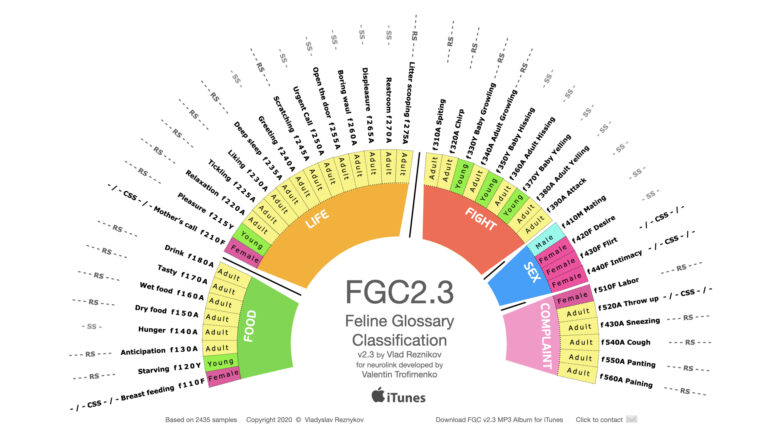
Global Breakthrough: FGC2.3 Feline Vocalization Project Nears Record Reads — Over 14,000 Scientists Engage With Cat-Human Translation Research

Global Breakthrough: FGC2.3 Feline Vocalization Project Nears Record Reads — Over 14,000 Scientists Engage With Cat-Human Translation Research

MIAMI, FL — The FGC2.3: Feline Vocalization Classification and Cat Translation Project, authored by Dr. Vladislav Reznikov, has crossed a critical scientific milestone — surpassing 14,000 reads on ResearchGate and rapidly climbing toward record-setting levels in the field of animal communication and artificial intelligence. This pioneering work aims to develop the world’s first scientifically grounded…

Tariff-Free Relocation to the US

Tariff-Free Relocation to the US

EU, China, and more are now in the crosshairs. How’s next? It’s time to act. The Trump administration has announced sweeping tariff hikes, as high as 50%, on imports from the European Union, China, and other major markets. Affected industries? Pharmaceuticals, Biotech, Medical Devices, IVD, and Food Supplements — core sectors now facing crippling costs,…

Global Distribution of the NRAs Maturity Levels as of the WHO Global Benchmarking Tool and the ICH data

Global Distribution of the NRAs Maturity Levels as of the WHO Global Benchmarking Tool and the ICH data

This study presents the GDP Matrix by Dr. Vlad Reznikov, a bubble chart designed to clarify the complex relationships between GDP, PPP, and population data by categorizing countries into four quadrants—ROCKSTARS, HONEYBEES, MAVERICKS, and UNDERDOGS depending on National Regulatory Authorities (NRAs) Maturity Level (ML) of the regulatory affairs requirements for healthcare products. Find more details…

Key Takeaways from the Pharmacovigilance Risk Assessment Committee (PRAC) Meeting Held from June 8 to 11, 2026

PRAC concludes evidence of potential risk of neurodevelopmental disorders in children born to men treated with valproate is inconsistent  Committee recommends updating product…, Agenda Agenda of the PRAC meeting 8-11 June 2026Draft Reference Number: EMA/PRAC/115322/2026…, PRAC statistics: June 2026 , , Glossary Safety signal assessments. A safety signal is information which suggests a new potentially causal association, or a new aspect of a known association between…

Exploring the Quest of a Google DeepMind Offshoot to Uncover Concealed Drug Targets

Exploring the Quest of a Google DeepMind Offshoot to Uncover Concealed Drug Targets

For more than a decade, artificial intelligence has been touted as a way to dramatically accelerate drug discovery. Yet despite billions of dollars in investment, relatively few AI-designed medicines have made it to patients. That’s partially because the timelines for careful drug testing can’t be easily compressed—and partially because drug development is just really hard.

Isomorphic Labs, the Google DeepMind spin-off that’s building on DeepMind’s Nobel Prize-winning work on protein structure prediction, may be making the most progress. The company has signed major drug-discovery partnerships with Novartis and Eli Lilly and recently raised US $2.1 billion in funding. In February, it published a technical report describing its new Isomorphic Drug Design Engine, a system created to discover the “pockets” on proteins where drugs can bind and in general to predict how proteins and drug molecules interact.

IEEE Spectrum spoke with Adrian Stecuła, a group leader in the machine learning organization at Isomorphic Labs, about how close AI may be to becoming a practical tool for designing new medicines.

Going Beyond AlphaFold

AlphaFold2 and AlphaFold3 were massive leaps forward for computational biology. Why weren’t those models sufficient for actually designing drugs?

Adrian Stecuła: AlphaFold2 was eventually recognized with the Nobel Prize, because it arguably solved the problem of protein folding. But proteins don’t exist in a vacuum, right? They interact with a wide variety of other types of biomolecules, which involves nucleic acids, small molecule ligands, ions, and other proteins. AlphaFold3 introduced a way to model the rest of these cellular biomolecules as part of a single framework. So all of a sudden, we have a single model that can model all of these interactions all at the same time.

That said, in the years since the AF3 release, multiple groups have evaluated it along the axis of pocket novelty. And you could see that as the pocket distance grows away from the training set, the model performance decreases. So if you define the success as “how well did the model actually fold this particular ligand with this particular protein,” as those systems become more novel, you can see a decline in performance.

But for drug discovery, ideally we do want to pursue novel mechanisms of action, which might involve targeting a never-before-observed pocket. And so it is absolutely important for us to have our models generalize to these regions that are distant from training.

How does the Isomorphic Drug Design Engine (IsoDDE) address these limitations, and what exactly is it predicting?

Stecuła: It takes a lot more than just structure prediction to create a molecule that will ultimately become a drug. You don’t just need to predict where the ligand binds with the protein, but also potentially how it binds, how tightly it binds, and a plethora of other properties about the ligand and how the ligand interacts with the rest of the proteins in the body.

IsoDDE is a unified computational system that lends itself to a number of different endpoints. As part of the technical report about IsoDDE, we have described three of those endpoints, which are structure prediction, pocket identification, and binding affinity prediction. [Editor’s note: Binding affinity measures how strongly a molecule binds to a target protein.]

Finding Hidden Protein Pockets

In your technical report about IsoDDE, you highlighted a key example involving a protein called cereblon and its “cryptic pocket.” First, can you tell readers about this protein and what a cryptic pocket is?

Stecuła: Cereblon is one of the most important and well-studied proteins in the targeted protein degradation pathway. It’s part of the mechanism that’s responsible for degrading proteins in the cell. [Editor’s note: Some drugs use cereblon to mark disease-causing proteins for destruction by the cell.]

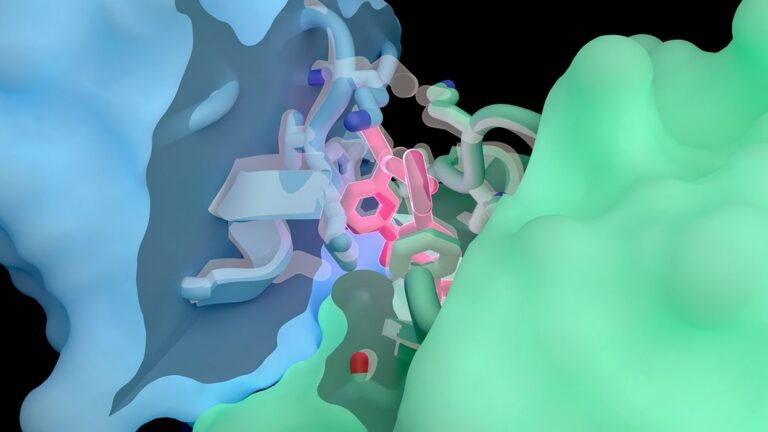
And cryptic pockets are pockets on protein surfaces that are non-obvious, in that in the [unbound] state of the protein, meaning that if you were to look at the protein by itself, it would not have a cavity there. This pocket only opens upon the binding of just the right ligand. So you can think of it as: You need the perfect key to unlock this lock.

How did you use recently published findings about cereblon to validate IsoDDE?

Stecuła: In January of this year a Nature paper published a completely novel, never-before-observed cryptic pocket on the surface of this protein. First we asked the question: Can IsoDDE find this pocket just using the protein sequence as input? And we were able to perfectly predict the location of this cryptic pocket. Again, note that this pocket had never been disclosed before.

The second question was: Can IsoDDE accurately predict how the ligands bind to the protein? Are we able to recapitulate the crystal structure shown in the Nature paper? And the model was able to place both the orthosteric ligand [at the known binding site] as well as the allosteric ligand [at the new, cryptic pocket] in exactly the perfect locations.

Most drugs today are small molecules—relatively simple compounds that bind to proteins. Does IsoDDE expand the toolkit for tackling diseases?

Stecuła: I think many of the hopes for machine learning for drug design revolve around making more protein targets tractable. There are already many diseases that have known associated proteins. So we know that if only we could target a particular protein, we would have a chance at helping the patient population suffering from a particular disease.

But in many of those instances, the protein that is associated with that disease doesn’t have a pocket or mechanism that can be easily drugged. IsoDDE is enabling us to find those mechanisms. Further, these methods generalize not just to small molecules but also to antibodies, molecular glues, and peptides. It’s not just a breakthrough that will impact small molecule design, but these other therapeutic modalities will also benefit from this.

There is a lot of hype around AI in drug discovery. What do people commonly misunderstand about where the field is right now?

Stecuła: Perhaps the misunderstanding is that just because we are able to accurately model structure, that drug discovery is a solved problem. It does take, we believe, a unified system such as IsoDDE with a plethora of other endpoints to really model these systems. We will continue to improve our performance on the endpoints that we have disclosed as part of the IsoDDE report, and will also continue to push on the endpoints that we have not yet disclosed.

Do you imagine more of the drug discovery process becoming automated, with AI systems generating hypotheses, testing hypotheses, and analyzing results?

Stecuła: Absolutely. This was quite nicely framed by our president Max Jaderberg as part of his TED AI talk, where he was discussing the future of agentic workflows in drug discovery. I absolutely think that is part of our collective future.

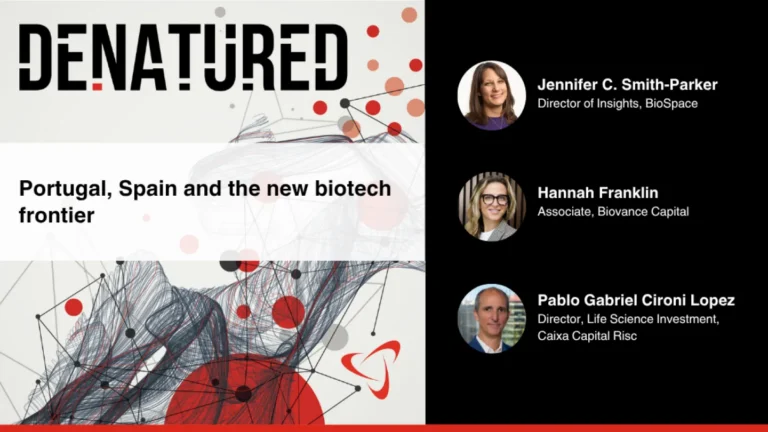
Exploring the Biotech Horizon: Portugal and Spain Lead the Way

Exploring the Biotech Horizon: Portugal and Spain Lead the Way

In this episode of Denatured, you’ll be hearing from Hannah Franklin, associate at Biovance Capital and Pablo Gabriel Cironi Lopez, director of life science investment at Caixa Capital Risc as they discuss the rise of Southern Europe’s biotech ecosystem.

Future Pacemakers May Emerge from Innovative Ultrasound Patch Technology

Future Pacemakers May Emerge from Innovative Ultrasound Patch Technology

With the reliability of a quality wristwatch, pacemakers send out electric pulses to keep your heart beating at a steady rate. But unlike a watch, when the batteries need replacement, it’s a surgical affair—one that can be required as often as every five years. While the risks of having a pacemaker implanted are low, going under the knife always creates the potential for complications.

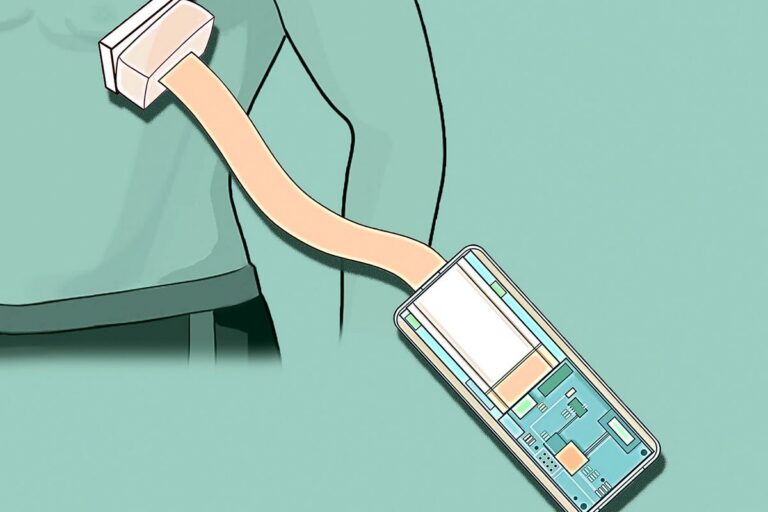
A group of California and Massachusetts scientists have developed a pacemaker that works without requiring surgery, publishing their work last week in Nature Biomedical Engineering. Researchers developed a wearable alternative to the traditional pacemaker measuring in at about the size of an iPod Shuffle. The device sticks to the patient’s chest, putting out ultrasound waves that tell the heart to beat.

But the ultrasound technology is only one component of what makes the noninvasive pacemaker work. Patients would undergo a gene therapy procedure to help heart cells react to the high frequency waves. Delivered by a simple injection, the treatment would work like a signal booster for the waves of the ultrasound device.

The approach has proved effective in rats, pig hearts—used for their similarity to human hearts—and samples of human heart cells.

“This is a very innovative and exciting study,” says Dr. Roger J. Hajjar, who heads the Gene and Cell Therapy Institute at Mass General Brigham and was not involved in the work. In terms of demonstrating that the technology could be safe and effective, he says, “the work is impressive.”

How an ultrasound pacemaker would work for patients

In a clinical setting, treatment would begin with a gene therapy injection that helps heart cells “hear” the ultrasound signals. It works by prompting the cells to produce a sound-sensitive protein in the ion channels that dot their membranes. The broad term for this type of therapy is “sonogenetics”— priming cells to respond to sound. It’s the same idea as a type of gene therapy that makes cells react to light, called optogenetics, which has been studied for treating hearing impairment and pain.

Importantly, this gene therapy doesn’t alter DNA, says Gengxi Lu, who was a mechanical engineering postdoctoral researcher at MIT while working on the paper, and is now a senior ultrasound engineer at Meta. Rather, he says the treatment introduces RNA into cells that directs them to create the ultrasound-sensitive protein without altering their genetic code.

A wearable device would then be stuck to the patient’s chest like a bandage. The device connects by wire to a data and power module that can be placed in a pants pocket. It would look similar to an insulin pump.

The ultrasound patch is programmed to emit high frequency waves that the cell proteins receive. These signals stimulate the cells’ ion channels to let in calcium. This influx of calcium ions cues the heart to beat.

Is sonogenetics a viable solution?

In terms of future research, sonogenetics is ripe for solving health issues, says Chen Gong, who was a PhD student at the University of Southern California while conducting the research and is now a postdoctoral researcher at MIT. Researchers from Harvard; the University of California, Los Angeles; and CalTech also contributed to the research.

Expanded view of multiple layers of a pacemakeru2019s circuitry. Source images: Chen Gong, Qifa Zhou, et al.

Using the sonogenetics technology, “we can modulate almost anywhere we want to stimulate, like in the inside of brains, eyes, other organs,” he says.

But the ultrasound pacemaker still needs to prove itself, says Dr. Hajjar. He says for the device to be clinically practical, it would have to be comparably reliable to traditional pacemakers under limiting factors like exercise, long-term use, and anatomical differences. Additionally, gene therapy, though FDA approved in some contexts, is a hurdle in terms of costs, safety, and regulation.

“The biggest question is not whether the ultrasound device works—it appears quite promising—but whether the benefits of a noninvasive pacing system are large enough to justify exposing patients to cardiac gene therapy when current pacemakers already have excellent safety and performance,” he says. “That will ultimately determine the size of the clinical opportunity.”