Global Breakthrough: FGC2.3 Feline Vocalization Project Nears Record Reads — Over 14,000 Scientists Engage With Cat-Human Translation Research

Global Breakthrough: FGC2.3 Feline Vocalization Project Nears Record Reads — Over 14,000 Scientists Engage With Cat-Human Translation Research

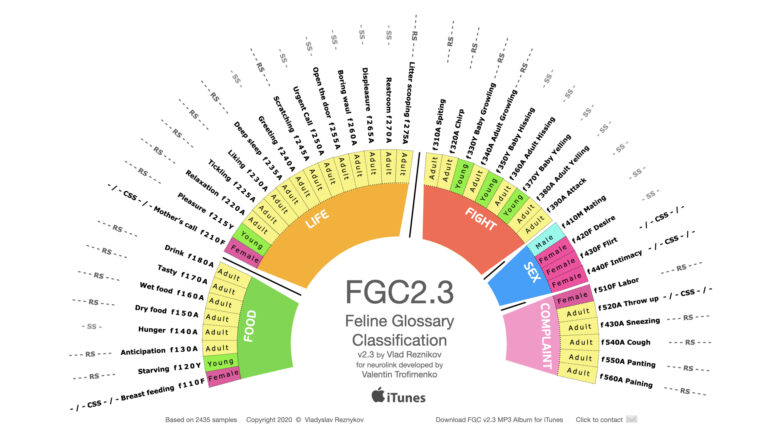
MIAMI, FL — The FGC2.3: Feline Vocalization Classification and Cat Translation Project, authored by Dr. Vladislav Reznikov, has crossed a critical scientific milestone — surpassing 14,000 reads on ResearchGate and rapidly climbing toward record-setting levels in the field of animal communication and artificial intelligence. This pioneering work aims to develop the world’s first scientifically grounded…

Tariff-Free Relocation to the US

Tariff-Free Relocation to the US

EU, China, and more are now in the crosshairs. How’s next? It’s time to act. The Trump administration has announced sweeping tariff hikes, as high as 50%, on imports from the European Union, China, and other major markets. Affected industries? Pharmaceuticals, Biotech, Medical Devices, IVD, and Food Supplements — core sectors now facing crippling costs,…

Global Distribution of the NRAs Maturity Levels as of the WHO Global Benchmarking Tool and the ICH data

Global Distribution of the NRAs Maturity Levels as of the WHO Global Benchmarking Tool and the ICH data

This study presents the GDP Matrix by Dr. Vlad Reznikov, a bubble chart designed to clarify the complex relationships between GDP, PPP, and population data by categorizing countries into four quadrants—ROCKSTARS, HONEYBEES, MAVERICKS, and UNDERDOGS depending on National Regulatory Authorities (NRAs) Maturity Level (ML) of the regulatory affairs requirements for healthcare products. Find more details…

Key Takeaways from the Pharmacovigilance Risk Assessment Committee (PRAC) Meeting Held from April 7 to 10, 2026

New safety information for healthcare professionals Ontozry (cenobamate): new requirements for liver monitoring due to reports of severe liver injuryPRAC agreed on a direct…, Agenda Agenda of the PRAC meeting 7-10 April 2026Draft Reference…, PRAC statistics: April 2026 , PRAC statistics: April 2026 English (EN) (33.18 MB – PDF)First published…, Glossary Safety signal assessments. A safety signal is information which suggests a new potentially causal association, or a new aspect of a known association between…

Microchip Can Display Video as Small as a Grain of Sand

Microchip Can Display Video as Small as a Grain of Sand

By many estimates, quantum computers will need millions of qubits to realize their potential applications in cybersecurity, drug development, and other industries. The problem is, anyone who has wanted to simultaneously control millions of a certain kind of qubits has run into the problem of trying to control millions of laser beams.

That’s exactly the challenge that was faced by scientists working on the MITRE Quantum Moonshot project, which brought together scientists from MITRE, MIT, the University of Colorado at Boulder, and Sandia National Laboratories. The solution they developed came in the form of an image projection technology that they realized could also be the fix for a host of other challenges in augmented reality, biomedical imaging, and elsewhere. The device is a one-square-millimeter photonic chip capable of projecting the Mona Lisa onto an area smaller than the size of two human egg cells.

“When we started, we certainly never would have anticipated that we would be making a technology that might revolutionize imaging,” says Matt Eichenfield, one of the leaders of the Quantum Moonshot project, a collaborative research effort focused on developing a scalable diamond-based quantum computer, and a professor of quantum engineering at the University of Colorado at Boulder. Each second, their chip is capable of projecting 68.6 million individual spots of light—called scannable pixels to differentiate them from physical pixels. That’s more than fifty times the capability of previous technology, such as micro-electromechanical systems (MEMS) micromirror arrays.

“We have now made a scannable pixel that is at the absolute limit of what diffraction allows,” says Henry Wen, a visiting researcher at MIT and a photonics engineer at QuEra Computing.

The chip’s distinguishing feature is an array of tiny micro-scale cantilevers, which curve away from the plane of the chip in response to voltage and act as miniature “ski-jumps” for light. Light is channeled along the length of each cantilever via a waveguide, and exits at its tip. The cantilevers contain a thin layer of aluminum nitride, a piezoelectric which expands or contracts under voltage, thus moving the micromachine up and down and enabling the array to scan beams of light over a two-dimensional area.

Despite the magnitude of the team’s achievement, Eichenfield says that the process of engineering the cantilevers was “pretty smooth.” Each cantilever is composed of a stack of several submicrometer layers of material and curls approximately 90 degrees out of the plane at rest. To achieve such a high curvature, the team took advantage of differences in the contraction and expansion of individual layers caused by physical stresses in the material resulting from the fabrication process. The materials are first deposited flat onto the chip. Then, a layer in the chip below the cantilever is removed, allowing the material stresses to take effect, releasing the cantilever from the chip and allowing it to curl out. The top layer of each cantilever also features a series of silicon dioxide bars running perpendicular to the waveguide, which keep the cantilever from curling along its width while also improving its length-wise curvature.

A micro-cantilever wiggles and waggles to project light in the right place.Matt Saha, Y. Henry Wen, et al.

What was more of a challenge than engineering the chip itself was figuring out the details of actually making the chip project images and videos. Working out the process of synchronizing and timing the cantilevers’ motion and light beams to generate the right colors at the right time was a substantial effort, according to Andy Greenspon, a researcher at MITRE who also worked on the project. Now, the team has successfully projected a variety of videos from a single cantilever, including clips from the movie A Charlie Brown Christmas.

A warped projection of the Mona Lisa. The chip projected a roughly 125-micrometer image of the Mona Lisa.Matt Saha, Y. Henry Wen, et al.

Because the chip can project so many more spots in any given time interval than any previous beam scanners, it could also be used to control many more qubits in quantum computers. The Quantum Moonshot program’s mission is to build a quantum computer that can be scaled to millions of qubits. So clearly, it needs a scalable way of controlling each one, explains Wen. Instead of using one laser per qubit, the team realized that not every qubit needed to be controlled at every given moment. The chip’s ability to move light beams over a two-dimensional area, would allow them to control all of the qubits with many fewer lasers.

Another process that Wen thinks the chip could improve is scanning objects for 3D printing. Today, that typically involves using a single laser to scan over the entire surface of an object. The new chip, however, could potentially employ thousands of laser beams. “I think now you can take a process that would have taken hours and maybe bring it down to minutes,” says Wen.

Wen is also excited to explore the potential of different cantilever shapes. By changing the orientations of the bars perpendicular to the waveguide, the team has been able to make the cantilevers curl into helixes. Wen says that such unusual shapes could be useful in making a lab-on-a-chip for cell biology or drug development. “A lot of this stuff is imaging, scanning a laser across something, either to image it or to stimulate some response. And so we could have one of these ski jumps curl not just up, but actually curl back around, and then move around and scan over a sample,” Wen explains. “If you can imagine a structure that will be useful for you, we should try it.”

Integrating Automation and Teamwork in the Evolution of Cutting-Edge Therapies

Integrating Automation and Teamwork in the Evolution of Cutting-Edge Therapies

In this episode of Denatured, you’ll hear from Jason Jones, head of global business development at Cellular Origins and Alexander Seyf, founder & CEO of Autolomous. They discuss how the push to scale cell and gene therapy manufacturing is accelerating interest in automation, digitization, robotics and deeper collaboration across the ecosystem.