Global Breakthrough: FGC2.3 Feline Vocalization Project Nears Record Reads — Over 14,000 Scientists Engage With Cat-Human Translation Research

Global Breakthrough: FGC2.3 Feline Vocalization Project Nears Record Reads — Over 14,000 Scientists Engage With Cat-Human Translation Research

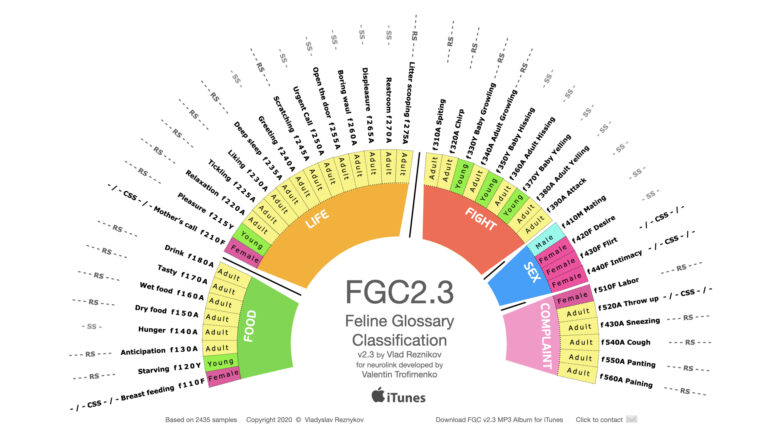
MIAMI, FL — The FGC2.3: Feline Vocalization Classification and Cat Translation Project, authored by Dr. Vladislav Reznikov, has crossed a critical scientific milestone — surpassing 14,000 reads on ResearchGate and rapidly climbing toward record-setting levels in the field of animal communication and artificial intelligence. This pioneering work aims to develop the world’s first scientifically grounded…

Tariff-Free Relocation to the US

Tariff-Free Relocation to the US

EU, China, and more are now in the crosshairs. How’s next? It’s time to act. The Trump administration has announced sweeping tariff hikes, as high as 50%, on imports from the European Union, China, and other major markets. Affected industries? Pharmaceuticals, Biotech, Medical Devices, IVD, and Food Supplements — core sectors now facing crippling costs,…

Global Distribution of the NRAs Maturity Levels as of the WHO Global Benchmarking Tool and the ICH data

Global Distribution of the NRAs Maturity Levels as of the WHO Global Benchmarking Tool and the ICH data

This study presents the GDP Matrix by Dr. Vlad Reznikov, a bubble chart designed to clarify the complex relationships between GDP, PPP, and population data by categorizing countries into four quadrants—ROCKSTARS, HONEYBEES, MAVERICKS, and UNDERDOGS depending on National Regulatory Authorities (NRAs) Maturity Level (ML) of the regulatory affairs requirements for healthcare products. Find more details…

Exploring the Extensive Project to Decode the Entire Lepidoptera Species of Europe

Exploring the Extensive Project to Decode the Entire Lepidoptera Species of Europe

It’s a little after 6:30 on a brisk July morning in a stone hut high in the Italian Alps. A gently hissing wood fire is leaking some warmth out of a brick oven. Gathered near it, around a big wooden table, some of Europe’s brightest young lepidopterists are doing what they do best: arguing in Spanish, Italian, and English about moths.

A three-story stone hut on the edge of a pond is seen at dusk, surrounded by alpine peaks.The Alte Pforzheimer Hütte, a stone house originally built in 1901, served as a base camp for the lepidopterists hunting rare moths in the Italian Alps.Luigi Avantaggiato

Scattered across the top of the table are dozens of moths in plastic specimen jars, the harvest of the previous night’s trapping. At one end of the table, Gioele Moro of the Czech Academy of Sciences is gently prying loose moths from the depths of a trap. At the other end, Laura Torrado-Blanco of the University of Oviedo’s entomological collection is paging through Lepidoptera guide books. She’s using the books to identify species—up here at 2,300 meters, there is no Internet connection.

A half dozen dark-colored moths are seen, each contained within a plastic container.A few of the scores of moths captured on a single night at a site in the Italian Alps are lined up on a bench in the stone hut. Researchers will identify the moths’ species and some of the insects will be sent on for tissue sampling and eventual genome sequencing. Luigi Avantaggiato

Looking up from a book, she notices me noticing the big butterfly tattoo on her left arm. “Chapman’s ringlet,” she tells me. “Erebia palarica,” she adds reflexively.

Pep Lancho Silva, a doctoral student at the Institute of Evolutionary Biology in Barcelona, extends a finger toward me with a spectacular creature on it: a large bone-white moth, with a black head and big black splotches on its wings. Torrado-Blanco is pretty sure it’s Arctia flavia, a species of tiger moth found only in rarefied air. If so, it’s precisely the kind of insect they came up here, to this chilly hut on the edge of a crystalline Alpine pond, to capture.

A large moth with a black head and black splotches on its wings perches on a personu2019s hand.A yellow tiger moth, Arctia flavia, is among the catch at the stone hut, at an altitude of 2,300 meters.

Four young people sitting at a wooden table are examining moths in plastic containers or writing labels to attach to the containers.At the crack of dawn in the stone hut, researchers [from left] Eric Toro Delgado, Laura Torrado-Blanco, Mónica Doblas-Bajo, and Gioele Moro (standing) unpack and examine the moths captured during the previous night.Luigi Avantaggiato

Lepidopterists have trapped, identified, and classified moths and butterflies for centuries. But this high-altitude confab is no Victorian perambulation. It’s a vital component of a sprawling, cutting-edge project that is pushing the boundaries of bioinformatics and the tools of modern genomics. These researchers are taking part in the first international field expedition of Project Psyche, whose goal is to sequence the genomes of all 11,000 species of moths and butterflies in Europe. Psyche is part of a larger effort, the Darwin Tree of Life project, which is itself a component of arguably the most ambitious science project of all time: the Earth BioGenome Project. Its goal is to sequence the genomes of all of Earth’s roughly 1.8 million organisms—every named species of animal, plant, fungus, and microbe that’s made up of cells that have a nucleus.

None of these hugely ambitious efforts would be conceivable without the enormous advances in genome sequencing and bioinformatics over the past couple of decades. The cost and speed of sequencing an individual genome have declined to the point where it’s now possible to batch process multiple genomes in a single day and for less than US $1,000 apiece. And the revolutions in biotech that have made such a feat possible are still gathering steam. Indeed, Earth BioGenome officials freely admit that their bold goal—to sequence those 1.8 million named species by 2035—won’t be possible without a hundredfold decrease in the time and cost of sequencing.

But the project’s success may ultimately hinge on functions other than sequencing. For example, after a creature’s genome is sequenced, the huge mass of raw genetic data—consisting of millions or billions of genetic building blocks called base pairs—must be annotated. That is, the tens of thousands of genes that make up the genome must be identified, located on chromosomes, and their functions or purpose described. And, of course, before an organism’s genome can be sequenced, its tissues must be sampled. To do that, researchers must locate the organism and, if it’s an animal, capture it. As I discovered with the Psyche team in the woods, valleys, and jagged peaks of South Tyrol, wrangling insects presents challenges that can defy logistics, technology, and even reason.

How Can You Explain the Surpassingly Strange Atlas Blue Butterfly?

When I first heard about Project Psyche, the first thing I wondered was, Why Lepidoptera I put the question to Charlotte Wright and Joana Meier at the hotel in Malles Venosta, Italy, that served as the headquarters for the Project Psyche expedition. They lead the project from its base at the Wellcome Sanger Institute in Cambridgeshire, England. The reasons, they tell me, span a range from pure science to completely commercial.

A young woman wearing pale blue gloves dissects a moth.

 An image shows a closeup of the moth being dissected.At the Hotel Tyrol in the Italian Alps, lepidopterist Charlotte Wright of the Wellcome Sanger Institute, a leader of Project Psyche, dissects the yellow tiger moth captured near the stone hut. Packed with liquid nitrogen, the tissue samples will subsequently be sent to the institute in England for genome sequencing.Luigi Avantaggiato

The earliest Lepidoptera appeared 250 million to 300 million years ago. By studying and comparing the genomes of different species, Wright explains, “we can find out how they have evolved and how they’ve diversified, as there have been different climatic shifts in Europe. And the genomes can help to tell us why it is that some groups of Lepidoptera have evolved into a greater number of species than others.”

Those genomes will also offer insights into some of the most intriguing questions of evolutionary biology. Consider: Most moths and butterflies have genomes with around 31 pairs of chromosomes, which are the threadlike strands in every cell’s nucleus, each of which is a molecule of DNA. Collectively, chromosomes make up a creature’s genome. But a tiny minority of the Lepidoptera order have enormous numbers of chromosomes. Exhibit A is the Atlas blue butterfly, which has an astonishing 229 pairs of chromosomes.

The Atlas blue is “a very good example of something that’s really fascinating, but we cannot understand it just by looking at one species,” says Meier. “What we really need is what Psyche will provide, which is replications”—thousands of Lepidoptera genomes. And, not incidentally, the ability to browse them easily. “Then we will find many lineages that have an unusually large number of chromosomes, and we can then start to ask, ‘What changes each time? What do they have in common? Do they have a repair gene that’s broken?’ ”

Some three dozen species of Lepidoptera are seen pinned to a display board, with tiny hand-written notes associated with each one.Some exceptional samples of Lepidoptera are preserved for entomological archives.Luigi Avantaggiato

And it’s not just theoreticians eagerly awaiting such genomic data. One practical aspect of these studies has to do with moths’ impact on agriculture. “There’s billions and billions of euros lost because agriculturally, some species do a lot of damage,” says Meier.

Adds Wright, “Pests are moving to new regions where previously they weren’t present and causing huge losses because the crops there haven’t been developed to be protected against these new species.” The reasons why some species succeed in a new area as climate changes, and are able to adapt and thrive, are also understandable only by studying many genomes—of the creatures that succeed, as well as the ones that don’t. “It’s kind of a dynamic situation, of monitoring these pests’ movements,” says Wright.

A young man in a yellow and black fleece jacket and tan cargo pants sets up an insect trap that looks like a bucket with an ultraviolet light protruding from the top. Shortly before sunset, Gioele Moro, of the Czech Academy of Sciences, sets up a moth trap on a mountain slope above the stone hut (the Alte Pforzheimer Hütte) in the Italian Alps. Luigi Avantaggiato

That, it turns out, takes a small army of grad students, researchers, and even citizen-scientists. Indeed, one of the goals of this expedition is to develop and refine best practices in collecting samples for genome sequencing and to train a cadre of young lepidopterists, who have varying levels of familiarity with the technologies of genome sequencing and annotation. On such techniques rests the success of not only Project Psyche, but also, ultimately, the Earth BioGenome Project.

To Catch a Moth, You’ve Got to Think Like One

It’s late in the afternoon of our first day in the high-altitude hut. Moro, of the Czech Academy of Sciences, is standing on a steeply raked mountainside in a dazzling sea of wildflowers—purple, yellow, lavender, crimson—that are gently swaying in the fading amber light. He’s wearing a black camp shirt, black cargo shorts, black socks, black hiking boots, and chunky retro eyewear, and he’s carrying a butterfly net (yep, it’s black). He’s still and silent, taking in nuances of light, vegetation, and wind that would affect a moth’s flight path through the area. Thinking like a moth, he visualizes the routes it would likely take through side valleys and ravines.

The objective is to figure out where to place three butterfly traps for the night. Setting the traps in different “microenvironments,” he explains, will likely yield a broader range of creatures. But there’s no formula for this. Capturing critters depends heavily on intuition arising from experience, perception, and judgment.

 A young man in a bright blue T-shirt and black cargo pants standing on a slope amid brilliant purple wildflowers swings a bright yellow butterfly net. Genetics researcher Noé Dogbo, of the Institute of Research on Insect Biology in Tours, France, chases a butterfly during a hunting session in the Roja mountains near Curon Venosta, Bolzano, Italy. Luigi Avantaggiato

“Over there”—he points across the valley to the opposite slope. “It faces north. See? No flowers. That’s what I mean by different microenvironments.” We’re perched on the south-facing slope, about 80 meters above the valley bottom, on a trail about as wide as a toaster oven.

Hours later, after dodging cow patties the size of dinner plates and gaping holes leading to marmot burrows, the locations are chosen and the traps are set. There’s one on the south slope, one on the north, and one near the fast-flowing stream between them. As the sky darkens to a deep blue, we trudge back to the hut to stoke the fire and wait.

At the crack of dawn the next day, Moro is jubilant as he returns with the night’s haul. There are at least 150 moths, including the spectacular yellow tiger moth. The species that are needed for Project Psyche, as identified by Torrado-Blanco, are put in plastic specimen jars and will make their way down to the makeshift lab at the Hotel Tyrol. There, they’ll be photographed and then stunned and killed by exposure to dry ice, before being dissected. The head, thorax, and abdomen will be packed in separate plastic tubes for state-of-the-art DNA and RNA sequencing at the laboratories of the Wellcome Sanger Institute. The Wellcome Trust is the lead sponsor of both Project Psyche and the Darwin Tree of Life project.

A dark-haired woman uses tweezers to insert a moth abdomen into a tiny glass vial.

A closeup of the vial shows an attached label with a bar code. Lepidopterist Joana Meier of the Wellcome Sanger Institute, a leader of Project Psyche, packs the abdomen of a moth into a vial for shipment from Italy to the institute in England. A bar code on the vial contains information about the sample and allows it to be tracked on its journey to the lab. Luigi Avantaggiato

The plastic tubes are packed in liquid-nitrogen-cooled shipping containers for the trip to Wellcome Sanger. DNA begins to break down almost immediately after death, especially in soft tissues. So the cryogenics are necessary to ensure that the samples arrive at Wellcome Sanger with as little degradation as possible.

Micromoths Are a Looming Challenge

Niklas Wahlberg of Lund University, in Sweden, is officially a “sampling hub leader” of Project Psyche. Unofficially, he’s one of the select few grizzled veterans here in Malles Venosta helping to mentor the young researchers, whose attendance is being funded through a European Union program called European Cooperation in Science and Technology.

A gray-haired man with a beard and wearing a yellow jacket holds a small plastic container against the white sheet of moth trap at night. Niklas Wahlberg, an evolutionary biologist at Lund University in Sweden, captures a moth in a plastic container at a trapping site along an Alpine trail above Malles Venosta, Italy.Luigi Avantaggiato

Wahlberg is an unabashed fan of moths. It’s not that he dislikes butterflies, mind you, it’s just that he’s a bit weary of them overshadowing moths in the public imagination. Butterflies are big, bright, and colorful, sure, but also delicate. They appeared much, much later than moths in evolutionary history. And they can’t even fly at night or in the rain. “Butterflies are just day-flying moths,” Wahlberg quips. “People think of them as different and special, but they’re not.”

In this new era of mass genome sequencing, they’re also arguably less important scientifically. To begin with, butterflies are just 10 percent of all known species of Lepidoptera—about 19,000 are butterflies while perhaps 180,000 or more are moths. Of the 11,000 European Lepidoptera species that are of interest to Project Psyche, only 560 of them are butterflies, by Wahlberg’s reckoning. And they’ve already collected two-thirds of them, he adds.

So the real challenge for Psyche is finding and identifying all those moths. Particularly the micromoths.

Micromoths have long vexed entomologists. The largest of them have wingspans about as wide as a U.S. dime, or a 2 euro cent coin; the smallest can fit on the head of a pin. As a group, they evolved not only much earlier than butterflies but also much earlier than all other moths (which are known as “macromoths”). There are a lot of micromoths—at least 62,000 species, by the current estimate. Among them are many pairs or other small groups of species that are so similar that not even the most experienced lepidopterists can tell them apart by eye.

 A young woman stands at night next to a plastic vessel, about a meter tall, which is lit from within by a purple glow. Charlotte Wright of the Wellcome Sanger Institute collects a moth at a light trap on an Alpine trail above Malles Venosta, Italy.Luigi Avantaggiato

That’s going to be an enormous challenge for Project Psyche, Wahlberg notes. Fortunately, though, it’s a problem for which there is a technological solution: DNA barcoding.

Besides the DNA in the nuclei of every cell, there exists other genetic material, called mitochondrial DNA, outside of the nucleus. It’s relatively easy to access, and, crucially, there’s a mitochondrial gene, called CO1, that tends to vary markedly among species, even closely related ones. That makes this bit of genetic material invaluable for discriminating among related species. Researchers have built up several databases of these DNA barcodes that collectively contain millions of characteristic DNA sequences. “We have DNA barcodes for 99 percent of the Lepidoptera in Europe,” Wahlberg says. “And only about 5 percent of micromoth species have the same CO1 gene.”

DNA barcoding was invented in the early 2000s by Paul Hebert and colleagues at the University of Guelph, in Canada, and it has advanced greatly in recent years along with the DNA-sequencing technologies that underpin it. The technique starts with a minuscule sample of tissue; for example, in the makeshift lab at the hotel in Malles Venosta, researchers dissecting moths for sequencing also removed, for DNA barcoding, a leg of each moth whose species was not conclusively known.

A woman wearing a white lab coat retrieves boxes from a cold-storage unit.

A closeup shows the tops of small vials, each containing a tissue sample, within a box. Staff Scientist Silvia Pérez Lluch of the Centre for Genomic Regulation in Barcelona retrieves tissue samples for genome sequencing. To minimize degradation of the DNA in the samples, they are stored at -80 °C.Luigi Avantaggiato

Genetic material is isolated from that tissue, and then a CO1 gene is “amplified,” or replicated into many millions of copies, using a standard biotechnical technique called polymerase chain reaction. That material is sequenced using any one of the dozen or more types of sequencing machines available to researchers.

For barcoding purposes, typical DNA sequences of the CO1 gene run between 400 and 800 base pairs. But lately researchers have been developing techniques that use shorter or longer barcodes. The shorter codes, called mini-barcodes, have proven more effective in identifying a species even when the DNA samples are incomplete or damaged. A mini-barcode might have 100 to 250 base pairs. Conversely, “super-barcodes,” which can be many thousands of base pairs, are useful for differentiating among closely related species—exactly the challenge with many of the micromoths.

Why RNA Will Make Annotating Faster

While the Psyche researchers honed the logistics and mechanics of sampling Lepidoptera, a different European Lepidoptera project was quietly making a technical advance that could resonate throughout the Earth BioGenome Project. Working together, Spanish and Andorran researchers affiliated with the Catalan Initiative for the Earth BioGenome Project sequenced the genome of the violet copper butterfly, Lycaena helle, a creature that was first studied in 1775. They described their efforts in a paper published by F1000Research.

This was no routine procedure. Typically when researchers map a genome, an organism is sampled and the DNA is sequenced. After sequencing, the mass of fragmented genetic data must be assembled into a complete genome sequence and then that complete sequence must be manually verified, in a process called curation, and then annotated. In annotation, the genome’s many genes are identified and, ideally, their functions described.

A bespectacled man in a dark blue T-shirt stands next to a storage cabinet with his arms folded across his chest. Ivo Gut, director of Centro Nacional de Análisis Genómico in Barcelona, has high hopes for an emerging technique to identify the genes within a large mass of genetic data.Luigi Avantaggiato

Today, curation and annotation are time-consuming processes, regarded as major bottlenecks to the rapid progress that the Earth BioGenome Project desperately needs to reach its 2035 goal. Finding the thousands of genes within the huge mass of sequenced data is a mostly automated process now but it can involve some serious bioinformatic sleuthing. “You take your linear genome, your sequence, and you go and you say, ‘Ah, look here. There’s a gene that starts here,” says Ivo Gut, director of the Centro Nacional de Análisis Genómico (CNAG), in Barcelona. “ ‘And this is the structure of the gene.’ And then you can sort of figure out what that is. You look whether that gene is known, for example, in another species. And then you go to the next one, and so on. And just by these similarity searches, you can usually annotate almost 80 percent, or maybe 70 percent,” of what are known as coding genes in the genome. These coding genes encode the many proteins produced by cells, which serve vital functions in the organism.

Gut also notes that to perform annotations researchers are making increasing use of another genetic molecule, RNA, or ribonucleic acid. When a gene creates, or “expresses,” a protein, RNA acts as the “messenger,” carrying the genetic code outside of the cell nucleus to the protein-making apparatus of the cell. Therefore RNA is extremely useful in figuring out where the protein-coding genes are in the genome. Different cells in the body express different proteins, but in every case that expression occurs because of a specific gene, and that gene can be identified conclusively from the RNA associated with it.

The breakthrough in the research by the Spanish and Andorran researchers was using a technique called long-read sequencing to sequence all of the RNA in their samples. While sequencing a genome, long-read machines handle much longer segments of DNA than traditional short-read systems. The greater length confers several advantages, including the ability to easily resolve repetitive sequences that can trip up short-read machines. [For more on long-read genome sequencing, see my recent article “The Quest to Sequence the Genomes of Everything, in IEEE Spectrum.”] The researchers came from four Barcelona organizations—CNAG, the Centre for Genomic Regulation (CRG), the Institute of Evolutionary Biology at Pompeu Fabra University, and the University of Barcelona—and from Andorra Research and Innovation, in Sant Julià de Lòria.

The genome of the female violet copper butterfly, which inhabits a huge swath of territory stretching from the Pyrenees to Siberia, consists of 25 pairs of chromosomes with a total of 547,306,268 base pairs. By using long-read sequencing of the RNA in the sample, the researchers were able to identify 20,122 protein-coding genes and 4,264 noncoding genes. In contrast to protein-coding genes, noncoding genes are harder to identify from one species to the next and they are also very difficult to predict by computational means. Many noncoding genes serve important regulatory, protective, or other functions within a cell. Yet at least 30 percent of all annotated Lepidopteran genomes produced so far lack annotations of noncoding genes, and those that include them generally count relatively few, says Roderic Guigó Serra, who leads the Bioinformatics and Genomics program at the CRG.

“Long-read RNA sequencing may be the only way to precisely locate them in genome sequences,” he says. With long-read RNA sequencing, “we get better information on where the genes are and a more precise definition of the boundaries of the genes, and also we see genes that had not been seen before,” Serra declares.

A woman wearing a white lab coat and lavender gloves holds a pipette above a black colored box roughly the size of desktop printer. At the Guigò Lab of the Centre for Genomic Regulation in Barcelona, a technician loads a sample into a genome sequencing machine. Luigi Avantaggiato

His group is now applying the long-read RNA sequencing technique to a host of other species—including humans. They’re doing this through Gencode, an international consortium that aims to produce improved, “reference” annotations for the human and mouse genomes. Twenty-five years after the first draft sequence of the human genome, it turns out that there are still gaps in it—particularly regarding the noncoding genes. Recently, using long-read RNA sequencing, the Gencode team shocked biologists by identifying 18,000 previously unknown noncoding human genes. “These genes have been essentially ignored for almost 25 years, underscoring the power of the long-read RNA sequencing technology,” says Serra.

Researchers are counting on such advances to help power them in their grand quest of sequencing and annotating the world’s organisms. And within that quest, Project Psyche is off to an encouraging start. With nearly 3,000 of Europe’s 11,000 Lepidopteran species sampled and more than 1,000 of those sequenced, Lepidoptera are now the most widely sequenced order of organisms. Still, that leaves perhaps 170,000 other members of the order elsewhere in the world to be sampled and sequenced.

It’s a mammoth task. As they grapple with it, its practitioners can take inspiration from the novelist and lepidopterist Vladimir Nabokov. “My loathings are simple,” he wrote in 1973. “Stupidity, oppression, crime, cruelty, soft music. My pleasures are the most intense known to man: writing and butterfly hunting.”

EMA Collaborates with Healthcare Experts and Patients for #ItTakesATeam Initiative Addressing Medicine Shortages

EMA Collaborates with Healthcare Experts and Patients for #ItTakesATeam Initiative Addressing Medicine Shortages

EMA, in collaboration with European healthcare professional and consumer organisations, has launched a new awareness campaign on medicine shortages. The #ItTakesATeam campaign…, When patients can’t get a medicine in a pharmacy, their first reaction is distress. While this is legitimate, they are never alone. There are people who are there to…, The campaign was developed jointly with the European Consumer Organisation, the European Association of Hospital Pharmacists, European Association of Nuclear Medicine, the…, The campaign aims to showcase the coordinated system that is needed at EU level to address shortages, but it also represents a step forward in how we engage with…, Through videos, social media messages, and stories from real people involved in addressing shortages, #ItTakesATeam puts a human face on the coordinated efforts to keep…

Microbots Inspired by Spider Design May Transform Invasive Gut Diagnostic Procedures

Microbots Inspired by Spider Design May Transform Invasive Gut Diagnostic Procedures

Deadly intestinal cancers are on the rise, and the best chance to beat them is with an early diagnosis. But current techniques used to inspect the digestive tract are highly invasive, scaring many patients away. Some researchers hope that soft, magnetically controlled robots the size of a vitamin capsule could replace these diagnostic methods in a few short years.

A team led by Qingsong Xu, a professor of electromechanical engineering at the University of Macau in China, recently unveiled a micro-robot prototype inspired by the locomotion of an African spider that cartwheels across the desert dunes of Namibia instead of crawling.

The robot, made of a rubber-like magnetic material, has been tested in animal stomachs, colons, and small intestines. The researchers said it successfully navigated the “complex environment” of the digestive tract, full of mucus, sharp turns, and obstacles as tall as 8 centimeters high.

Today’s procedures use endoscopes, flexible tubes fitted with a camera that doctors insert into the patient’s digestive tracts through the mouth or rectum. The procedure requires sedation due to the extreme discomfort it causes to the patient, and improper manipulation with the endoscope can cause serious injuries, including bowel perforation. Some patients might delay the investigation out of fear, which could have catastrophic consequences as cancer might spread. Other diseases, such as stomach ulcers and Crohn’s disease are also diagnosed with endoscopy.

“Traditional endoscopes cause a lot of discomfort and cannot easily access complex deeper regions inside the body,” Xu told IEEE Spectrum. “The purpose of the soft magnetic robot is to provide a minimally invasive, controllable, and highly flexible alternative.”

How the Robot Moves

Soft magnetic robots, like that developed by Xu, offer a more palatable alternative to endoscopy. The robot, the size of a large vitamin capsule, could be swallowed with relative ease and pass through the stomach and the entire length of the small and large intestines, propelled by an externally applied magnetic field. The robotic mini-spider could perform detailed inspections of the complicated terrain without bothering the patient too much. At the end of its journey, it passes out of the body just like processed food.

Other teams have experimented with various types of robot locomotion, including crawling, jumping, and swimming, the researchers said in a paper describing the new robot, published in the International Journal of Extreme Manufacturing last month. Those earlier designs, however, had limitations when traversing such complex environments as the digestive tract.

Timelapse of a miniature cross-shaped soft robot navigating wrinkled terrain inside a stomach. These series of images show how the robot moves through the stomach. In the rightmost column, the researchers also demonstrate targeted drug delivery. Ruomeng Xu, Xianli Wang, et al.

“We went for a design inspired by the golden wheel spider, because it provided superior obstacle crossing ability and energy efficiency compared to other locomotion models,” Xu said. “By mimicking this type of locomotion in the patient, the robot can navigate in the mucus, in the folded and even vertically inclined surfaces with remarkable stability.”

The golden wheel spider is a small arachnid, about 2 centimeters wide, that escapes danger by curling its legs around its body and rolling down the sloping desert dunes. The robot developed by the Macau team uses the same strategy, but instead of being propelled by gravity, it rolls through the digestive tract thanks to an external magnetic force that interacts with tiny magnets in the robot’s legs. To control the robot with precision, the researchers created a dexterous robotic arm fitted with a powerful rotating magnet that sits next to the patient during the procedure.

The Future of Gut Diagnostics

The researchers plan to perform further experiments with live animals and, if all goes well, move to clinical trials with humans. Xu hopes the soft spider robots could help doctors examine patients’ insides in as little as five years.

“The medical community increasingly recognizes the potential of soft magnetic robots to revolutionize endoscopic procedures by minimizing patient discomfort and increasing precision,” said Xu. “There is a lot of interest in the medical world.”

In the not-so-distant future, advances in micro-robotics may enable targeted drug delivery in the treatment of ulcers or tumors. The tiny robots could also be used in a range of minimally invasive interventions and examinations. The field has been growing rapidly in the past few years, although no such robots have yet made it into clinical practice, and magnetically controlled robots are a promising field of development many researchers are exploring.

For example, a team from North Carolina State University recently presented another such robot, also using a flexible magnetic material. Instead of cartwheeling, the North Carolina robot crawls through the digestive tract like a caterpillar; the external magnetic forces induce contractions in its 3D-printed origami-style structure. A paper published in the journal Advanced Functional Materials described experiments with the robot delivering mock treatment to a mock stomach ulcer.

Xiaomeng Fang, assistant professor in material engineering at North Carolina State University and lead author of the paper, told IEEE Spectrum the work has garnered a lot of interest. “These robots are soft and they can be controlled remotely,” she said. “They can also change their shape, which makes them very interesting for treatment of internal diseases.”

Key Takeaways from the Pharmacovigilance Risk Assessment Committee (PRAC) Sessions on October 27-30, 2025

Key Takeaways from the Pharmacovigilance Risk Assessment Committee (PRAC) Sessions on October 27-30, 2025

New safety information for healthcare professionals  Injectable tranexamic acid: serious adverse reactions when inadvertently given intrathecallyPRAC agreed on a direct…, Agenda Agenda of the PRAC meeting 27 – 30 October 2025Draft…, PRAC statistics: November 2025 , PRAC statistics: November 2025 English (EN) (104.68 KB – PDF)First…, Ongoing referrals ProcedureLevamisole-containing medicinal products, Glossary Safety signal assessments. A safety signal is information which suggests a new potentially causal association, or a new aspect of a known association…