Global Breakthrough: FGC2.3 Feline Vocalization Project Nears Record Reads — Over 14,000 Scientists Engage With Cat-Human Translation Research

Global Breakthrough: FGC2.3 Feline Vocalization Project Nears Record Reads — Over 14,000 Scientists Engage With Cat-Human Translation Research

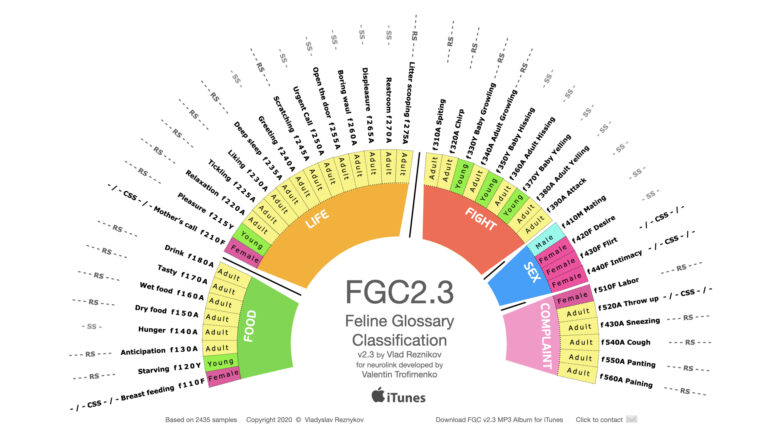
MIAMI, FL — The FGC2.3: Feline Vocalization Classification and Cat Translation Project, authored by Dr. Vladislav Reznikov, has crossed a critical scientific milestone — surpassing 14,000 reads on ResearchGate and rapidly climbing toward record-setting levels in the field of animal communication and artificial intelligence. This pioneering work aims to develop the world’s first scientifically grounded…

Tariff-Free Relocation to the US

Tariff-Free Relocation to the US

EU, China, and more are now in the crosshairs. How’s next? It’s time to act. The Trump administration has announced sweeping tariff hikes, as high as 50%, on imports from the European Union, China, and other major markets. Affected industries? Pharmaceuticals, Biotech, Medical Devices, IVD, and Food Supplements — core sectors now facing crippling costs,…

Global Distribution of the NRAs Maturity Levels as of the WHO Global Benchmarking Tool and the ICH data

Global Distribution of the NRAs Maturity Levels as of the WHO Global Benchmarking Tool and the ICH data

This study presents the GDP Matrix by Dr. Vlad Reznikov, a bubble chart designed to clarify the complex relationships between GDP, PPP, and population data by categorizing countries into four quadrants—ROCKSTARS, HONEYBEES, MAVERICKS, and UNDERDOGS depending on National Regulatory Authorities (NRAs) Maturity Level (ML) of the regulatory affairs requirements for healthcare products. Find more details…

Insights from Leucovorin’s Approval: Implications for the FDA’s Approach to Rare Diseases

Insights from Leucovorin’s Approval: Implications for the FDA’s Approach to Rare Diseases

Although FDA Commissioner Marty Makary promised “an exciting treatment” for autism, what the agency delivered was a label expansion for leucovorin to treat the ultrarare cerebral folate deficiency. The regulatory process, which relied on a literature review rather than new evidence, stands in contrast to recent rare disease rejections in which the FDA cited a need for more rigorous evidence.

Unveiling Light and Existence: The Role of Nanophotonics and Artificial Intelligence in Molecular Sequencing and Single-Cell Phenotypic Analysis

Unveiling Light and Existence: The Role of Nanophotonics and Artificial Intelligence in Molecular Sequencing and Single-Cell Phenotypic Analysis

The biosphere transmits data 9 orders of magnitude faster than the technosphere. A new class of nanophotonic tools is beginning to close that gap.

In this webinar, Prof. Dionne will present VINPix: Si-photonic resonators with high-Q factors (thousands to millions), subwavelength mode volumes, and densities exceeding 10M/cm². Combined with acoustic bioprinting and AI, they may enable detection of multiomic signatures — genes, proteins, and metabolites on a single chip — at previously unattainable rates, opening new possibilities for molecular communication systems and biochemical sensing for health and sustainability.

Key Takeaway:

  • Single-chip multiomics — VINPix arrays plus AI for simultaneous gene, protein, and metabolite detection
  • Field-deployed biosensing — integrated with Monterey Bay Aquarium Research Institute (MBARI) autonomous underwater robots for ocean biochemical monitoring
  • Peptide & glyco-conjugate sequencing — major histocompatibility complex (MHC)-tethered peptides, dynamic Raman spectroscopy, and computational metadynamics to identify previously unseen molecular species
  • Tumor microenvironment profiling — subcellular prediction of drug resistance, macrophage polarization, and T-cell activation states

Register now for this free webinar!

Microchip Grippers Designed to Manipulate Human Cells

Microchip Grippers Designed to Manipulate Human Cells

Living cells and tissues grown in the lab are vital tools for helping scientists learn about basic biology and test new drugs. Growing miniature organs on a chip from a person’s stem cells could even one day help doctors test personalized treatments.

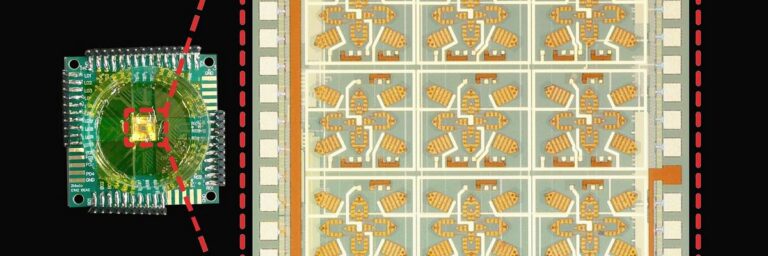
Now, researchers have developed a lab-on-chip that adds a new feature to these systems: low-power grippers that can hold cells or tiny organ models called organoids in place. The CMOS-compatible lab-on-a-chip features shape-memory grippers and chemical sensors for detecting molecules such as neurotransmitters. The micro-cage array was presented in San Francisco on 18 February at the IEEE International Solid State Circuits Conference.

Researchers working on this multifunctional system hope it will be used to sense and manipulate biological samples of different sizes and potentially help direct the development of stem cells into organoids, which are used to study basic biology and drugs. Growing neural organoids in lab-on-a-chip systems, for instance, can help biologists study brain development and how it’s impacted by chemicals or drugs. Cage-like grippers could be used to hold samples in place, or to bring tissue samples next to each other to encourage their development.

Building bioelectronic systems directly on a chip is attractive because it makes it easy to integrate many different features, including chemical sensing, electrical sensing and stimulation, and physical manipulation. However, manipulating biological samples on CMOS chips can be tricky, says Adam Wang, an electrical engineer at ETH Zurich. Optical and acoustic tweezers, for example, can heat up, while the electrical fields used to generate motion in dieletrophoresis can be weakened by high concentrations of ions in the media used to support cells and tissues. These methods also require continuous power inputs. Wang presented the research on behalf of lead student Zhikai Huang, who was unable to attend.

How the Microcages

The ETH chip integrates tiny grippers to “cage” biological samples. These grippers are based on so-called shape-memory alloys, layered metal structures that change their shape in response to electrical signals, then hold that shape without the need for any additional power.

The ETH chip holds an array of nine sets of microcages, along with control electrodes and electrodes for chemical sensing. At each spot on the array, cages of three different sizes are nested together like rows of concentric flower petals. Their arms are 100, 150, and 280 micrometers long. The smallest might be used to grab single cells while the largest is designed to grapple with whole organoids.

The arms are made of layered platinum and titanium. Each of the three different sized sets has its own dedicated control electrode. In response to the polarity and magnitude of a signal, the cage arms will either bend and curl upward or flatten back down onto the surface. The electrical signal triggers the movement by changing the electrochemical state of the platinum. Once the cages change shape, they stay in place with no additional power, unless they receive an electrical order to open or close again. The array includes electrochemical sensors in the form of electrodes made of gold, platinum, and palladium. Using different electrode materials with different properties enhances the sensitivity of the system, says Wang. And all these materials can operate in electrolytes, including the cell culture media that help sustain biological cells and tissues in the lab.

At the conference, Wang presented the circuit design, and initial tests using the cages to grip onto glass beads and measure concentrations of ferrocyanide, a chemical commonly used to test lab-on-a-chip sensors. Next, they hope to demonstrate that the array can delicately handle biological cells and organoids, and measure biochemicals such as neurotransmitters. Wang says future versions of the CMOS platform could integrate more electrodes for electrical sensing and stimulation of nerve cells.
Key Takeaways from the Pharmacovigilance Risk Assessment Committee (PRAC) Meeting Held on 9 – 12 March 2026

PRAC warns about known risk of aseptic meningitis with chikungunya vaccine IxchiqUpdate to product information recommended to reflect recent evidenceEMA’s safety committee (…, Agenda Agenda of the PRAC meeting 9-12 March 2026Draft Reference…, PRAC statistics: March 2026 , PRAC statistics: March 2026 English (EN) (10.77 MB – PDF)First published…, Glossary Safety signal assessments. A safety signal is information which suggests a new potentially causal association, or a new aspect of a known association between…