Global Breakthrough: FGC2.3 Feline Vocalization Project Nears Record Reads — Over 14,000 Scientists Engage With Cat-Human Translation Research

Global Breakthrough: FGC2.3 Feline Vocalization Project Nears Record Reads — Over 14,000 Scientists Engage With Cat-Human Translation Research

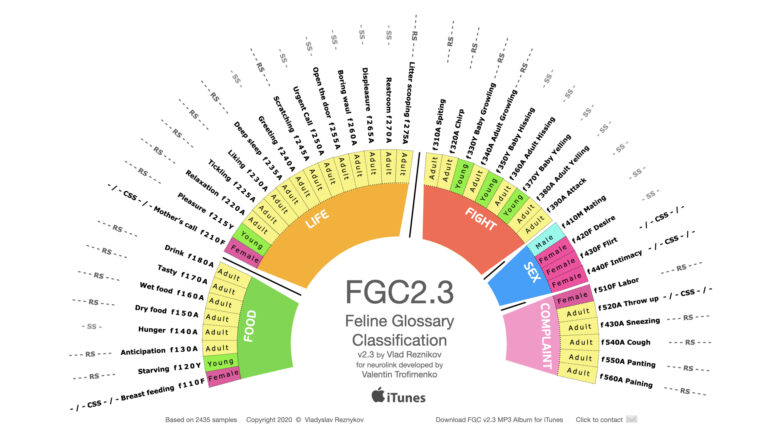
MIAMI, FL — The FGC2.3: Feline Vocalization Classification and Cat Translation Project, authored by Dr. Vladislav Reznikov, has crossed a critical scientific milestone — surpassing 14,000 reads on ResearchGate and rapidly climbing toward record-setting levels in the field of animal communication and artificial intelligence. This pioneering work aims to develop the world’s first scientifically grounded…

Tariff-Free Relocation to the US

Tariff-Free Relocation to the US

EU, China, and more are now in the crosshairs. How’s next? It’s time to act. The Trump administration has announced sweeping tariff hikes, as high as 50%, on imports from the European Union, China, and other major markets. Affected industries? Pharmaceuticals, Biotech, Medical Devices, IVD, and Food Supplements — core sectors now facing crippling costs,…

Global Distribution of the NRAs Maturity Levels as of the WHO Global Benchmarking Tool and the ICH data

Global Distribution of the NRAs Maturity Levels as of the WHO Global Benchmarking Tool and the ICH data

This study presents the GDP Matrix by Dr. Vlad Reznikov, a bubble chart designed to clarify the complex relationships between GDP, PPP, and population data by categorizing countries into four quadrants—ROCKSTARS, HONEYBEES, MAVERICKS, and UNDERDOGS depending on National Regulatory Authorities (NRAs) Maturity Level (ML) of the regulatory affairs requirements for healthcare products. Find more details…

Trividia Health Updates for TRUE METRIX Blood Glucose Monitoring Systems

Trividia Health Updates for TRUE METRIX Blood Glucose Monitoring Systems

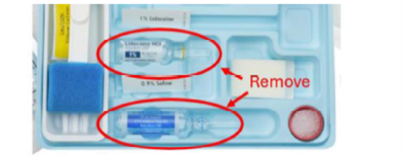
FT. LAUDERDALE, FL – May 1, 2026 – Trividia Health, Inc., a global leader in diabetes management, today provided an important update to the medical device labeling correction it announced on February 6, 2026, for all TRUE METRIX®, TRUE METRIX® AIR, TRUE METRIX® GO, and TRUE METRIX® PRO Blood Glucose

Insights into Drug Trials: Understanding BIMZELX Snapshots

Insights into Drug Trials: Understanding BIMZELX Snapshots

BIMZELX is an anti-interleukin (IL)-17A and IL-17F monoclonal antibody that is indicated for the treatment of adults with moderate to severe plaque psoriasis who are candidates for systemic therapy or phototherapy.

Charter of the Advisory Committee on Pharmacy Compounding

Charter of the Advisory Committee on Pharmacy Compounding

The Pharmacy Compounding Advisory Committee advises the Commissioner or designee in discharging responsibilities as they relate to compounding drugs for human use and, as required, any other product for which the Food and Drug Administration has regulatory responsibility.

Chips Detect Free Radicals Rapidly

Chips Detect Free Radicals Rapidly

When things go bad—be it beer, batteries, or blood—they generate a certain class of molecules called free radicals. Scientists use a technique called electron paramagnetic resonance (EPR) spectroscopy to pick up the concentration and identities of free radicals, but today’s equipment relies on huge, heavy magnets.

Groups of researchers in California, Germany, and now France have been inventing ways to shrink the whole spectroscopy system onto a chip, so scientists can take the instrument into the field.

The most recent entrant in this space is a group of engineers at the French government technology lab CEA-Leti, in Grenoble. They presented a new, potentially faster, take on chip-scale EPR earlier this year at the IEEE International Solid-State Circuits Conference in San Francisco. But competing research groups have also been working to speed these systems up, moving the process toward supersensitive real-time results.

Free Radicals and EPR

Chemicals are most stable when all the electrons in the outer orbitals of their constituent molecules are paired up, with each electron in the pair having an oppositely oriented property called spin. Free radicals are molecules with unpaired electrons, which makes them highly reactive. This can be good when it’s part of a necessary bit of biochemistry, or bad when it degrades materials, foods, or your body. (Free radicals are why we need antioxidants in our diet.)

“Free radicals determine the quality of almost everything on the planet,” says Jens Anders, director of the Institute of Smart Sensors at the University of Stuttgart, in Germany. Anders is considered by at least one expert as “one of the O.G.s” of chip-scale EPR for having pioneered the portable tech about a decade ago.

That “almost everything” includes technology, says Jean-Baptiste David, who led the work at CEA-Leti. “In a battery, the free radicals will reduce the capacity of the battery. In photovoltaic panels, it leads to aging,” he says.

EPR spectroscopy works because free radicals are paramagnetic. That is, their free electron spins will align with the magnetic field. In a full-size EPR machine, the sample under examination is placed between two poles of a powerful electromagnet, aligning the spins of the unpaired electrons. Then a weaker oscillating magnetic field is applied atop it.

This oscillation can come in two forms. In one form, called continuous wave EPR, the oscillating frequency conventionally is held steady, and the stronger field is swept through a range of values, necessitating a bulky specialized electromagnet. Through some creative circuitry, chip-scale EPR reverses this setup—using a simple magnet to create an unchanging field and sweeping through a band of oscillation frequencies. (Most EPR chips use frequencies in the satellite downlink X and Ku bands.) The spins of unpaired electrons will resonate with some of these frequencies. The EPR spectrometer’s circuitry picks this up and plots it as a frequency spectrum that chemists can interpret.

A T-shaped printed circuit board. The 4.4-square-millimeter EPR chip is shown on a circuit board that fits between portable magnets.Jean-Baptiste David/CEA

Continuous-Wave Electron Paramagnetic Resonance

The CEA-Leti team’s chip uses the continuous wave method, but “we use a completely different way to measure the EPR phenomenon,” says David. By sweeping very quickly, the new circuit cuts the time the process takes while remaining sensitive enough to detect micromolar quantities of free radicals in a sample that’s just 10 nanoliters.

This first EPR chip, developed by Anders and his colleagues at Stuttgart about a decade ago, worked using the continuous wave method. It relied on a voltage-controlled oscillator—a circuit that outputs a signal with a frequency proportional to the magnitude of an input voltage—with an inductor that delivers the sweeping-frequency magnetic field to a droplet of beer or whatever you’re analyzing. When the frequency resonates with the free radicals’ electron spins, those spins couple with the inductor, altering the frequency of the oscillator, which is detected via a feedback loop.

Most EPR chips that came after work on essentially the same principle. According to CEA-Leti’s David, the feedback loop places a limit on how quickly the EPR chip can sweep through its range of frequencies. Speed is important, he says, because lingering too long on a frequency drowns out the response and long sweeps keep EPR from catching fast changes in free-radical concentration.

Hoping to speed things along, the CEA-Leti team came up with a different way of sensing spins. The new method, called injection-locked phase detection, is designed to sweep through its bandwidth in just 200 nanoseconds, equivalent to 1,400 terahertz per second. That’s three times as fast as competing systems, the researchers claim.

The new method relies on circuits called injection-locked oscillators (ILOs). Here, two oscillators are running at close to but not identical frequencies. One signal is “injected” into the other oscillator, forcing the latter to adopt the injected frequency. (Imagine two pendulum clocks on the same mantlepiece synching up with each other because of subtle vibrations sent through the shared surface.)

The team took advantage of the phase difference between the two oscillations to turn the ILO into a kind of frequency-to-phase converter circuit. The ILO connects to the inductor where the free radicals sit, and the frequency is swept both with the external magnetic field on and without it. The two resulting signals are subtracted from each other to deliver the pure EPR signal—no speed-limiting feedback loop needed.

An electron paramagnetic resonance machine. EPR spectrometers usually rely on huge electromagnets.Jean-Baptiste David/CEA

Pulse Electron Paramagnetic Resonance

While the CEA-Leti development advances continuous wave EPR, other researchers have been focusing on chips that do a different form of EPR, called pulse mode. In pulse EPR, instead of presenting the free radicals with a sweep of frequencies, they’re exposed to a pulse containing a band of frequencies surrounding the central oscillation frequency. It’s like striking a bell. The spins all react at once but stop “ringing” in different ways. A computer can then tease out the frequency spectrum from this response. At ISSCC 2024, Constantine Sideris and his student Ray Sun at the University of Southern California presented the first chip that can actually perform both.

By using multiple pulses in a sequence, chemists can study additional properties of radicals that are difficult to see with continuous-wave EPR, says Sideris, who recently moved to Stanford University. “With a single pulse, you can excite a wide spectrum. You can look at a big bandwidth without having to sweep [through a band of frequencies] in the first place.”

Stuttgart’s Anders, too, has turned to pulse-mode EPR, and is launching a startup this summer, called SpinMagIC, to commercialize the tech. The first application will be checking the quality of food and especially, as the company is in Germany, beer. But eventually, the company will tackle cancer detection and other health-care issues.

Turning EPR chips into a product has meant solving a number of problems. Notably, the size of the coil that delivers the varying magnetic field had to be increased to accommodate larger volumes. That required segmenting the coil and inserting electronics within it to keep it from radiating its energy away like an antenna. “That was really the most important patent for the company, because now we have a chip with a coil that’s 2 millimeters across instead of 200 micrometers,” Anders says.

Meanwhile, the CEA-Leti team plans to let loose its new version of EPR on scientific questions. The hope is that scientists “can start to see new phenomena, for example, that were not observed due to the speed of the technique,” says David.