Global Breakthrough: FGC2.3 Feline Vocalization Project Nears Record Reads — Over 14,000 Scientists Engage With Cat-Human Translation Research

Global Breakthrough: FGC2.3 Feline Vocalization Project Nears Record Reads — Over 14,000 Scientists Engage With Cat-Human Translation Research

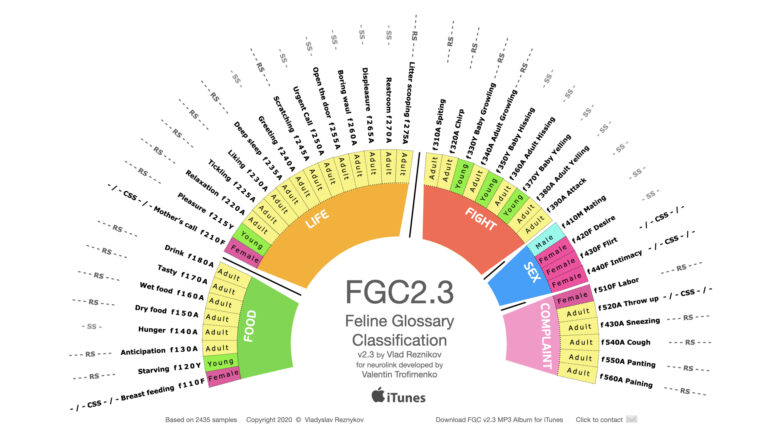
MIAMI, FL — The FGC2.3: Feline Vocalization Classification and Cat Translation Project, authored by Dr. Vladislav Reznikov, has crossed a critical scientific milestone — surpassing 14,000 reads on ResearchGate and rapidly climbing toward record-setting levels in the field of animal communication and artificial intelligence. This pioneering work aims to develop the world’s first scientifically grounded…

Tariff-Free Relocation to the US

Tariff-Free Relocation to the US

EU, China, and more are now in the crosshairs. How’s next? It’s time to act. The Trump administration has announced sweeping tariff hikes, as high as 50%, on imports from the European Union, China, and other major markets. Affected industries? Pharmaceuticals, Biotech, Medical Devices, IVD, and Food Supplements — core sectors now facing crippling costs,…

Global Distribution of the NRAs Maturity Levels as of the WHO Global Benchmarking Tool and the ICH data

Global Distribution of the NRAs Maturity Levels as of the WHO Global Benchmarking Tool and the ICH data

This study presents the GDP Matrix by Dr. Vlad Reznikov, a bubble chart designed to clarify the complex relationships between GDP, PPP, and population data by categorizing countries into four quadrants—ROCKSTARS, HONEYBEES, MAVERICKS, and UNDERDOGS depending on National Regulatory Authorities (NRAs) Maturity Level (ML) of the regulatory affairs requirements for healthcare products. Find more details…

Key Factors Behind the Success of Angel Investments in Life Sciences

Key Factors Behind the Success of Angel Investments in Life Sciences

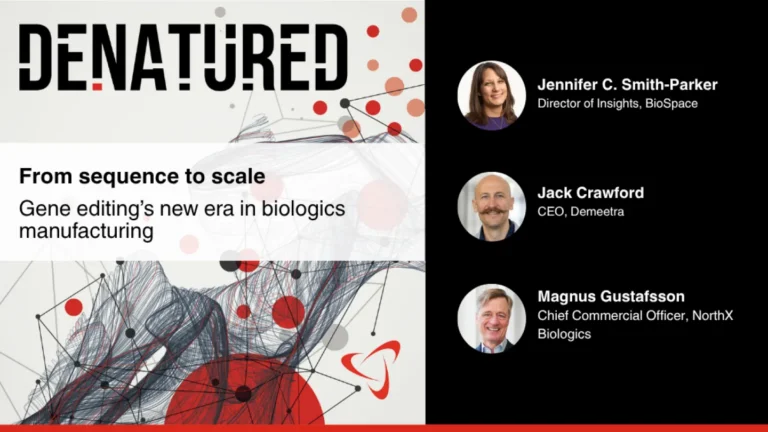
In this episode of Denatured, you’ll be hearing from Yaniv Sneor, founder of the Mid Atlantic Bio Angels and Alex Pederson, an investor at Mid Atlantic Bio Angels and partner at Alloy Bio Consulting. We discuss why a life sciences-only angel group matters, how they evaluate opportunities, and the importance of strong teams, capital efficiency and a realistic path to exit.

Can Scientists Reengineer the Genome’s Entangled Code?

Can Scientists Reengineer the Genome’s Entangled Code?

What if biology stopped being something we study and started becoming something we design? That’s the premise of Adrian Woolfson’s new book, On the Future of Species: Authoring Life by Means of Artificial Biological Intelligence, which published on 28 April from MIT Press. He argues that advances in AI and DNA synthesis are pushing biology toward an engineering paradigm—one in which scientists can generate new genetic sequences and eventually build organisms to order. He calls this emerging capability artificial biological intelligence, or ABI, a catchall term for systems that can design, construct, and ultimately “boot up” living things.

That vision runs into a basic problem: Evolution didn’t produce clean, modular systems. It produced genomes shaped by billions of years of incremental change, with overlapping functions and little of the tidy structure that engineers rely on. Some synthetic biology researchers have tried to “refactor” genetic code (the same way engineers restructure computer code) by reorganizing genomes to make them easier to understand and manipulate. But how far can that approach go? And what would it take to make biology predictable enough to engineer? In a conversation with IEEE Spectrum, Woolfson lays out both the promise and the limits of designing life.

You describe the genome as “spaghetti code” produced by evolution. What makes biology so inherently hostile to traditional engineering principles?

Adrian Woolfson: In human-made machines, the components are typically orthogonal. Every component has a predetermined function. And if the component breaks, guess what? You can just replace it, or in some cases repair it. But sadly, biology doesn’t work like that. In biology, we’re talking about a complex network with emergent behaviors, which are built upon tiny contributions from many many components.

Biology has this requirement to be robust and to be able to deal with damage in an efficient way. It also always had to build upon preexisting architectures. It can never reinvent. Biological machines are this complex entanglement of history and current design, and we have design components that an engineer would find risible. If you were to take the human genome and look at it from an engineering perspective, you’d say, “My God, what an absolute mess.” Because it was built in an opportunistic, incremental manner with no foresight or intentionality.

How are synthetic biologists trying to improve this code? Can you explain how researchers are refactoring genomes?

Woolfson: Drew Endy was a pioneer. He took a bacteriophage and he said, “What if we treat this as a bit of spaghetti code, and we literally clean it up and refactor it and reorganize it into a more user-friendly configuration?” Now, sadly, he had the idea way in advance of there being technologies that made that a particularly easy thing to do. But he pioneered that computer code approach to genomes and the idea that you could refactor them. Genomes have not been refactored for around four billion years—imagine if you had a piece of computer code that hadn’t been refactored for four billion years.

How far have researchers gotten with this effort?

Woolfson: The best example might be the synthetic yeast genome project known as Sc2.0, which was pioneered by Jef Boeke in New York City. It has taken him around 15 years, and he has slowly been assembling all these synthetic chromosomes into a single organism. What he’s done is more than refactoring; it’s redesigning really. For example, yeast has 16 chromosomes, and he has built an entirely new 17th synthetic chromosome. In separate work, he showed that you could join the 16 chromosomes up into two massive chromosomes. That’s a massive reconfiguration of the way in which the genetic material is stored.

But when you start to mess around with these genomes and reconfigure them, inevitably you introduce bugs into the code. And those bugs often impair functionality and growth. It’s not that you couldn’t redesign totally without creating a growth impediment, it’s just that you need to invest the time to identify the optimal way to do it. Of course, AI wasn’t around when Boeke started, and it makes all of that so much easier. AI is going to have a huge impact on our ability to turn DNA into a predictive engineering material.

AI-Powered Artificial Biological Intelligence

Speaking of AI, you introduce the concept of artificial biological intelligence (ABI). What specific capabilities will AI give us that we don’t have today?

Woolfson: Before AI, we didn’t have the ability to design DNA at scale. We couldn’t invent totally new DNA sequences that performed functions at the level of a biological entity. Now we have these so-called genome language models, which are a bit like the chatbots that we use to manipulate text. But instead of manipulating the 26 letters of the English alphabet, they manipulate the four letters of the language of DNA.

When we manipulate the language of DNA, we need to have a very wide context window, because unlike text, where most of the meaning is in sentences or paragraphs, in DNA distant regions can talk to one another. So we need to have AI that can discern those action-at-a-distance relationships. In the case of one particular genome language model, Evo 2, it uses an architecture that has a context window of a million base pairs. That means it can see how base pairs a million bases away from one another are interacting.

Designing the code is only half the battle. How are researchers tackling the bottleneck of physically manufacturing DNA at scale?

Woolfson: Another crucial thing that wasn’t present in the past is the ability to write DNA at scale rapidly, efficiently, at low cost, and of any degree of complexity. When you bring together these two capabilities of design and construction, you become an engineer. We’ve achieved cost reduction with a technology called Sidewinder, which enables us to build DNA in a massively parallel manner and thereby hugely reduces the cost and scalability of DNA construction. That alone makes the proposition of using DNA as an engineering material far more feasible.

Once you have designed and synthesized the DNA, what does it take to boot up a living organism?

Woolfson: That’s probably the most difficult bit. Because right now we have no idea how to build an artificial cell. Craig Venter showed that you can destroy the genome in a bacterium and put in a new one. In other words, the cell behaves like a nanocomputer and a genome behaves like software. But getting genomes into cells is not trivial.

The term “ABI” addresses the design capability and the buildout capability, but it also encompasses the ability to then boot that up into a living thing. If you have all those capabilities, you’re in full mastery of biology as a technology. And all of a sudden, DNA becomes a programmable material which you can manipulate in a predictive manner.

Biology as the Next Engineering Material

If researchers gain that mastery, what will be possible?

Woolfson: My prediction is that within 50 years, biology will be the engineering material of choice, and many of the people reading this article will become bioengineers. Biology can deliver most of the functionality that materials deliver; for example, spider silk has the tensile strength of steel. When we redesign it using AI, it might get to a point where it’s five times the tensile strength of steel. And biology, of course, has the additional advantage that it can generate intelligent materials. So imagine if you could have an intelligent form of steel. How would an engineer go about utilizing that in buildings?

What is the single hardest technical problem preventing you from designing a functional multicellular organism from scratch?

Cover of Adrian Woolfsonu2019s book, u201cOn the Future of Speciesu201d. MIT Press

Woolfson: I think it’s our inadequate knowledge of the grammar of life. AI turns out to be a great tool for unpicking those grammatical rules. It looks at huge databases and can discern the patterns within those databases. We won’t be able to design a complex multicellular organism until we can speak the language of DNA more fluently, and to do that we need to understand the grammar, and to understand the grammar we need to interrogate more complex and more nuanced databases. We need to be grammar hunters. Every time we destroy a species, we’re destroying a page of the grammar book. We need to pull all the information together into a grammar book.

Finally, as you begin this journey into engineering life, what are the realistic failure modes?

Woolfson: I can interpret “failure mode” in two ways. One is a kind of mechanical failure: As you strip away all of this non-orthogonality, the system becomes brittle, because biological machines are designed not to fail and they’ve got all these overlapping fail-safe mechanisms.

The other way in which these things could fail is by being dangerous. We don’t understand ecosystems. They’re incredibly difficult to compute. So if we release engineered organisms into complex ecosystems, they could create havoc. And obviously, these technologies themselves are inherently dangerous in the wrong hands. So, we need to learn how to use them safely, responsibly, ethically, transparently, and equitably in a way that benefits society.

EMA Unveils New Advisory Panel to Boost Vaccine Confidence

EMA has set up a new advisory group on vaccine confidence, which will advise the Agency on issues related to vaccine hesitancy and help guide its actions to increase science…, “Vaccine hesitancy is a growing global threat to public health. When public trust declines, infectious diseases can reemerge, putting lives at risk. EMA has a vital…, The advisory group on vaccine confidence will meet quarterly. It includes academics, representatives of healthcare professionals, medical societies and patient organisations, as…

Transforming Health Research: NYU’s Innovative Approach to Engineering Collisions

Transforming Health Research: NYU’s Innovative Approach to Engineering Collisions

This sponsored article is brought to you by NYU Tandon School of Engineering.

The traditional approach to academic research goes something like this: Assemble experts from a discipline, put them in a building, and hope something useful emerges. Biology departments do biology. Engineering departments do engineering. Medical schools treat patients.

NYU is turning that model inside out. At its new Institute for Engineering Health, the organizing principle centers around disease states rather than traditional disciplines. Instead of asking “what can electrical engineers contribute to medicine?,” they’re asking “what would it take to cure allergic asthma,” and then assembling whoever can answer that question, whether they’re immunologists, computational biologists, materials scientists, AI researchers, or wireless communications engineers.

Person in blue suit and patterned shirt standing against a plain indoor background Jeffrey Hubbell, NYU’s vice president for bioengineering strategy and professor of chemical and biomolecular engineering at NYU’s Tandon School of Engineering.New York University

The early results suggest they’re onto something. A chemical engineer and an electrical engineer collaborated to build a device that detects airborne threats — including disease pathogens — that’s now a startup. A visually impaired physician teamed with mechanical engineers to create navigation technology for blind subway riders. And Jeffrey Hubbell, the Institute’s leader, is advancing “inverse vaccines” that could reprogram immune systems to treat conditions from celiac disease to allergies — work that requires equal fluency in immunology, molecular engineering, and materials science.

The underlying problem these collaborations address is conceptual as much as organizational. In his field, Hubbell argues that modern medicine has optimized around a single strategy: developing drugs that block specific molecules or suppress targeted immune responses. Antibody technology has been the workhorse of this approach. “It’s really fit for purpose for blocking one thing at a time,” he says. The pharmaceutical industry has become extraordinarily good at creating these inhibitors, each designed to shut down a particular pathway.

But Hubbell asks a different question: Rather than inhibit one bad thing at a time, what if you could promote one good thing and generate a cascade that contravenes several bad pathways simultaneously? In inflammation, could you bias the system toward immunological tolerance instead of blocking inflammatory molecules one by one? In cancer, could you drive pro-inflammatory pathways in the tumor microenvironment that would overcome multiple immune-suppressive features at once?

This shift from inhibition to activation requires a fundamentally different toolkit — and a different kind of researcher. “We’re using biological molecules like proteins, or material-based structures — soluble polymers, supramolecular structures of nanomaterials — to drive these more fundamental features,” Hubbell explains. You can’t develop those approaches if you only understand biology, or only understand materials science, or only understand immunology. You need an understanding and a mastery of all three.

“There will be people doing AI, data science, computational science theory, people doing immunoengineering and other biological engineering, people doing materials science and quantum engineering, all really in close proximity to each other.” —Jeffrey Hubbell, NYU Tandon

Which logically leads to the question: How do you create researchers with that kind of cross-disciplinary depth?

The answer isn’t what you might expect. “There may have been a time when the objective was to have the bioengineer understand the language of biology,” Hubbell says. “But that time is long, long gone. Now the engineer needs to become a biologist, or become an immunologist, or become a neuroscientist.”

Hubbell isn’t talking about engineers learning enough biology to collaborate with biologists. He’s describing something more radical: training people whose disciplinary identity is genuinely ambiguous. “The neuroengineering students — it’s very difficult to know that they’re an engineer or a neuroscientist,” Hubbell says. “That’s the whole idea.”

His own students exemplify this. They publish in immunology journals, present at immunology conferences. “Nobody knows they’re engineers,” he says. But they bring engineering approaches — computational modeling, materials design, systems thinking — to immunological problems in ways that traditional immunologists wouldn’t.

The mechanism for creating these hybrid researchers is what Hubbell calls a “milieu.” “To learn it all on your own is hopeless,” he acknowledges, “but to learn it in a milieu becomes very, very efficient.”

NYU building at 770 Broadway with Future Home of Science + Tech signs and street traffic NYU is expanding its facilities to include a science and technology hub designed to force encounters between people across various schools and disciplines who wouldn’t naturally cross paths.Tracey Friedman/NYU

NYU is making that milieu physical. The university has acquired a large building in Manhattan that will serve as its science and technology hub — a deliberate co-location strategy designed to force encounters between people across various schools and disciplines who wouldn’t naturally cross paths.

Businessperson in dark suit and purple tie standing in a modern office setting Juan de Pablo is the Anne and Joel Ehrenkranz Executive Vice President for Global Science and Technology and Executive Dean of the NYU Tandon School of Engineering.Steve Myaskovsky, Courtesy of NYU Photo Bureau

“There will be people doing AI, data science, computational science theory, people doing immunoengineering and other biological engineering, people doing materials science and quantum engineering, all really in close proximity to each other,” Hubbell explains.

The strategy mirrors what Juan de Pablo, NYU’s Anne and Joel Ehrenkranz Executive Vice President for Global Science and Technology and Executive Dean at the NYU Tandon School of Engineering, describes as organizing around “grand challenges” rather than traditional disciplines. “What drives the recruitment and the spaces and the people that we’re bringing in are the problems that we’re trying to solve,” he says. “Great minds want to have a legacy, and we are making that possible here.”

But physical proximity alone isn’t enough. The Institute is also cultivating what Hubbell calls an “explicit” rather than “tacit” approach to translation — thinking about clinical and commercial pathways from day one.

“It’s a terrible thing to solve a problem that nobody cares about,” Hubbell tells his students. To avoid that, the Institute runs “translational exercises” — group sessions where researchers map the entire path from discovery to deployment before launching multi-year research programs. Where could this fail? What experiments would prove the idea wrong quickly? If it’s a drug, how long would the clinical trial take? If it’s a computational method, how would you roll it out safely?

NYU Tandon graphic showing seven research areas with futuristic science imagery. The new cross-institutional initiative represents a major investment in science and technology, and includes adding new faculty, state-of-the-art facilities, and innovative programs.NYU Tandon

The approach contrasts sharply with typical academic practice. “Sometimes academics tend to think about something for 20 minutes and launch a 5-year PhD program,” Hubbell says. “That’s probably not a good way to do it.” Instead, the Institute brings together people who have actually developed drugs, built algorithms, or commercialized devices — importing their hard-won experience into the planning phase before a single experiment is run.

The timing may be fortuitous. De Pablo notes that AI is compressing timelines dramatically. “What we thought was going to take 10 years to complete, we might be able to do in 5,” he says.

But he’s quick to note AI’s limitations. While tools like AlphaFold can predict how a single protein folds — a breakthrough of the last five years — biology operates at much larger scales. “What we really need to do now is design not one protein, but collections of them that work together to solve a specific problem,” de Pablo explains.

Hubbell agrees: “Biology is much bigger — many, many, many systems.” The liver and kidney are in different places but interact. The gut and brain are connected neurologically in ways researchers are just beginning to map. “AI is not there yet, but it will be someday. And that’s our job — to develop the data sets, the computational frameworks, the systems frameworks to drive that to the next steps.”

It’s a moment of unusual ambition. “At a time when we’re seeing some research institutions retrench a little bit and limit their ambitions,” de Pablo says, “we’re doing just the opposite. We’re thinking about what are the grand challenges that we want to, and need to, tackle.”

The bet is that the breakthroughs worth making can’t emerge from any single discipline working alone. They require collisions —sometimes planned, sometimes accidental — between people who speak different technical languages and are willing to develop a shared one. NYU is engineering those collisions at scale.

Transforming Health Analytics into Action: Brown University’s Online Master’s Program in Biostatistics and Health Data Science

Transforming Health Analytics into Action: Brown University’s Online Master’s Program in Biostatistics and Health Data Science

Trained biostatisticians play a central role in clinical science and public health. Brown’s online master’s in biostatistics (health data science concentration), prepares you with a strong foundation in biostatistical and data science methods combined with rigorous training in applied skills to make critical data-driven decisions and meet the growing demand for leaders in this industry – on your schedule