Global Breakthrough: FGC2.3 Feline Vocalization Project Nears Record Reads — Over 14,000 Scientists Engage With Cat-Human Translation Research

Global Breakthrough: FGC2.3 Feline Vocalization Project Nears Record Reads — Over 14,000 Scientists Engage With Cat-Human Translation Research

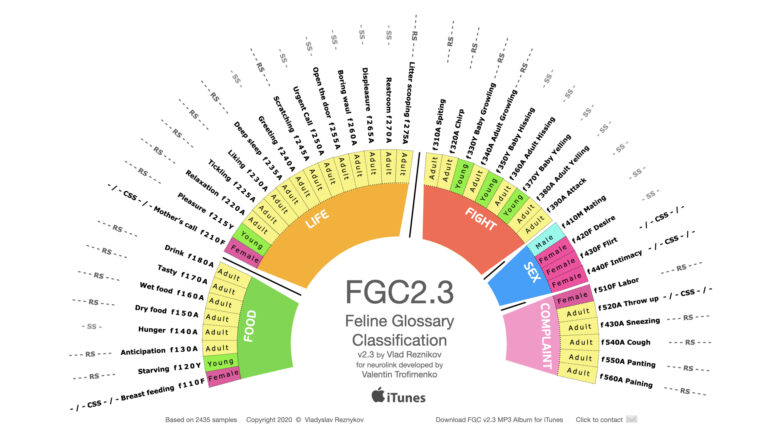
MIAMI, FL — The FGC2.3: Feline Vocalization Classification and Cat Translation Project, authored by Dr. Vladislav Reznikov, has crossed a critical scientific milestone — surpassing 14,000 reads on ResearchGate and rapidly climbing toward record-setting levels in the field of animal communication and artificial intelligence. This pioneering work aims to develop the world’s first scientifically grounded…

Tariff-Free Relocation to the US

Tariff-Free Relocation to the US

EU, China, and more are now in the crosshairs. How’s next? It’s time to act. The Trump administration has announced sweeping tariff hikes, as high as 50%, on imports from the European Union, China, and other major markets. Affected industries? Pharmaceuticals, Biotech, Medical Devices, IVD, and Food Supplements — core sectors now facing crippling costs,…

Global Distribution of the NRAs Maturity Levels as of the WHO Global Benchmarking Tool and the ICH data

Global Distribution of the NRAs Maturity Levels as of the WHO Global Benchmarking Tool and the ICH data

This study presents the GDP Matrix by Dr. Vlad Reznikov, a bubble chart designed to clarify the complex relationships between GDP, PPP, and population data by categorizing countries into four quadrants—ROCKSTARS, HONEYBEES, MAVERICKS, and UNDERDOGS depending on National Regulatory Authorities (NRAs) Maturity Level (ML) of the regulatory affairs requirements for healthcare products. Find more details…

Innovative Contact Lens Utilizes Microfluidic Technology for Monitoring and Managing Glaucoma

Innovative Contact Lens Utilizes Microfluidic Technology for Monitoring and Managing Glaucoma

More than 80 million people suffer from glaucoma globally, making it the second most common cause of blindness worldwide. The disease—caused by elevated internal eye pressure damaging the optic nerve—is incurable, but its progression can be slowed with drugs to control eye pressure.

Now, researchers have developed an electronics-free smart contact lens that can track the disease in real-time and also deliver drugs in response. The all-polymer lens includes a microfluidic sensor that monitors eye pressure in real time, as well as pressure-activated drug reservoirs that dispense medicine as eye pressure rises.

“A lot of patients forget to take the medicine at the right time,” saysYangzhi Zhu, an assistant professor at the Terasaki Institute for Biomedical Innovation. “For our technology, we don’t need the user to manually operate or trigger. Everything is based on the sensor and the closed-loop drug delivery.”

A Contact Lens for Glaucoma Treatment

The gold-standard approach for measuring eye pressure requires patients to visit a clinic, and check-ups are often months apart. This provides infrequent snapshots that often fail to accurately measure glaucoma’s dynamics. In addition, previous research has found that nearly half of patients stopped treating the disease within six months of filling an initial prescription.

There have been earlier efforts to treat glaucoma with smart contacts. In 2016, the U.S. Federal Drug Administration approved a device calledTriggerfish, which embeds electronic components into a lens to provide continuous eye pressure monitoring. And other research groups have builtelectronic smart contact lenses that combine pressure measurement and drug release.

But Zhu says the mechanical mismatch between rigid electronic components and delicate corneal tissue can lead to irritation and discomfort. “Frankly speaking, we know that electronic control is the most accurate, but the issue is that it is not user-friendly and not biocompatible, or comfortable for long-term use,” he says. “So we needed to find a better balance between the accuracy and the user comfort.”

The solution he and his colleagues came up with was to create a soft, all-polymer lens that relied on microfluidics to sense pressure and release drugs as needed. Microfluidics uses networks of microscopic channels and chambers to manipulate fluids. It’s normally used in biological analysis or medical diagnostics.

Yangzhi Zhu/Terasaki Institute for Biomedical Innovation

The researchers used 3D-printed molds to embed tiny microchannels and reservoirs into the bottom layer of their contact lens. These reservoirs were then filled with a specially designed silk sponge that can quickly absorb up to 2,700 times its weight in fluid.

One of the reservoirs is filled with a red fluid to measure pressure. When eyeball pressure rises, it compresses the reservoir enough to push the red liquid further down a snaking microchannel. A phone-based imaging app with a convolutional neural network trained on images of these microchannels in different states can provide a pressure readout with 94 percent accuracy.

Two drug-filled reservoirs make up part of the drug delivery system. These reservoirs are connected to microchannels that deliver medicine to the surface of the eye. As pressure in the eye increases, the reservoir is compressed and the drug is pushed through the channels. The threshold at which this happens can be tailored by adjusting the width of the channel, making it possible to tune drug delivery and even administer two different drugs at different pressure levels.

Microfluidic Pressure Sensors and Drug Delivery

Zhu says the prototype device, reported in a paper published on 8 April in Science Translational Medicine, can hold enough medicine for up to two weeks of use. The narrow design of the microchannels means the pressure sensor and drug release mechanism only respond to the sustained build up of pressure characteristic of glaucoma and not short, sharp pressure spikes caused by things like blinking or swallowing.

In tests on rabbits, the team demonstrated the closed-loop drug delivery enabled by the smart contact lens was as effective as conventional treatment with eye drops, while also enabling accurate monitoring of eye pressure. They also recorded no inflammation or other biocompatibility issues over 14 days of repeated use.

The new device is an elegant solution for combining pressure sensing and drug delivery while avoiding the comfort and safety concerns associated with the use of electronic components, saysChi Hwan Lee, a professor of biomedical and mechanical engineering at Purdue University. “These are important considerations for long-term wear and real-world adoption, particularly in a chronic condition such as glaucoma.”

However, Lee notes that ditching electronics comes with trade-offs including reduced precision and robustness. More importantly, the fact that pressure readings require the user to hold a smartphone up to their eye means that monitoring is not continuous. This is a significant limitation, he adds, as glaucoma often features transient spikes and fluctuations in eye pressure, often outside of waking hours, that are clinically relevant and would be missed by this system.

Nonetheless, Lee thinks the technology could be a useful complement to electronics-based approaches. “When used alongside electronic systems, they could offer a synergistic strategy—providing a simpler, low-cost, and potentially more comfortable option for intermittent or threshold-based monitoring and therapy, while electronic devices deliver continuous, high-resolution data,” he says.

One major advantage of the approach, says Zhu, is that the fabrication process is already well-aligned with existing contact lens manufacturing approaches. And all of the information required to personalize the contact lenses for specific patients could be collected by clinicians during the standard process used to fit contact lenses.

Zhu and his collaborators are already working towards commercialization of the technology and have applied for a provisional patent. And while the focus is currently on glaucoma, he thinks the platform they’ve developed could ultimately be extended to a host of eye diseases, including dry eye, diabetic retinopathy, and age-related macular degeneration.

Securing Tomorrow: Financial Strategies for the Advancement of European Biotechnology

Securing Tomorrow: Financial Strategies for the Advancement of European Biotechnology

In this episode of Denatured, you’ll be hearing from Edoardo Negroni, co-founder & managing partner at AurorA-TT and Naveed Siddiqi, senior partner, Venture Investments at Novo Holdings. We debate whether Europe’s world-class science can be matched by a truly integrated venture ecosystem—and what it would take, in practice, to get there.